






Что это?
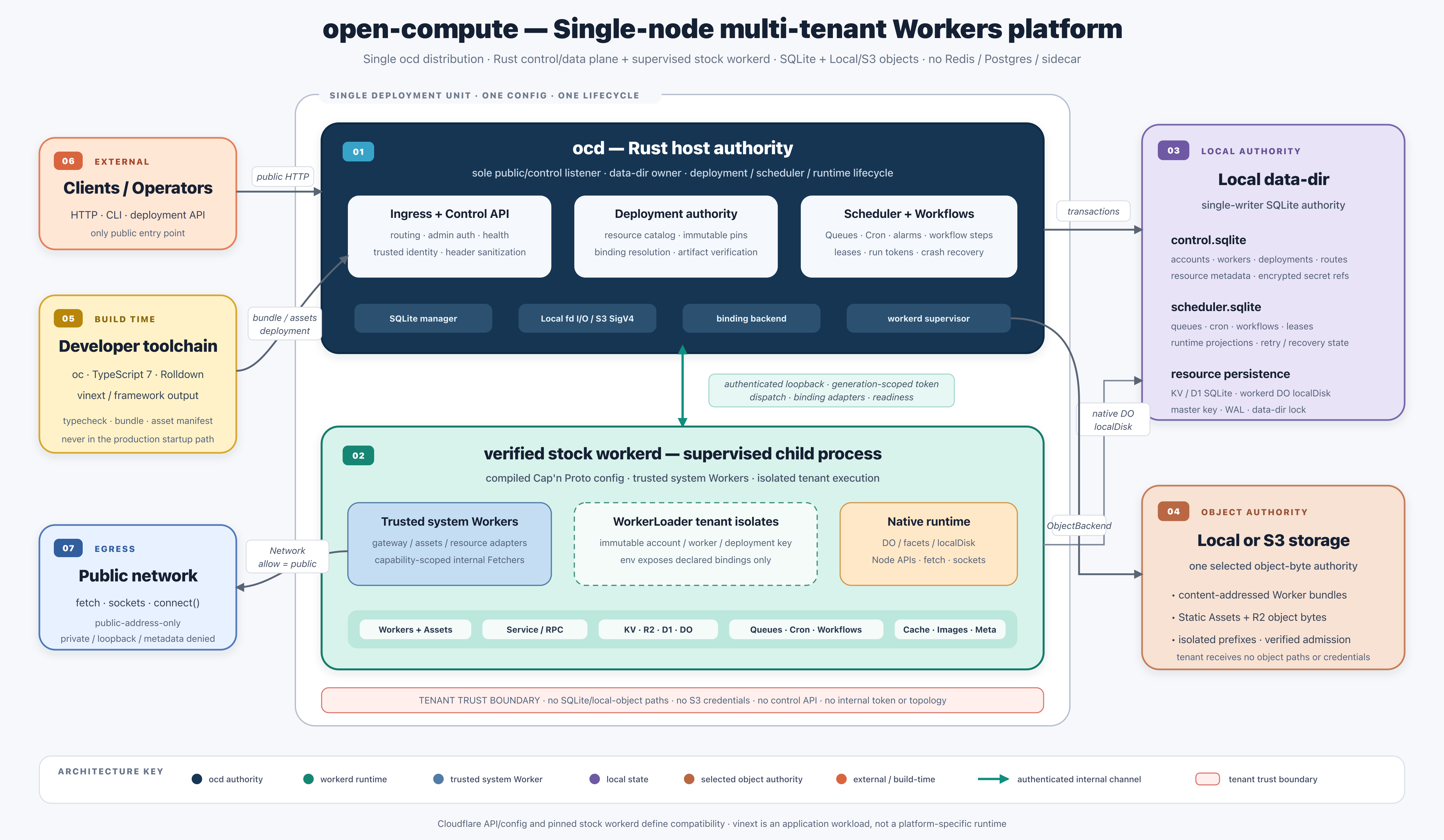
 open-compute — это self-hosted платформа, которая запускает код Cloudflare Workers без изменений на вашем железе, заново реализуя Workers, KV, D1, R2, Durable Objects, Queues, Workflows, Cron, Cache, Images, Vectorize и AI Search в виде одного Rust-бинарника.
Это просто рантайм workerd или полноценная платформа?Это полноценная платформа, построенная поверх workerd. workerd лишь исполняет изолированные Workers в песочнице; open-compute добавляет недостающую управляющую плоскость — маршрутизацию, постоянное состояние, планирование и жизненный цикл развертывания — и поставляет всё это одним бинарником (ocd).
Это полноценная платформа, построенная поверх workerd. workerd лишь исполняет изолированные Workers в песочнице; open-compute добавляет недостающую управляющую плоскость — маршрутизацию, постоянное состояние, планирование и жизненный цикл развертывания — и поставляет всё это одним бинарником (ocd).Как развернуть на нём свой первый Worker?Вы поднимаете платформу локально и развертываете через тот же Wrangler CLI, которым уже пользуетесь для Cloudflare. Одна команда проверяет типы, собирает, развертывает и запускает Worker. В продакшене всё работает как один исполняемый файл с одним файлом конфигурации и одной директорией данных.
Вы поднимаете платформу локально и развертываете через тот же Wrangler CLI, которым уже пользуетесь для Cloudflare. Одна команда проверяет типы, собирает, развертывает и запускает Worker. В продакшене всё работает как один исполняемый файл с одним файлом конфигурации и одной директорией данных.Что нужно установить для сборки и запуска?Для сборки нужны Rust 1.98, Bun 1.3.14, Node 26 и Git LFS. Скомпилированному продакшен-бинарнику ничего из этого не требуется — ни инструментов сборки, ни сетевого доступа на хосте при запуске.
Для сборки нужны Rust 1.98, Bun 1.3.14, Node 26 и Git LFS. Скомпилированному продакшен-бинарнику ничего из этого не требуется — ни инструментов сборки, ни сетевого доступа на хосте при запуске.Каких функций Cloudflare всё ещё не хватает?Workers AI, Containers, Hyperdrive, Analytics Engine, Workers for Platforms, Pipelines, Rate Limiting, сертификаты mTLS и Tail Workers/Logpush находятся на отметке 0% — пока не реализованы. Vectorize и AI Search готовы лишь частично, на 80%.
Workers AI, Containers, Hyperdrive, Analytics Engine, Workers for Platforms, Pipelines, Rate Limiting, сертификаты mTLS и Tail Workers/Logpush находятся на отметке 0% — пока не реализованы. Vectorize и AI Search готовы лишь частично, на 80%.Может ли он масштабироваться на несколько машин, как настоящий Cloudflare?Нет, он изначально одноузловой: одна директория данных, один процесс, одна машина, без Anycast-маршрутизации и межрегиональной репликации, как у настоящего edge Cloudflare.
Нет, он изначально одноузловой: одна директория данных, один процесс, одна машина, без Anycast-маршрутизации и межрегиональной репликации, как у настоящего edge Cloudflare.Он отправляет данные Cloudflare или требует аккаунт?Нет — он полностью работает офлайн: без аккаунта Cloudflare, без исходящих вызовов наружу, без телеметрии и без счетов к оплате.
Нет — он полностью работает офлайн: без аккаунта Cloudflare, без исходящих вызовов наружу, без телеметрии и без счетов к оплате.Насколько точно его поведение совпадает с настоящим Cloudflare?Команда прогоняет одни и те же тестовые фикстуры через open-compute и настоящий Cloudflare и не выпускает релиз при расхождениях: 2 097 членов API реализовано без пробелов, 7 из 7 продуктовых поверхностей проверены побайтово, и продакшен-сборка Next.js 16 работает одинаково на обеих.
Команда прогоняет одни и те же тестовые фикстуры через open-compute и настоящий Cloudflare и не выпускает релиз при расхождениях: 2 097 членов API реализовано без пробелов, 7 из 7 продуктовых поверхностей проверены побайтово, и продакшен-сборка Next.js 16 работает одинаково на обеих.Где на самом деле хранятся мои данные?Метаданные платформы лежат в локальной базе SQLite, а байты объектов — данные R2, бандлы и снапшоты кэша — по умолчанию находятся в локальной файловой системе, с опциональным S3-совместимым хранилищем как единственной альтернативой — Redis или внешняя база данных не нужны.
Метаданные платформы лежат в локальной базе SQLite, а байты объектов — данные R2, бандлы и снапшоты кэша — по умолчанию находятся в локальной файловой системе, с опциональным S3-совместимым хранилищем как единственной альтернативой — Redis или внешняя база данных не нужны.Зачем это создавать, вместо того чтобы использовать напрямую workerd?workerd лишь запускает изолированные Workers — у него нет собственных маршрутизации, постоянного состояния, планировщика или API развертывания. open-compute оборачивает стандартный workerd всей этой управляющей плоскостью (ocd), так что ничего дополнительного запускать рядом не нужно.
workerd лишь запускает изолированные Workers — у него нет собственных маршрутизации, постоянного состояния, планировщика или API развертывания. open-compute оборачивает стандартный workerd всей этой управляющей плоскостью (ocd), так что ничего дополнительного запускать рядом не нужно.Могу ли я по-прежнему пользоваться панелью Cloudflare или инструментами для её API?Wrangler работает почти без изменений — привязан к версии 4.127.1 и проверен на 95% — против локального API /client/v4, а на том же API есть отдельная админ-панель для операторов, хотя это не клон собственной панели Cloudflare.
Wrangler работает почти без изменений — привязан к версии 4.127.1 и проверен на 95% — против локального API /client/v4, а на том же API есть отдельная админ-панель для операторов, хотя это не клон собственной панели Cloudflare.What are similar projects?celld, cloudflare_temp_email, DoulorCloud, WasmEdge, mailflare, nodewarden, durable-git, company-brain
celld, cloudflare_temp_email, DoulorCloud, WasmEdge, mailflare, nodewarden, durable-git, company-brainWhich topics is it in?v8, queue, cloudflare-r2, edge-computing, cloudflare-d1, container, object-storage, workflow-engine, ai-gateway, key-value, runtime, cloudflare-workers
v8, queue, cloudflare-r2, edge-computing, cloudflare-d1, container, object-storage, workflow-engine, ai-gateway, key-value, runtime, cloudflare-workers