这是什么?
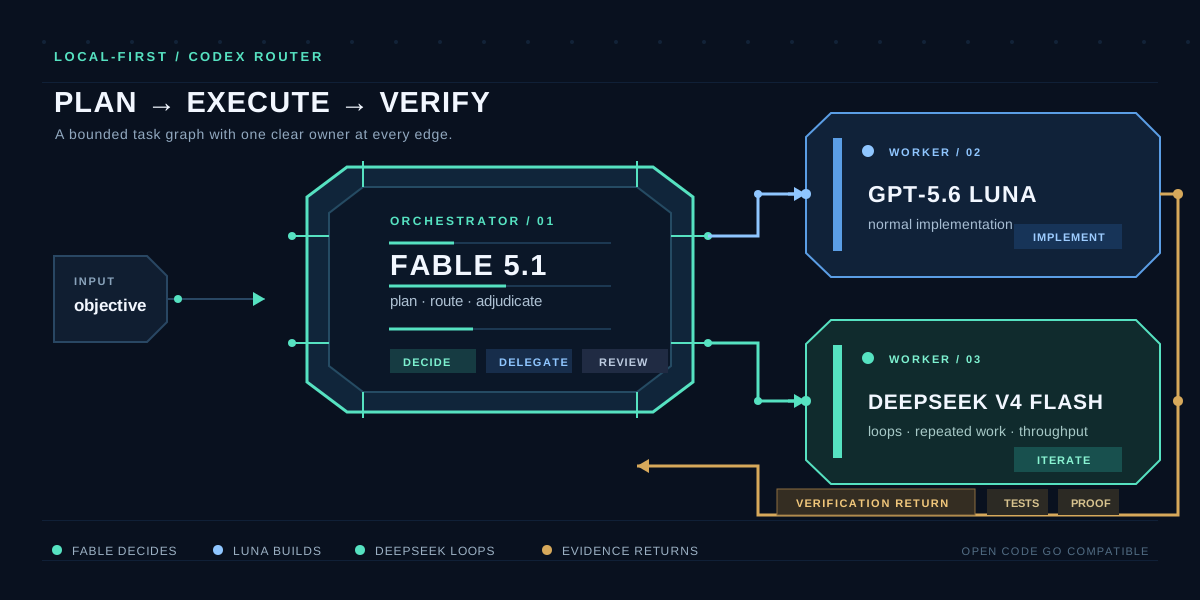
 Fable 是一个本地优先的 Codex 路由技能,负责规划和裁决任务,把范围有限的实现工作委派给 OpenCode Go 智能体——日常工作用 GPT-5.6 Luna,循环和高吞吐迭代用 DeepSeek V4 Flash。
这是一个独立应用还是现有工具的技能?它是一个 Codex 技能,不是独立应用:skill/fable/ 下的三个文件会被复制进 Codex 的 skills 文件夹,Codex 仍是运行时,Fable 只负责规划和裁决,不写代码。
它是一个 Codex 技能,不是独立应用:skill/fable/ 下的三个文件会被复制进 Codex 的 skills 文件夹,Codex 仍是运行时,Fable 只负责规划和裁决,不写代码。使用 Fable 之前需要先配置什么?你需要配置好 Codex,在 Codex Router 中配置 OpenCode Go 智能体(GPT-5.6 Luna 和 DeepSeek V4 Flash),另外还要有 Claude Code 的本地 fable 别名,askfable.sh 会调用它。
你需要配置好 Codex,在 Codex Router 中配置 OpenCode Go 智能体(GPT-5.6 Luna 和 DeepSeek V4 Flash),另外还要有 Claude Code 的本地 fable 别名,askfable.sh 会调用它。如果所需的模型不可用会怎样?如果 GPT-5.6 Luna 和 DeepSeek V4 Flash 都无法通过 OpenCode Go 调用,Fable 会报告一个阻塞问题而不是替换成别的模型;另外,更改提供商或智能体定义后必须重启 Codex。
如果 GPT-5.6 Luna 和 DeepSeek V4 Flash 都无法通过 OpenCode Go 调用,Fable 会报告一个阻塞问题而不是替换成别的模型;另外,更改提供商或智能体定义后必须重启 Codex。Fable 会碰我的凭据吗?不会——该技能及其安装器从不读取、创建或修改凭据,传给它的任何数据包都只能包含决策和工作区事实。
不会——该技能及其安装器从不读取、创建或修改凭据,传给它的任何数据包都只能包含决策和工作区事实。为什么有两个不同的实现模型而不是一个?GPT-5.6 Luna 负责常规实现,DeepSeek V4 Flash 专用于循环、重复迭代和高吞吐工作,这样 Fable 可以把每项任务路由到最适合它的模型。
GPT-5.6 Luna 负责常规实现,DeepSeek V4 Flash 专用于循环、重复迭代和高吞吐工作,这样 Fable 可以把每项任务路由到最适合它的模型。测试怎么跑?仓库的轻依赖测试套件会检查 shell 语法、复制过来的源文件、必需的路由字符串、基本 YAML 结构、可选的 XML/SVG 校验、临时主目录试运行、幂等复制,并扫描形似凭据的字符串,全程不需要 PyYAML 或真实的 Claude 登录。
仓库的轻依赖测试套件会检查 shell 语法、复制过来的源文件、必需的路由字符串、基本 YAML 结构、可选的 XML/SVG 校验、临时主目录试运行、幂等复制,并扫描形似凭据的字符串,全程不需要 PyYAML 或真实的 Claude 登录。Fable 如何判断任务何时需要再次决策?Codex 校验 Fable 返回的图,并行启动就绪的 worker,收集它们的证据并验证结果,只有当任务需要再次决策时才回头调用 Fable 进行裁决。
Codex 校验 Fable 返回的图,并行启动就绪的 worker,收集它们的证据并验证结果,只有当任务需要再次决策时才回头调用 Fable 进行裁决。What are similar projects?pstack-claude, council-of-high-intelligence, ordewell, agents, ruflo, foreman, pstack, hyperfide
pstack-claude, council-of-high-intelligence, ordewell, agents, ruflo, foreman, pstack, hyperfideWhich topics is it in?bash, agent-skill, gpt, harness, opencode, orchestration, agent-orchestration, cli-tool, skill, shell, deepseek, agentic-ai
bash, agent-skill, gpt, harness, opencode, orchestration, agent-orchestration, cli-tool, skill, shell, deepseek, agentic-ai