
What is this?
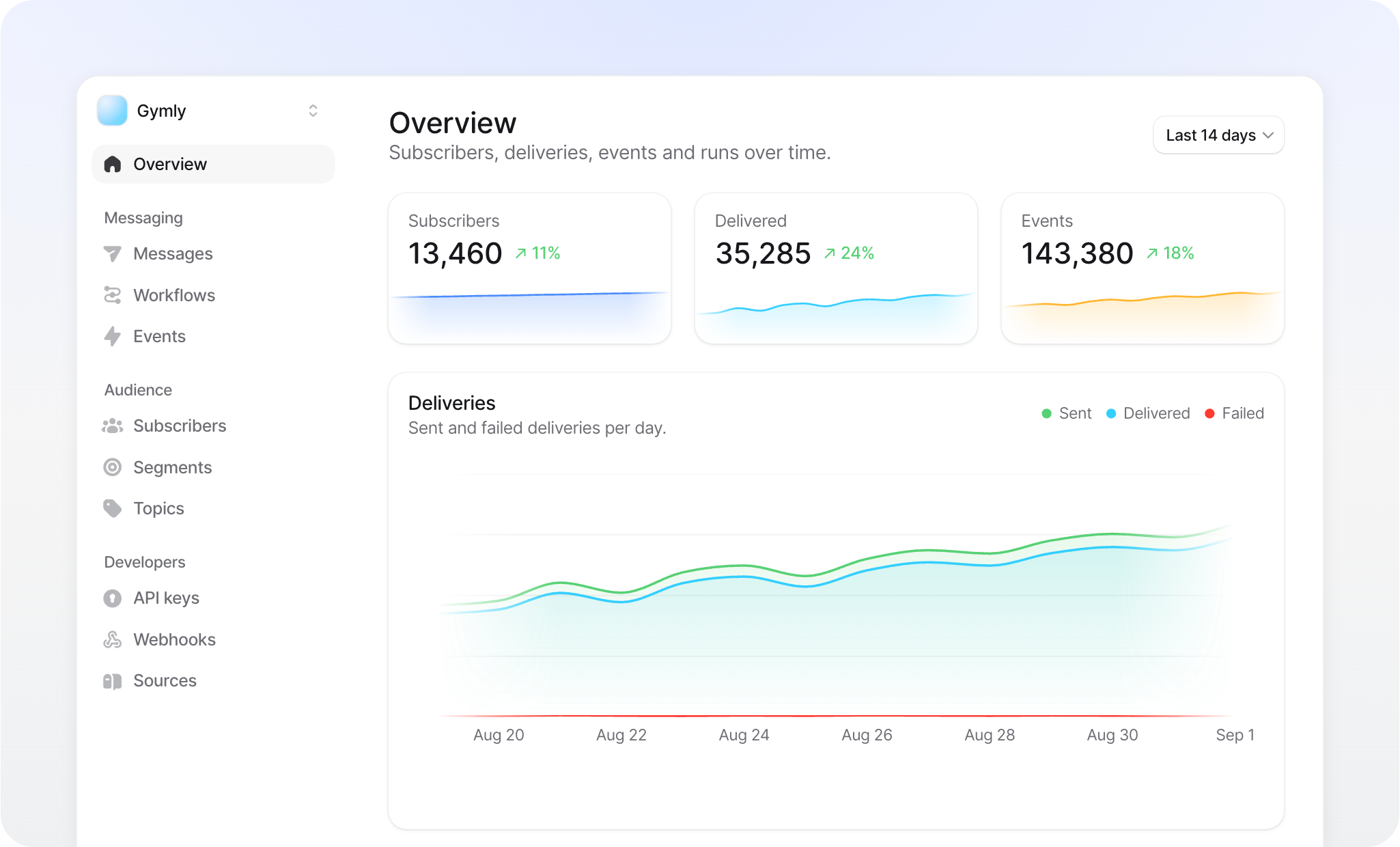
 BuzzKit is an open source orchestration layer for notifications: you plug in your own provider keys, and it handles subscriber management, targeting, preferences, scheduling, workflows, retries and delivery receipts behind one API and one dashboard.
BuzzKit is an open source orchestration layer for notifications: you plug in your own provider keys, and it handles subscriber management, targeting, preferences, scheduling, workflows, retries and delivery receipts behind one API and one dashboard.Do I use the hosted buzzkit.dev or run my own instance?Both options exist: use the managed service at buzzkit.dev, or self-host the exact same codebase.
Both options exist: use the managed service at buzzkit.dev, or self-host the exact same codebase.How do I get a development environment running?Install Bun and Docker, set BETTERAUTHSECRET, CREDENTIALMASTERKEYV1 and SQIDSALPHABET in the API's .dev.vars, then run bun db:up to start PostgreSQL and Tinybird Local in Docker before running bun dev.
Install Bun and Docker, set BETTERAUTHSECRET, CREDENTIALMASTERKEYV1 and SQIDSALPHABET in the API's .dev.vars, then run bun db:up to start PostgreSQL and Tinybird Local in Docker before running bun dev.What do I need to self-host this for real?A Cloudflare account for Workers, KV, Queues, Durable Objects and Hyperdrive, plus PostgreSQL and Tinybird; a full self-hosting guide is still being written.
A Cloudflare account for Workers, KV, Queues, Durable Objects and Hyperdrive, plus PostgreSQL and Tinybird; a full self-hosting guide is still being written.Which notification channels can I actually send through today?Only iOS push is live right now; Android, email, SMS, web push and in-app messaging are still on the roadmap as planned connectors.
Only iOS push is live right now; Android, email, SMS, web push and in-app messaging are still on the roadmap as planned connectors.Where does the mobile SDK live?The iOS SDK is kept in a separate repository, buzzkit-dev/buzzkit-ios, and it's what keeps subscriber and device state synced with BuzzKit.
The iOS SDK is kept in a separate repository, buzzkit-dev/buzzkit-ios, and it's what keeps subscriber and device state synced with BuzzKit.What's the catch with the AGPL license?The core is AGPLv3, so if you run a modified version as a network service, you're obligated to share that modified source too.
The core is AGPLv3, so if you run a modified version as a network service, you're obligated to share that modified source too.What does the workflow engine actually decide?Workflows decide what to send and when, triggered by events your app and backend report, while the SDK keeps subscriber and device state continuously in sync.
Workflows decide what to send and when, triggered by events your app and backend report, while the SDK keeps subscriber and device state continuously in sync.Is there an API reference available?Yes, the API ships with an OpenAPI/Swagger reference at /swagger, alongside a separate documentation site with guides.
Yes, the API ships with an OpenAPI/Swagger reference at /swagger, alongside a separate documentation site with guides.What are similar projects?novu, goshen-email, apprise, react-starter-kit, mail2telegram, open-connector, bisibility, fleetbase
novu, goshen-email, apprise, react-starter-kit, mail2telegram, open-connector, bisibility, fleetbaseWhich topics is it in?beta, queue, turborepo, swagger, push-notifications, openapi, cloudflare-workers, notifications, bun, agplv3, saas, email
beta, queue, turborepo, swagger, push-notifications, openapi, cloudflare-workers, notifications, bun, agplv3, saas, email