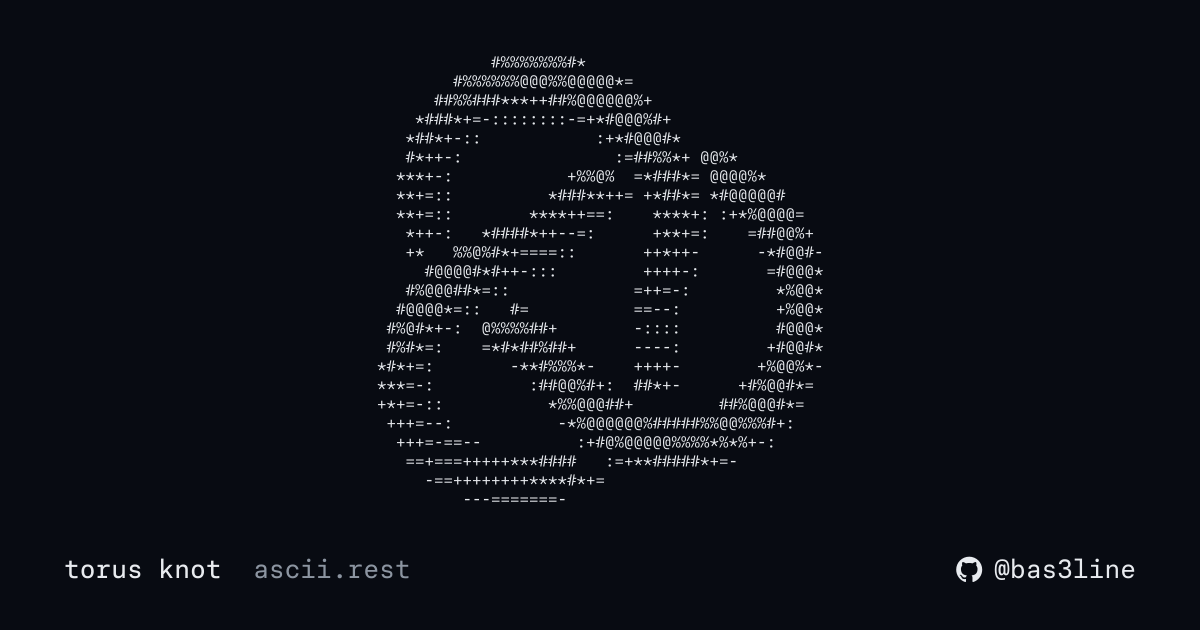
Written in TypeScript by @bas3line. 216 pieces, from full-colour scenes to loaders, charts, language logos, Linux distros, spinning shapes and physics. The donut above turns on a page with one tag: <ascii-art piece="donut"></ascii-art>. See them all at ascii.rest.
Why
I've always been a fan of Markdown files and terminal-style websites: plain text, one monospace face, nothing that moves without a reason. The kind of quiet web that planetscale.com does well. So I made this, a way to put a little motion on pages like that without giving up the style. If you like minimalism, this library is for you.
Install
npm install ascii.rest
Or skip installing: the HTML tag loads everything from ascii.rest.
React and Next.js
import { Ascii } from "ascii.rest/react";
import { donut } from "ascii.rest/pieces";

<Ascii piece={donut} />
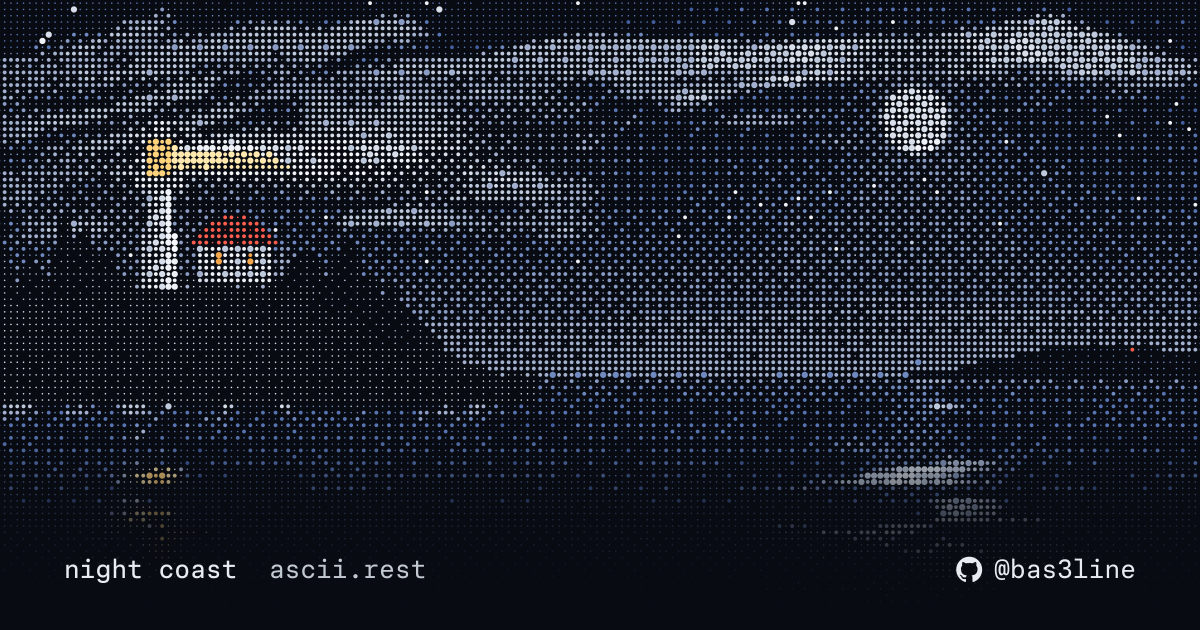
<Ascii piece="night-coast" />                          // fetched by name when it mounts
<Ascii piece={donut} options={{ fps: 12 }} className="art" />
<Ascii piece="rust" mono />                            // a logo in one ink
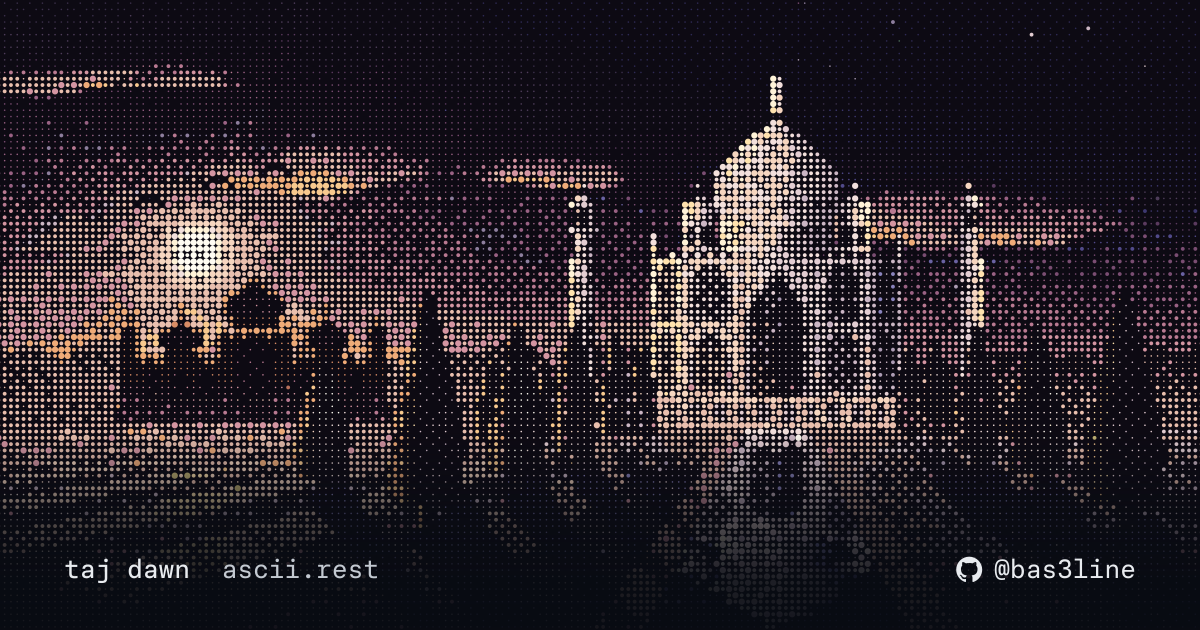
Ascii is a client component ("use client"), so it goes straight into the Next.js app router. Text pieces draw into a <pre> in its colour and font size; the coloured ones, scenes, logos, companies and distros, draw onto a <canvas> as wide as its container, or into a <pre> in one ink with mono.
Astro
---
import Ascii from "ascii.rest/astro";
---

<Ascii piece="donut" />
<Ascii piece="big-text" options={{ text: "hello" }} class="banner" />
The first frame is rendered on the server, so the page is whole before any script runs; the piece starts playing once the page loads.
HTML, no build step
<script type="module" src="https://ascii.rest/ascii.js"></script>

<ascii-art piece="donut"></ascii-art>
Style it like text: ascii-art { font-size: 10px; color: teal; }. The logos, companies and distros come in their own colours; add mono, <ascii-art piece="rust" mono>, to draw one in the text's colour instead. In a bundled app, import "ascii.rest/element" defines the same tag.
In a GitHub README
A README runs no script, so every logo, company and distro also comes as an animated SVG, one loop of its glint or scan, at https://ascii.rest/svg/<name>.svg for light pages and <name>.dark.svg for dark ones:
<picture>
  <source media="(prefers-color-scheme: dark)" srcset="https://ascii.rest/svg/rust.dark.svg">
  <img alt="rust" src="https://ascii.rest/svg/rust.svg" width="320">
</picture>
GitHub shows the dark one in its dark theme. Each piece's page on ascii.rest has its snippet under readme.
In a terminal
npx ascii.rest rust                        # plays until you press a key
npx ascii.rest night-coast --seconds 10
npx ascii.rest list                        # every piece's name, by category
The logos, companies, distros and scenes play in their own colours, in 24-bit colour. A scene is shrunk to fit the terminal, whatever its size, and drawn in tones, two of its rows in each of the terminal's as half blocks, so the dots it is made of blend as they do on a page. --mono draws a coloured piece in the terminal's own colour, for a terminal without 24-bit colour, and --light takes the colours meant for a light background. --fps and --seconds set the speed and the length. The piece plays centred; any other piece wider or taller than the terminal shows only its middle, and it says so when it stops. Piped or redirected, it prints its first frame as text.
As a splash screen
import { play } from "ascii.rest/terminal";

const { interrupted } = await play("command-code", { seconds: 2 });
if (interrupted) process.exit(130);
play(piece, options?) takes a piece module or a name and resolves when the piece stops: after seconds, on any key, or on Ctrl+C, which sets interrupted. It plays on the alternate screen with the cursor hidden, and puts the terminal back however it stops, on an error too. When the output is not a terminal it draws nothing and resolves at once, so a pipe or a CI log never gets a splash. It uses only Node's own modules.
| option |
|
seconds |
how long it plays; until a key is pressed by default |
mono |
draws a coloured piece in the terminal's own colour |
light |
for a light terminal: the light colours, and shaded pieces flipped |
fps |
frames a second, instead of the piece's own |
options |
the piece's option overrides: { text: "hello" } |
out |
where it draws: process.stdout by default |
It resolves with { interrupted, cropped, piece, terminal }: cropped is true when the terminal was smaller than the piece, whose size and the terminal's are in piece and terminal.
TypeScript, anywhere
import { mount } from "ascii.rest";
import { donut } from "ascii.rest/pieces";

const stop = mount(document.querySelector("pre")!, donut, { fps: 12 });
API
mount(element, piece, options?)
Plays piece in element and returns a function that stops it.
element: a <pre> for text pieces, a <canvas> for the coloured ones (canvas.has(name) tells you which). A coloured piece in a <pre> is drawn in one ink.piece: a piece module, such as donut from ascii.rest/pieces.options: overrides the piece's option defaults, plus fps to change its frame rate, and motion: true to play even when the reader prefers reduced motion. Pieces hold their first frame for those readers by default; set motion only behind a control the reader chooses, like the site's [play anyway].
load, names, canvas, isPiece
From ascii.rest. load["night-coast"]() imports any piece by name, names lists every name, canvas is the set of pieces drawn on a canvas, and isPiece(name) narrows a string to a piece name.
<Ascii> (React)
| prop |
type |
|
piece |
piece module or name |
a module is bundled, a name is fetched when it mounts |
options |
object |
option overrides, and fps |
label |
string |
what it shows, for screen readers; the piece's name by default |
mono |
boolean |
draws a coloured piece in one ink, in a <pre> |
className, style |
|
passed to the <pre> or <canvas> |
<Ascii> (Astro)
piece (a name), options, fps, label, mono and class.
<ascii-art>
| attribute |
|
piece |
a piece's name: donut, night-coast |
src |
or the URL of any module that follows the piece contract |
fps |
overrides the frame rate |
options |
JSON overriding the option defaults: '{"text":"hello"}' |
label |
what it shows, for screen readers |
mono |
draws a coloured piece in one ink, the text's colour |
Browser support
Any current browser: it needs ES modules, custom elements and IntersectionObserver, plus ResizeObserver for the coloured pieces. Importing any module on a server, for server rendering, is safe: nothing touches the DOM until a piece is mounted.
Many pieces draw with box drawing and block glyphs (─ │ ╭ █ ▄ ░). Where the system monospace face has none, as on Android, the tag and the Astro component take them from "ascii.rest mono", a 3 KB cut of JetBrains Mono (OFL) served by ascii.rest, so every row keeps its width. Only a browser that lacks the glyphs fetches it. With React, put it in your own <pre>'s font stack:
@font-face {
  font-family: "ascii.rest mono";
  src: url("https://ascii.rest/fonts/ascii-rest-mono.woff2") format("woff2");
  unicode-range: U+00B0, U+00B7, U+2022, U+2500-259F, U+25CF;
}
pre.art { font-family: ui-monospace, SFMono-Regular, Menlo, Consolas, "Liberation Mono", "ascii.rest mono", monospace; }
Pieces
| category |
pieces |
| scenes |
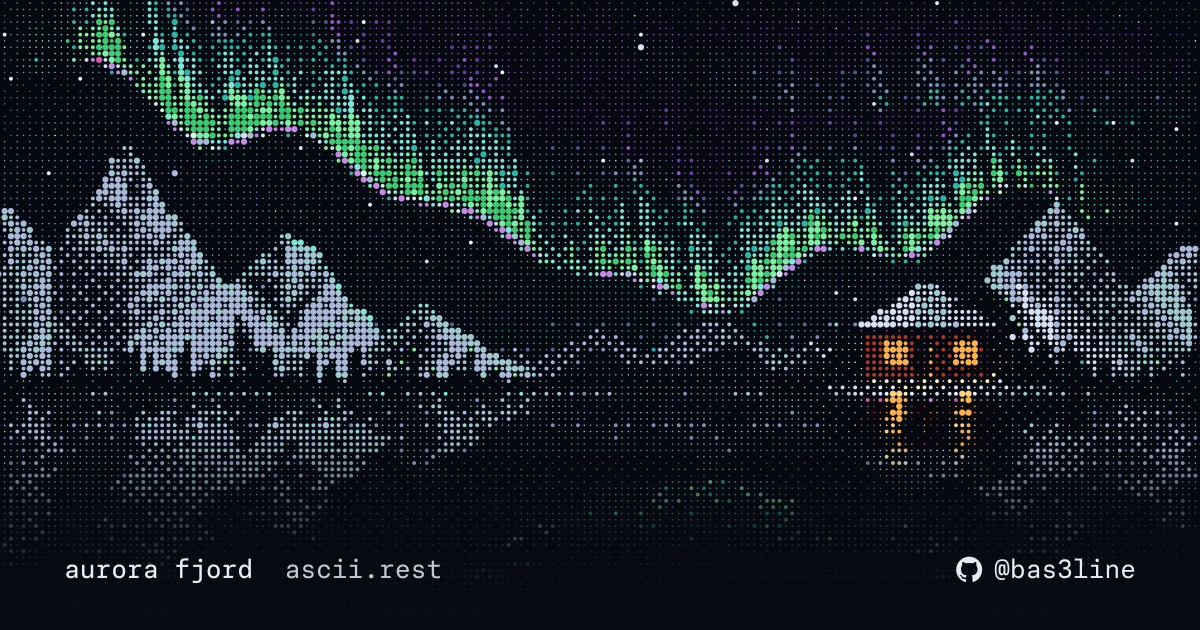
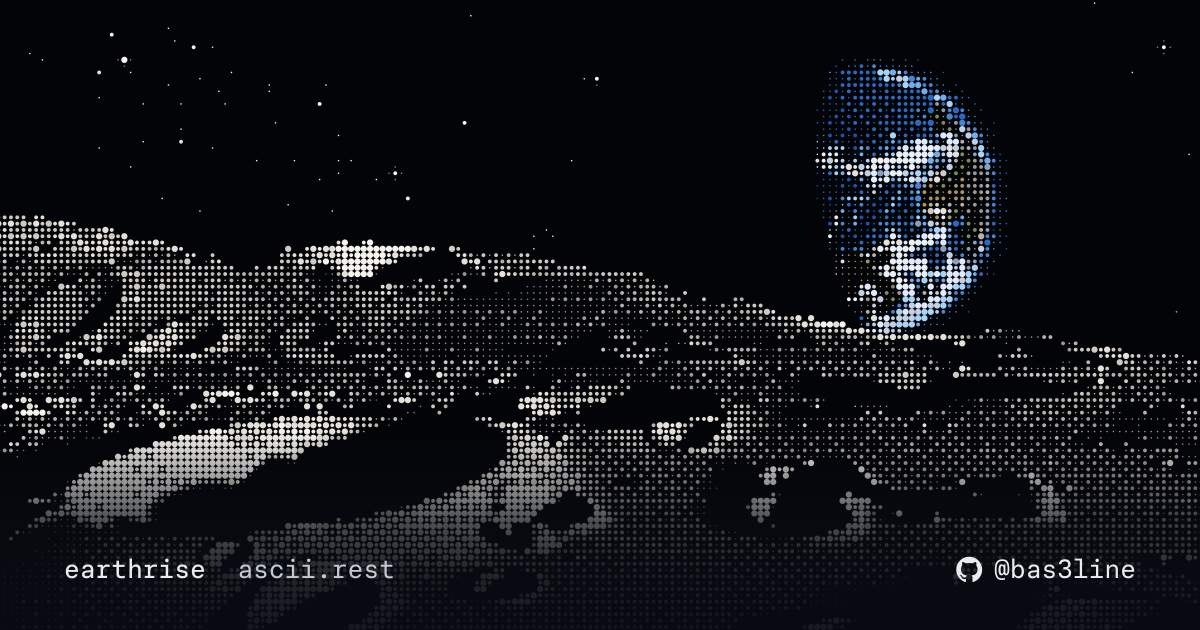
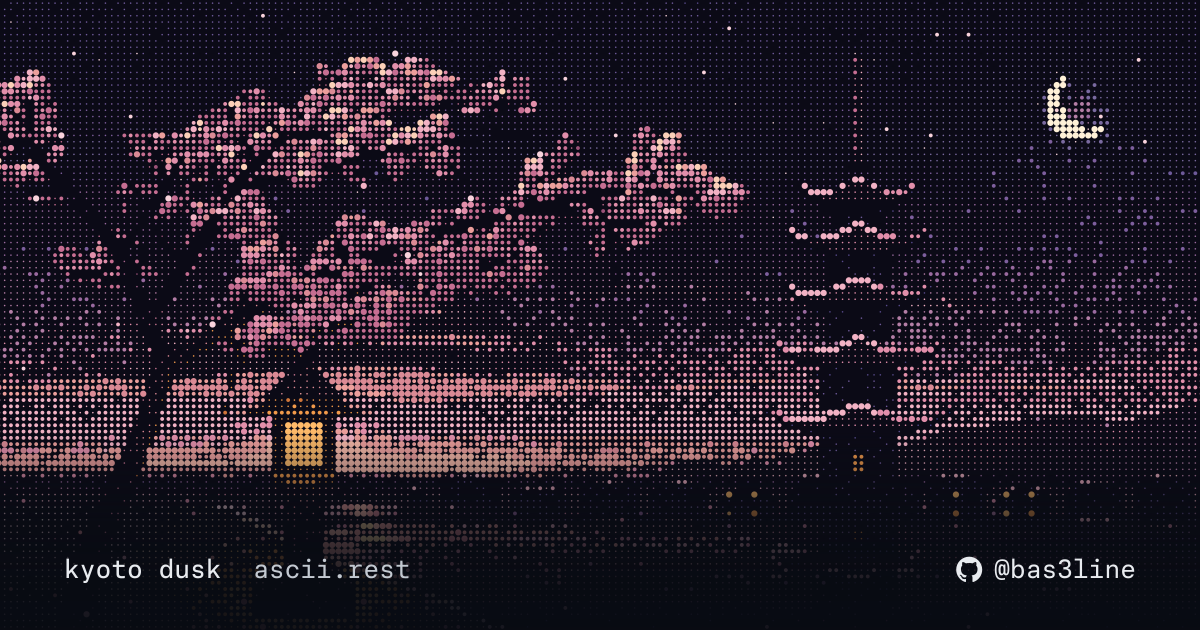
alpine dawn, aurora fjord, deep reef, desert night, earthrise, kyoto dusk, lantern lake, marine drive, misty forest, night coast, ocean sunset, storm plains, taj dawn, tokyo rain, varanasi ghats |
| ui |
boot log, box frames, calendar, digital clock, dividers, file tree, form controls, not found, progress bar, skeleton, spinners, terminal |
| data |
bar chart, candlesticks, cpu meters, equalizer, gauge, heartbeat, heatmap, radar, sparkline, uptime bar |
| type |
big text, dissolve, glitch, marquee, morse, scramble, split-flap, typewriter, wave text |
| logos |
c, c#, c++, clojure, css, dart, elixir, elm, erlang, go, haskell, html, java, javascript, julia, kotlin, lua, ocaml, perl, php, python, r, ruby, rust, scala, svelte, swift, typescript, zig |
| companies |
a0, agentmail, apple, autumn, cloudflare, coderabbit, collabute, command code, databuddy, greptile, helium, keiki, mintlify, orchid, planetscale, playstation, polar, supabase, supermemory, vercel |
| distros |
almalinux, alpine linux, arch linux, centos, debian, deepin, elementary os, endeavouros, fedora, gentoo, kali linux, linux mint, manjaro, nixos, omarchy, opensuse, pop!_os, red hat, rocky linux, tux, ubuntu, void linux, zorin os |
| shapes |
cube, dna helix, donut, glxgears, gyroscope, heart, icosahedron, mobius strip, spring, tesseract, torus knot, twisted ring |
| space |
black hole, earth, eclipse, galaxy, moon phases, planet, rocket, saptarishi, solar system, starfield, three-body |
| physics |
bouncing balls, chladni plate, double pendulum, falling sand, flag, fountain, harmonograph, lorenz attractor, newton's cradle, pendulum wave, plucked string, pond ripples, smoke, wave interference |
| nature |
aurora, bonsai, campfire, cherry blossom, contour map, fern, fireflies, fractal tree, landscape, lightning, rain, ruled mountains, sea swell, snowfall, sunrise, wind |
| creatures |
aquarium, butterfly, cat, fox, jellyfish, owl, snake, spider, starlings, whale |
| objects |
analog clock, candle, coffee, ferris wheel, hawa mahal, hourglass, kite, lava lamp, lighthouse, skyline, sundial, train, vinyl, windmill |
| generative |
epicycles, flow field, glider gun, hilbert curve, julia set, langton's ant, mandelbrot, maze, plasma, reaction diffusion, rule 30, sierpinski, voronoi |
| effects |
doom fire, fireworks, matrix rain, rotozoomer, sparks, synthwave, tunnel, tv static |
The logos and distros are drawn from devicon (MIT) and Simple Icons (CC0); omarchy's mark there is its own, MIT licensed, from omarchy.org. The companies are drawn from Simple Icons too, and a0, agentmail, autumn, coderabbit, collabute, command code, databuddy, greptile, keiki, orchid, polar and supermemory from their own marks on a0.dev, agentmail.to, useautumn.com, coderabbit.ai, collabute.ai, commandcode.ai, databuddy.cc, greptile.com, onkeiki.com, orchid.ai, polar.sh and supermemory.ai. Each is a trademark of its owner, shown here to name the language, the distribution or the company.
Contributing
New pieces, fixes and ideas are welcome. CONTRIBUTING.md covers the piece contract, the checks and how to open a pull request, and the code of conduct applies everywhere. Found a security problem? See SECURITY.md.
Author
Made by @bas3line. If you use it, a link back is appreciated, and so is a star.
To support it: GitHub Sponsors, Buy Me a Coffee or PayPal.
License
MIT, © @bas3line







 ascii 是一个 TypeScript 库,收录 216 件网页用的动态 ASCII 艺术作品,可用于 React、Next.js、Astro、纯 HTML、终端和 GitHub README。