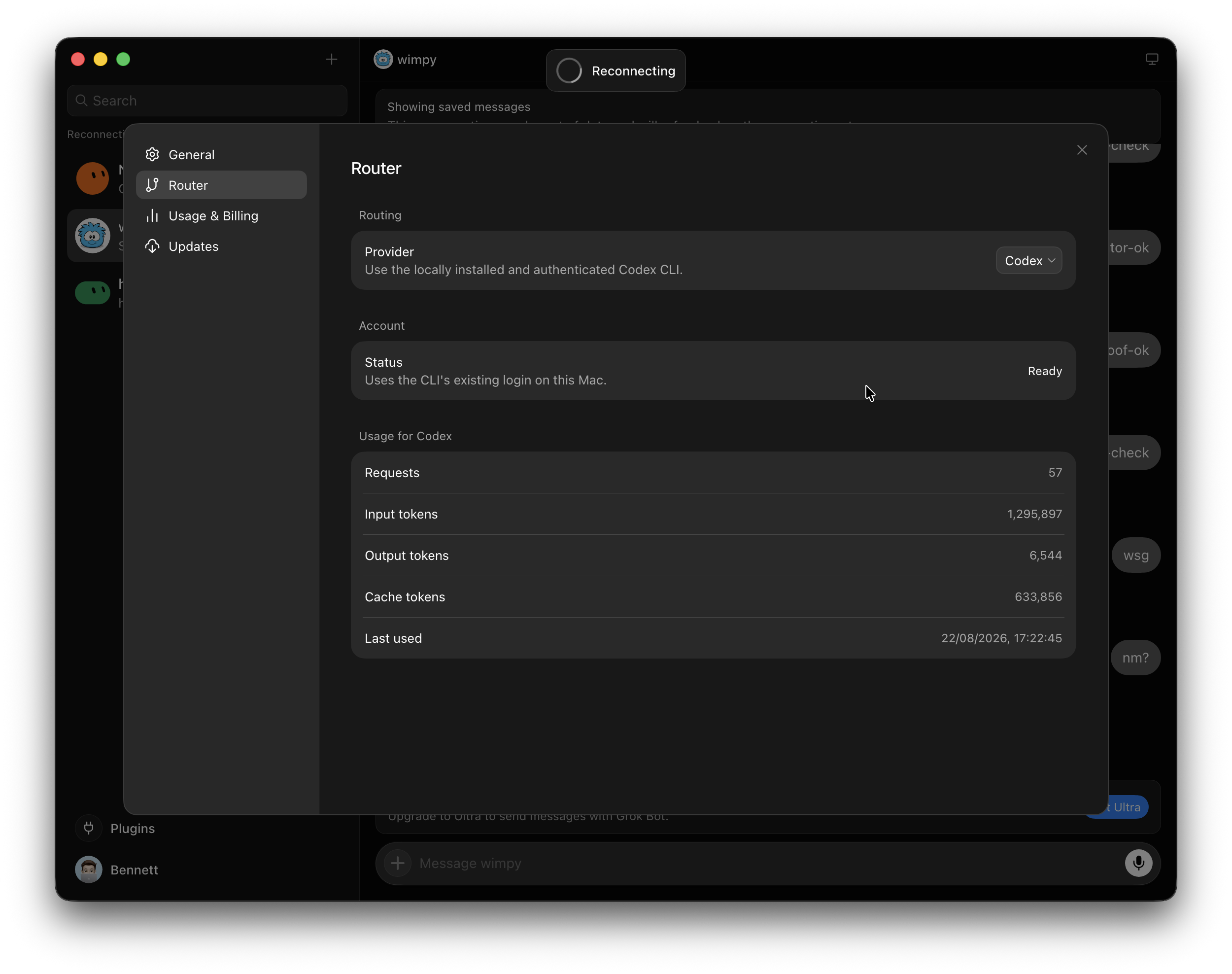
Что это?
 Это неофициальная, ориентированная на исходники реконструкция публично выпускавшегося macOS-приложения Grok Bot 0.18.0, пересобранная в читаемые исходники на TypeScript и расширенная роутером инференса, инструментами MCP, локальным учетом использования и опциональной локальной Docker-песочницей.
Это неофициальная, ориентированная на исходники реконструкция публично выпускавшегося macOS-приложения Grok Bot 0.18.0, пересобранная в читаемые исходники на TypeScript и расширенная роутером инференса, инструментами MCP, локальным учетом использования и опциональной локальной Docker-песочницей.Это официальный релиз Grok Bot или сборка, полученная реверс-инжинирингом?Это реконструкция в духе хакинга/исследования, а не оригинальные исходники Anysphere и не официальный релиз; она комбинирует восстановленный код рантайма из source/ с оригинальным минифицированным renderer из поставки в качестве базового UI.
Это реконструкция в духе хакинга/исследования, а не оригинальные исходники Anysphere и не официальный релиз; она комбинирует восстановленный код рантайма из source/ с оригинальным минифицированным renderer из поставки в качестве базового UI.Как собрать и запустить реконструированное приложение?Выполните 'npm run bootstrap', чтобы скачать и проверить по SHA-256 зафиксированный DMG 0.18.0 (или укажите GROKBOT018APP на существующую копию), затем выполните 'npm run package', чтобы скомпилировать рантаймы, пропатчить renderer и получить подписанный ad-hoc app bundle.
Выполните 'npm run bootstrap', чтобы скачать и проверить по SHA-256 зафиксированный DMG 0.18.0 (или укажите GROKBOT018APP на существующую копию), затем выполните 'npm run package', чтобы скомпилировать рантаймы, пропатчить renderer и получить подписанный ad-hoc app bundle.Что нужно установить перед сборкой?Нужны macOS на Apple Silicon, Node.js 26.5.x, Xcode Command Line Tools и Git LFS; Docker Desktop требуется только если нужна локальная песочница, а режимы роутера Claude Code/Codex требуют, чтобы эти приложения уже были залогинены локально.
Нужны macOS на Apple Silicon, Node.js 26.5.x, Xcode Command Line Tools и Git LFS; Docker Desktop требуется только если нужна локальная песочница, а режимы роутера Claude Code/Codex требуют, чтобы эти приложения уже были залогинены локально.Можно ли на это долго полагаться или это разовый эксперимент?Это явно экспериментальный проект: он нацелен только на один зафиксированный релиз macOS/arm64, зависит от того, остаются ли действительными внешние сессии провайдеров, и не обещает работы с будущими версиями Grok Bot.
Это явно экспериментальный проект: он нацелен только на один зафиксированный релиз macOS/arm64, зависит от того, остаются ли действительными внешние сессии провайдеров, и не обещает работы с будущими версиями Grok Bot.Можно ли собрать и запустить это и на Windows?Нет — сборка и запуск реконструкции требуют macOS на Apple Silicon; установщик Windows 0.18.0 сохранен лишь как артефакт исследования с контрольными суммами в research-archives/, а не как поддерживаемая цель сборки.
Нет — сборка и запуск реконструкции требуют macOS на Apple Silicon; установщик Windows 0.18.0 сохранен лишь как артефакт исследования с контрольными суммами в research-archives/, а не как поддерживаемая цель сборки.Через каких AI-провайдеров можно направлять инференс?Router поддерживает Cursor (по умолчанию, через вашу существующую сессию), Claude Code и Codex (с переиспользованием локальных авторизованных входов, без дополнительного API-ключа) и OpenRouter через сохраненный API-ключ.
Router поддерживает Cursor (по умолчанию, через вашу существующую сессию), Claude Code и Codex (с переиспользованием локальных авторизованных входов, без дополнительного API-ключа) и OpenRouter через сохраненный API-ключ.Проект активно поддерживается?Нет — репозиторий заархивирован, то есть заморожен как экспериментальный исследовательский снимок, а не активно развиваемый проект.
Нет — репозиторий заархивирован, то есть заморожен как экспериментальный исследовательский снимок, а не активно развиваемый проект.Что заменяет локальная Docker-песочница?Она заменяет удаленную исполнительную машину локальным контейнером, доступным только через loopback, с тем же box host и демоном выполнения, монтирующим контентно-адресуемые артефакты в режиме только чтения.
Она заменяет удаленную исполнительную машину локальным контейнером, доступным только через loopback, с тем же box host и демоном выполнения, монтирующим контентно-адресуемые артефакты в режиме только чтения.Почему весь UI не пересобрали с нуля?В поставляемом приложении были только минифицированные production JS/CSS без source map, поэтому воссоздание полного оригинального React-фронтенда было за рамками; вместо этого команда сохранила проверенный по контрольным суммам renderer из поставки и сделала узкий патч для нового интерфейса настроек Router.
В поставляемом приложении были только минифицированные production JS/CSS без source map, поэтому воссоздание полного оригинального React-фронтенда было за рамками; вместо этого команда сохранила проверенный по контрольным суммам renderer из поставки и сделала узкий патч для нового интерфейса настроек Router.What are similar projects?claudecodeui, overmind, opensquilla, 1code, opencodex, deer-flow, claude-task-master, CanvasTTY
claudecodeui, overmind, opensquilla, 1code, opencodex, deer-flow, claude-task-master, CanvasTTYWhich topics is it in?llm-router, openrouter, hacking, sandbox, reverse-engineering, electron, cursor, anthropic, codex, research, claude-code, mcp
llm-router, openrouter, hacking, sandbox, reverse-engineering, electron, cursor, anthropic, codex, research, claude-code, mcp