












47.5K ·GitHub
What is this?
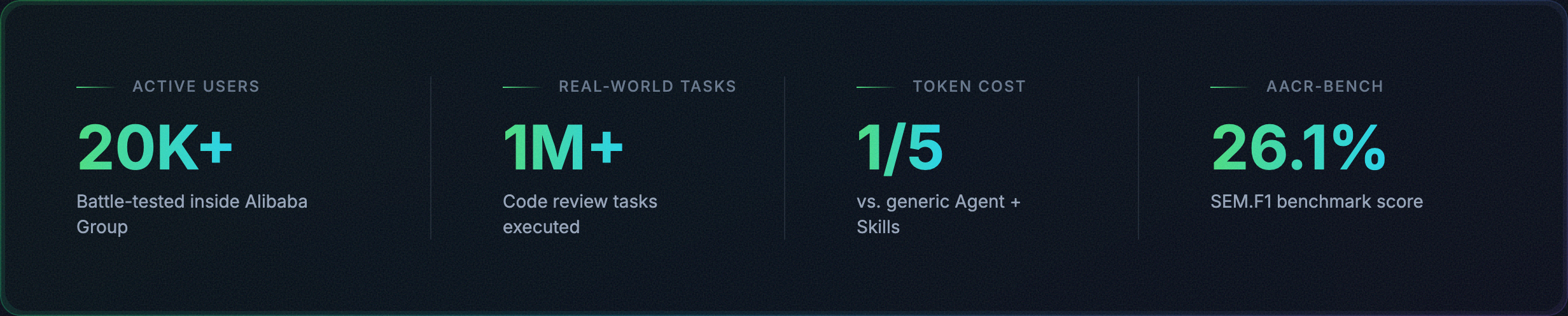
 An AI-powered code review CLI born inside Alibaba: it reads Git diffs, sends changed files to a configurable LLM agent, and returns structured review comments with line-level precision.
An AI-powered code review CLI born inside Alibaba: it reads Git diffs, sends changed files to a configurable LLM agent, and returns structured review comments with line-level precision.Is it a standalone CLI or something that lives inside my editor?A standalone CLI — after install the ocr command works globally. There are also plugins for coding agents (Claude Code, Codex, Cursor, Kimi Code, OpenCode) and an MCP server for extending the review agent.
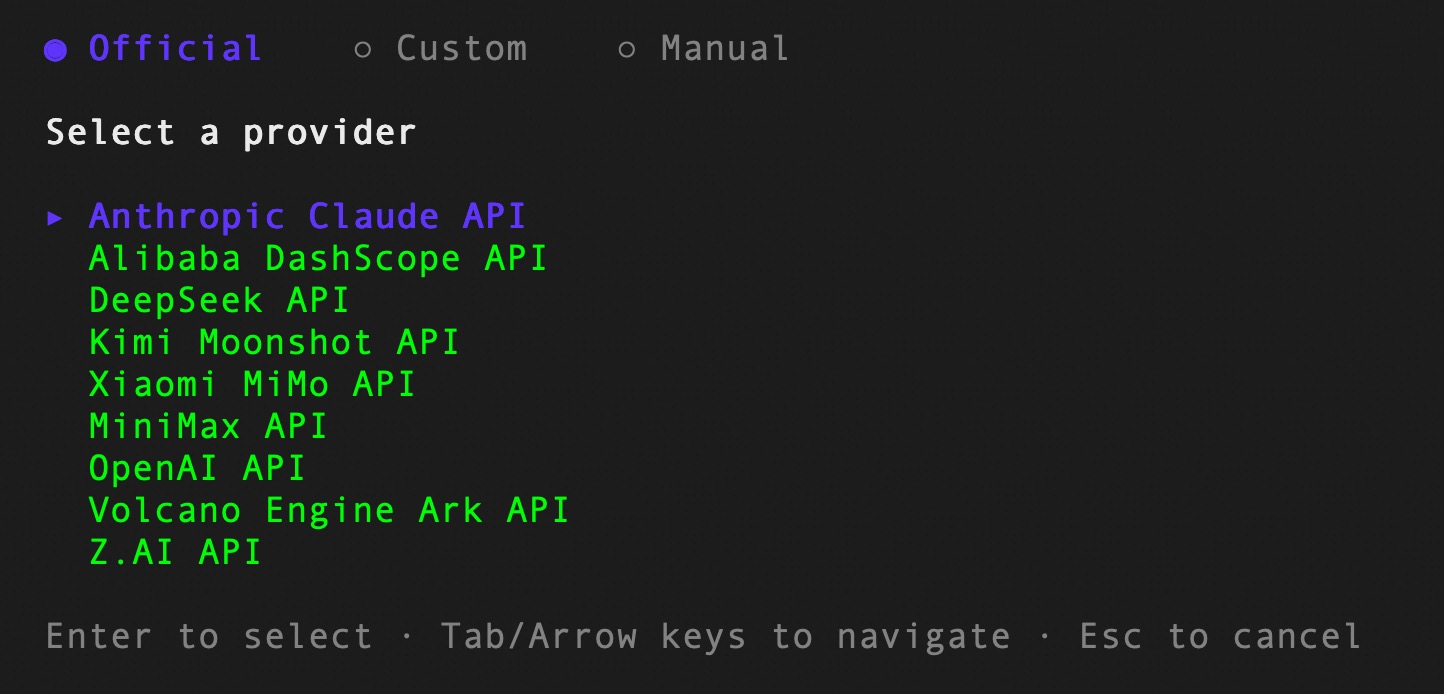
A standalone CLI — after install the ocr command works globally. There are also plugins for coding agents (Claude Code, Codex, Cursor, Kimi Code, OpenCode) and an MCP server for extending the review agent.What does getting it running involve?Install it, then run the interactive setup: it walks you through provider selection, API key entry, and model configuration, and automatically tests connectivity before your first review.
Install it, then run the interactive setup: it walks you through provider selection, API key entry, and model configuration, and automatically tests connectivity before your first review.What needs to be on my machine before it works?Git >= 2.41 is required — ocr leans on Git for diff generation, code search, and repository operations — and you must configure an LLM endpoint before reviewing code.
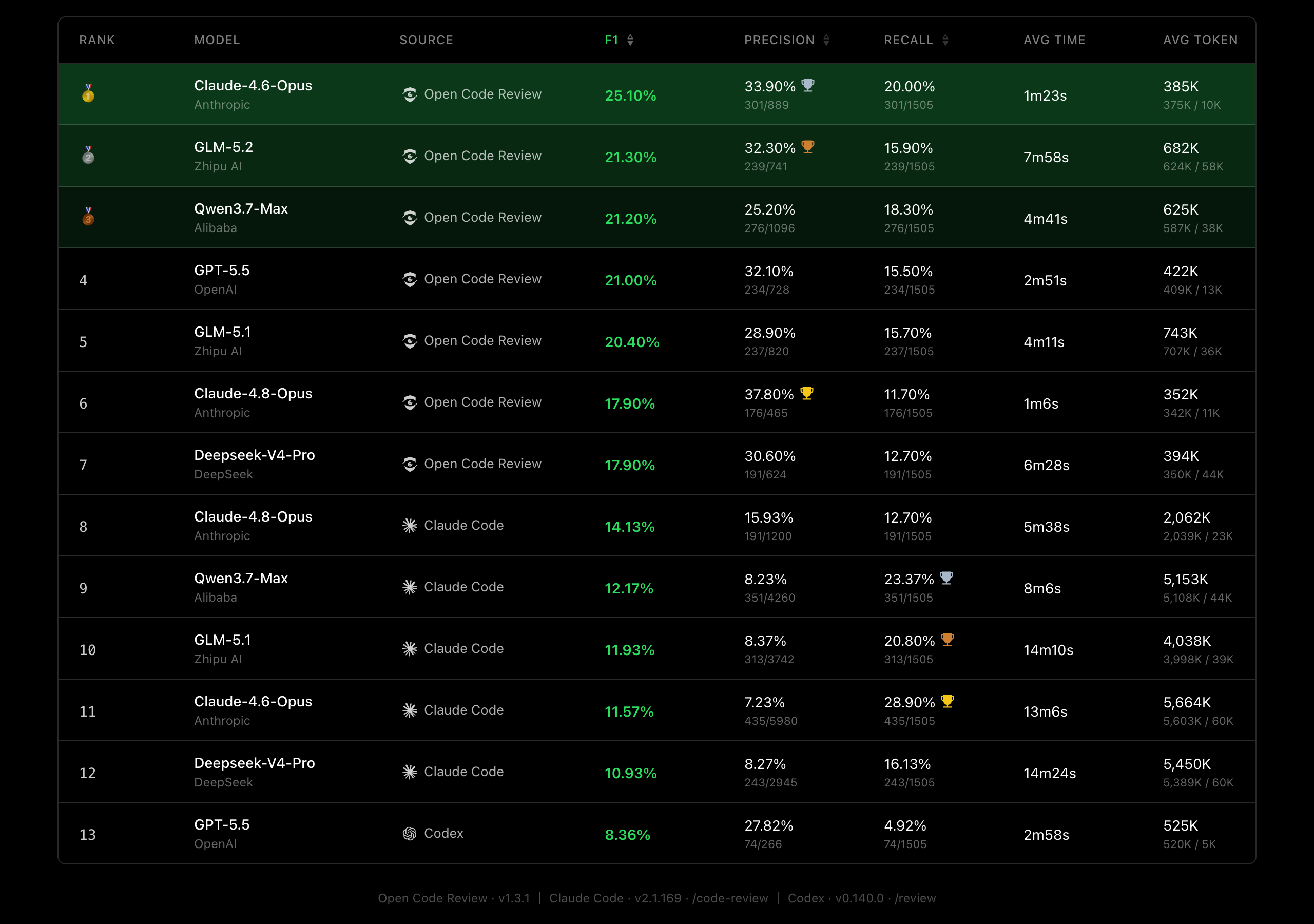
Git >= 2.41 is required — ocr leans on Git for diff generation, code search, and repository operations — and you must configure an LLM endpoint before reviewing code.Will it catch every defect in my changes?No — recall is deliberately lower than general-purpose agents in exchange for precision: fewer false alarms to triage, higher F1, and roughly 1/9 of the tokens per review.
No — recall is deliberately lower than general-purpose agents in exchange for precision: fewer false alarms to triage, higher F1, and roughly 1/9 of the tokens per review.Does it run on all major operating systems?Yes — the docs cover installation across all platforms and package managers, with GitHub Release binaries also offered, so Linux, macOS, and Windows are all covered.
Yes — the docs cover installation across all platforms and package managers, with GitHub Release binaries also offered, so Linux, macOS, and Windows are all covered.What happens to my code during a review?Changed files are sent to the LLM endpoint you configure — ocr reads the Git diff and the agent inspects those files through that model, so your provider choice decides where the code goes.
Changed files are sent to the LLM endpoint you configure — ocr reads the Git diff and the agent inspects those files through that model, so your provider choice decides where the code goes.Why mix deterministic pipelines with an LLM agent?Purely language-driven reviews tend to cut corners on large changesets, drift off the actual code location, and fluctuate with prompt tweaks. Here engineering logic locks down file selection, bundling, and rule matching, while the agent handles dynamic decisions and context retrieval.
Purely language-driven reviews tend to cut corners on large changesets, drift off the actual code location, and fluctuate with prompt tweaks. Here engineering logic locks down file selection, bundling, and rule matching, while the agent handles dynamic decisions and context retrieval.Can it review whole files, not just diffs?Yes — ocr scan reviews entire files, aimed at auditing unfamiliar codebases or directories where there is no meaningful diff to look at.
Yes — ocr scan reviews entire files, aimed at auditing unfamiliar codebases or directories where there is no meaningful diff to look at.What is Delegation Mode?An execution mode where your coding agent runs the review with its own LLM, so no OCR API key is needed; by default OCR runs reviews with the model you configured for it.
An execution mode where your coding agent runs the review with its own LLM, so no OCR API key is needed; by default OCR runs reviews with the model you configured for it.Can reviews run automatically in CI?Yes — the docs cover GitHub Actions, GitLab CI, GitFlic CI, and Gerrit integration, so reviews can run on every pull request.
Yes — the docs cover GitHub Actions, GitLab CI, GitFlic CI, and Gerrit integration, so reviews can run on every pull request.What are similar projects?Benzi, pstack-claude, openqodex, semgrep, github-mcp-server, claude-code-action, pr-agent, codex-guard
Benzi, pstack-claude, openqodex, semgrep, github-mcp-server, claude-code-action, pr-agent, codex-guardWhich topics is it in?gitlab, pull-request, ci-cd, code-quality, code-review, static-analysis, harness, github-actions, cursor, anthropic, mcp-server, coding-agent
gitlab, pull-request, ci-cd, code-quality, code-review, static-analysis, harness, github-actions, cursor, anthropic, mcp-server, coding-agent