





Что это такое?
 opengrok позволяет запускать другие LLM (Claude, GLM, Qwen, Gemini, DeepSeek, локальные модели) внутри существующей десктоп-установки Grok Bot, с картами формата запросов, основанными на доказательствах, чтобы каждая модель получала правильную форму запроса, а не универсальный промпт.
Это отдельное приложение или оно встраивается в Grok Bot?Это конфигурационный сателлит, а не отдельное приложение: он записывает привязки моделей и карты форматов запросов рядом с вашей существующей установкой Grok Bot и указывает ей, с какой моделью общаться, не размещая и не эмулируя сам Grok Bot.
Это конфигурационный сателлит, а не отдельное приложение: он записывает привязки моделей и карты форматов запросов рядом с вашей существующей установкой Grok Bot и указывает ей, с какой моделью общаться, не размещая и не эмулируя сам Grok Bot.Как его запустить?Запустите установщик: он обнаружит вашу установку Grok Bot и работающие сервисы, примет существующие привязки или задаст три вопроса настройки, запишет свой конфиг и базовый снимок машины, затем откроет выбор моделей, где можно выбрать модель, проверить её вживую и сохранить её для каждого агента.
Запустите установщик: он обнаружит вашу установку Grok Bot и работающие сервисы, примет существующие привязки или задаст три вопроса настройки, запишет свой конфиг и базовый снимок машины, затем откроет выбор моделей, где можно выбрать модель, проверить её вживую и сохранить её для каждого агента.Что нужно перед установкой?Работающая десктоп-установка Grok Bot, Python 3.9+, Node 18+ для выбора моделей и карт, а также API-ключи тех провайдеров моделей, которые планируете привязать.
Работающая десктоп-установка Grok Bot, Python 3.9+, Node 18+ для выбора моделей и карт, а также API-ключи тех провайдеров моделей, которые планируете привязать.Работает ли привязка моделей так же на облачных хостах Grok Bot?Нет — стандартные облачные хосты Grok Bot игнорируют сохранённые привязки, пока вы не запустите инструмент box-patch, чтобы установить в хост обработчик привязок; там требуется цепочка local → push → patch → bounce → verify.
Нет — стандартные облачные хосты Grok Bot игнорируют сохранённые привязки, пока вы не запустите инструмент box-patch, чтобы установить в хост обработчик привязок; там требуется цепочка local → push → patch → bounce → verify.Куда попадают мои API-ключи провайдеров?Они остаются локально на вашей машине; opengrok никогда не передаёт ключи за пределы машины и не записывает их в закоммиченный конфиг.
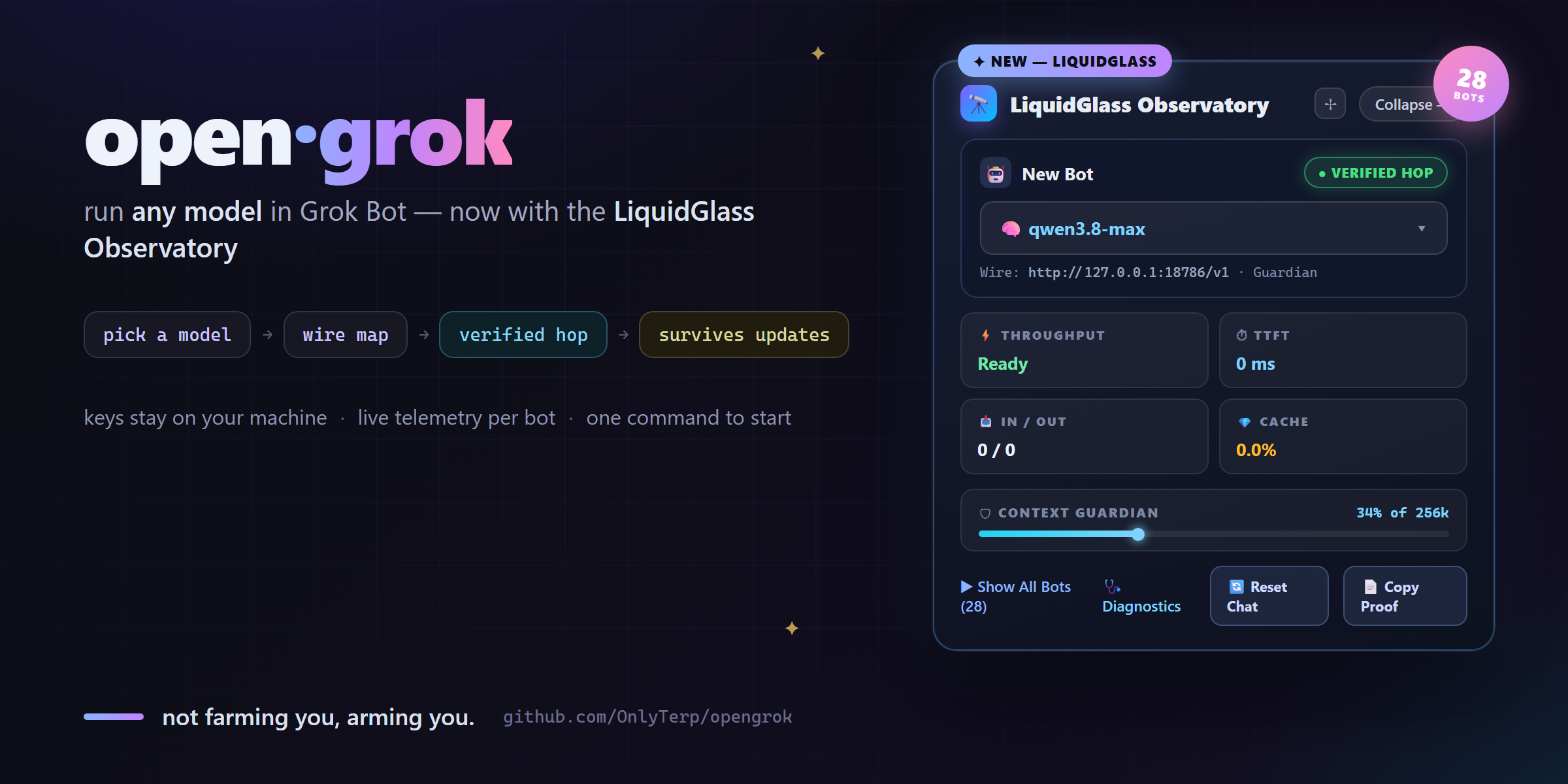
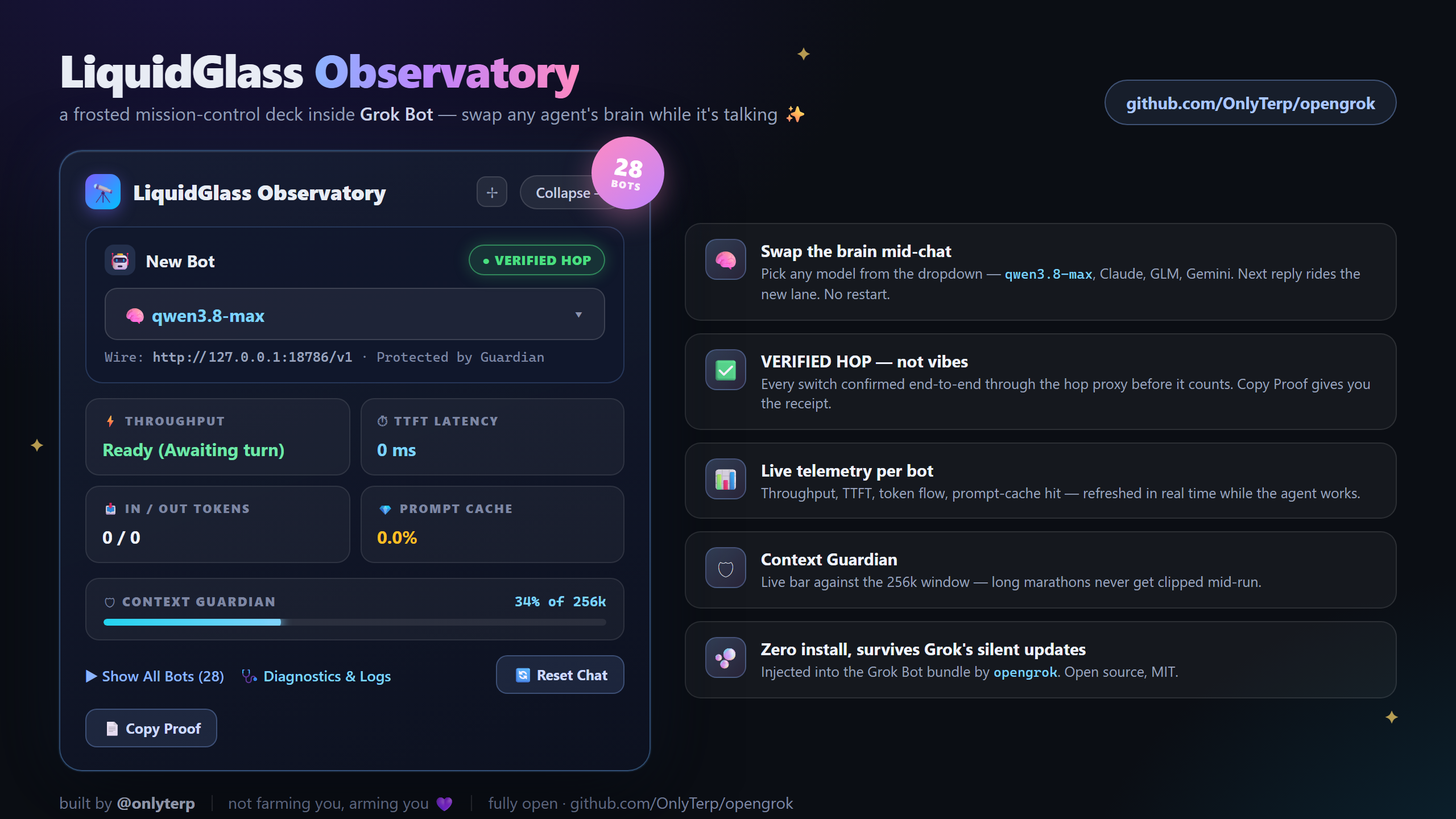
Они остаются локально на вашей машине; opengrok никогда не передаёт ключи за пределы машины и не записывает их в закоммиченный конфиг.Что такое LiquidGlass Observatory?Это встроенная в Grok Bot панель управления в стиле матового стекла, позволяющая менять модель посреди чата без перезапуска, видеть подтверждение каждого переключения, следить за телеметрией по каждому боту (пропускная способность, TTFT, поток токенов, доля попаданий в кэш) и отслеживать индикатор-хранителя контекстного окна по 28 ботам.
Это встроенная в Grok Bot панель управления в стиле матового стекла, позволяющая менять модель посреди чата без перезапуска, видеть подтверждение каждого переключения, следить за телеметрией по каждому боту (пропускная способность, TTFT, поток токенов, доля попаданий в кэш) и отслеживать индикатор-хранителя контекстного окна по 28 ботам.Почему нельзя просто направить API модели прямо в Grok Bot?Каждое семейство моделей было обучено с RL на формате запросов собственного харнесса (поля reasoning-effort, переключатели thinking, соглашения о model-slug). Если вставить модель как есть, возникает несоответствие харнессу — она «работает», но медленнее и глупее. Карты провайдеров opengrok исправляют точные поля формата запросов для каждого семейства моделей, опираясь на собранные доказательства проб.
Каждое семейство моделей было обучено с RL на формате запросов собственного харнесса (поля reasoning-effort, переключатели thinking, соглашения о model-slug). Если вставить модель как есть, возникает несоответствие харнессу — она «работает», но медленнее и глупее. Карты провайдеров opengrok исправляют точные поля формата запросов для каждого семейства моделей, опираясь на собранные доказательства проб.Там есть голосовой ассистент?Да — в папке voice/ находится локальный голосовой стек в реальном времени, доступный только на localhost: потоковое распознавание речи, «мозг» на OpenAI realtime и синтез речи ElevenLabs с поддержкой перебивания, настраиваемый через пошаговый мастер.
Да — в папке voice/ находится локальный голосовой стек в реальном времени, доступный только на localhost: потоковое распознавание речи, «мозг» на OpenAI realtime и синтез речи ElevenLabs с поддержкой перебивания, настраиваемый через пошаговый мастер.Как он переживает тихие обновления Grok Bot?doctor.py создаёт базовый снимок вашей машины при первой настройке и перепроверяет файлы, сервисы и кэши после обновлений, сообщая, что именно изменилось; режим --quiet молчит, когда ничего не изменилось, что удобно для cron.
doctor.py создаёт базовый снимок вашей машины при первой настройке и перепроверяет файлы, сервисы и кэши после обновлений, сообщая, что именно изменилось; режим --quiet молчит, когда ничего не изменилось, что удобно для cron.What are similar projects?casbin-gateway, aichat, router, openclaw-zero-token, opencodex, 9router, ccx, ThinkWatch-Lite
casbin-gateway, aichat, router, openclaw-zero-token, opencodex, 9router, ccx, ThinkWatch-LiteWhich topics is it in?model-router, llm-gateway, voice-assistant, byok, grok, configuration, speech-recognition, tts, qwen, openai-compatible, local-llm, deepseek
model-router, llm-gateway, voice-assistant, byok, grok, configuration, speech-recognition, tts, qwen, openai-compatible, local-llm, deepseek