


158 ·GitHub
Что это такое?
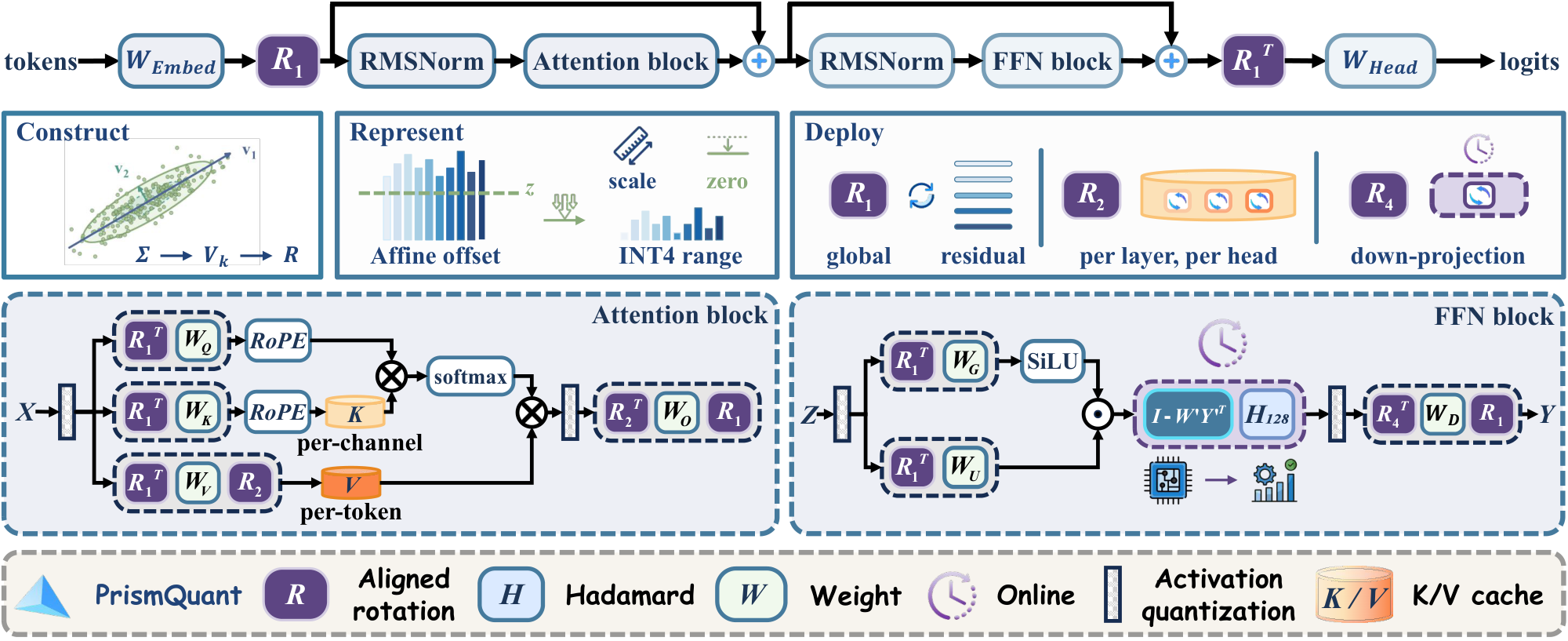
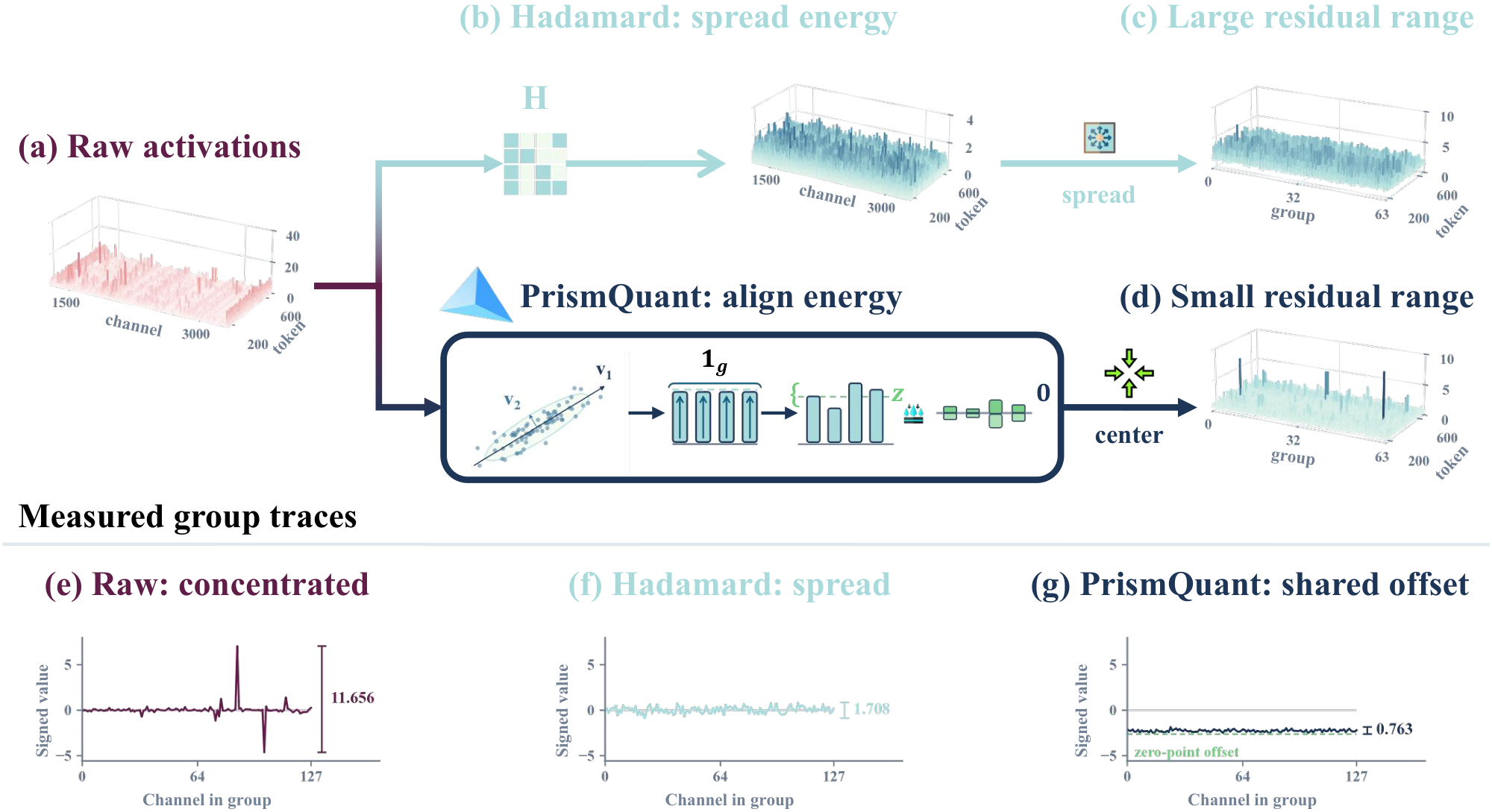
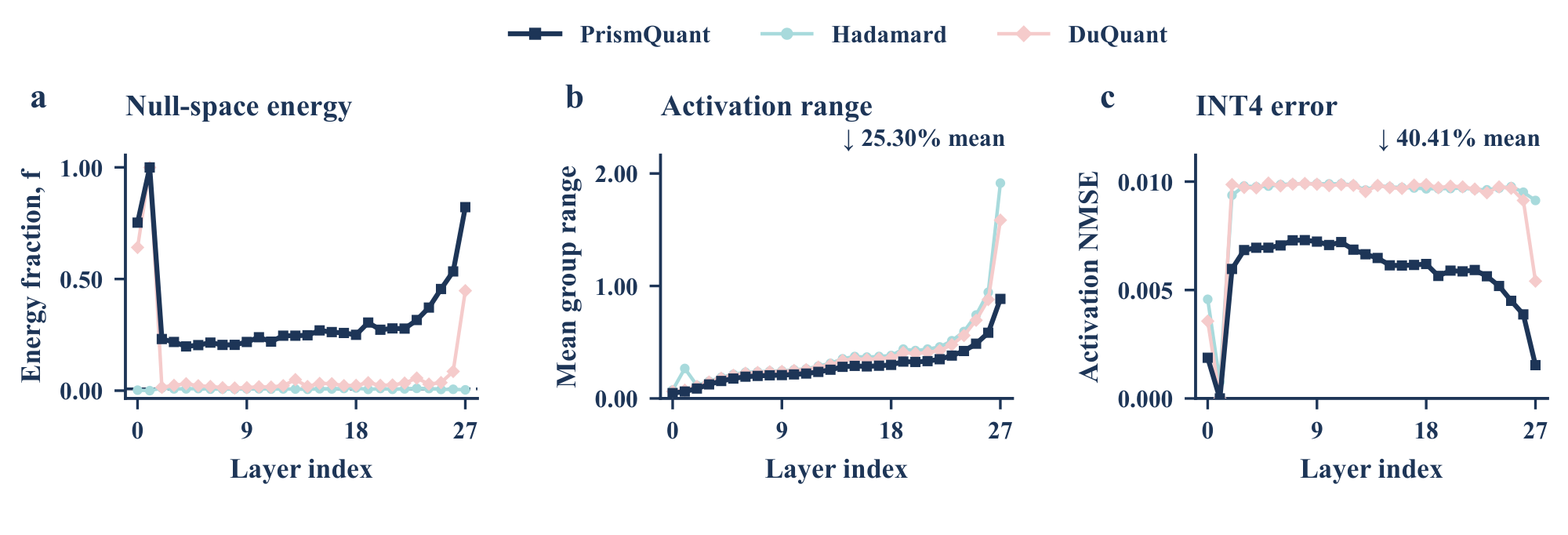
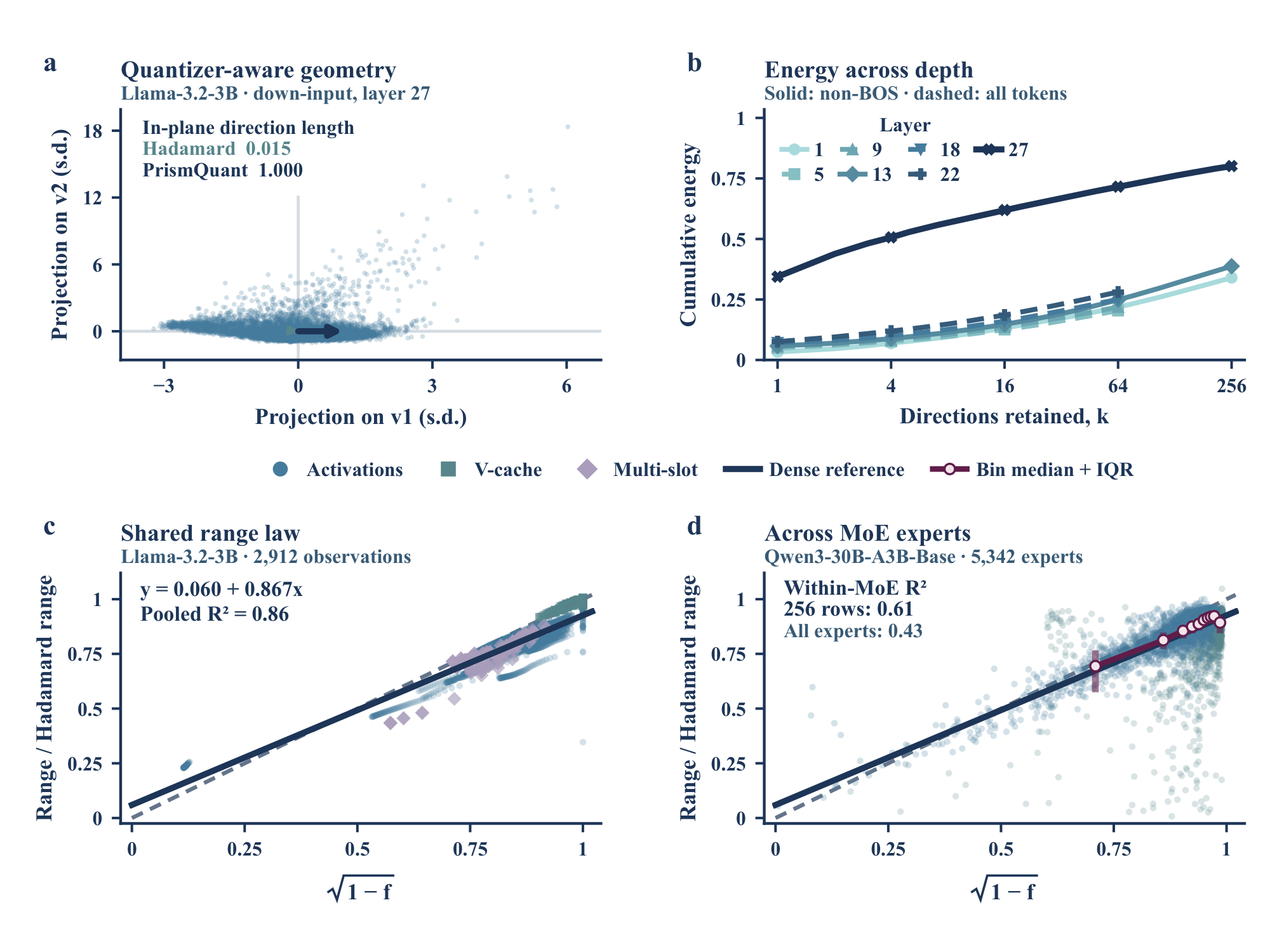
 PrismQuant — официальный код и предобученные чекпоинты к научной статье о квантизации больших языковых моделей в INT4. Метод выравнивает направления активаций с большой энергией и постоянные направления групп квантизации с помощью калиброванных ортогональных поворотов.
Это готовый движок INT4 для работы с моделями или исследовательская эталонная реализация?Это эталонная реализация и каталог моделей, а не промышленный движок для обслуживания запросов. Опубликованные веса GPTQ — это деквантованные значения INT4, хранящиеся в тензорах с плавающей точкой, а среда выполнения эмулирует квантизацию активаций и KV-кэша, а не запускает упакованные операции INT4.
Это эталонная реализация и каталог моделей, а не промышленный движок для обслуживания запросов. Опубликованные веса GPTQ — это деквантованные значения INT4, хранящиеся в тензорах с плавающей точкой, а среда выполнения эмулирует квантизацию активаций и KV-кэша, а не запускает упакованные операции INT4.Как попробовать одну из опубликованных моделей?Используйте Python 3.10+ с сборкой PyTorch, соответствующей вашей версии CUDA, затем загрузите самый маленький опубликованный чекпоинт через собственный загрузчик этого пакета (доступен из Python или командной строки). Он скачает сам чекпоинт, факторы поворота, а также подходящую базовую модель и токенизатор.
Используйте Python 3.10+ с сборкой PyTorch, соответствующей вашей версии CUDA, затем загрузите самый маленький опубликованный чекпоинт через собственный загрузчик этого пакета (доступен из Python или командной строки). Он скачает сам чекпоинт, факторы поворота, а также подходящую базовую модель и токенизатор.Что нужно установить перед использованием?Для запуска загрузчика и моделей требуются Python 3.10 или новее и установленный PyTorch, соответствующий вашей версии CUDA.
Для запуска загрузчика и моделей требуются Python 3.10 или новее и установленный PyTorch, соответствующий вашей версии CUDA.Есть ли подводные камни при загрузке чекпоинтов?Нужно использовать собственный загрузчик этого пакета, а не передавать репозиторий чекпоинта напрямую в 'AutoModelForCausalLM.from_pretrained', так как веса требуют соответствующих факторов поворота. Кроме того, опубликованные модели — это базовые модели для продолжения текста, а не ассистенты, настроенные на диалог.
Нужно использовать собственный загрузчик этого пакета, а не передавать репозиторий чекпоинта напрямую в 'AutoModelForCausalLM.from_pretrained', так как веса требуют соответствующих факторов поворота. Кроме того, опубликованные модели — это базовые модели для продолжения текста, а не ассистенты, настроенные на диалог.Какие семейства моделей имеют опубликованные чекпоинты?Qwen3 Base (0.6B-8B), Qwen3 MoE Base (30B-A3B), Llama 3.2 (3B) и Llama 3.1 (8B и 70B), все размещены на Hugging Face вместе с факторами поворота.
Qwen3 Base (0.6B-8B), Qwen3 MoE Base (30B-A3B), Llama 3.2 (3B) и Llama 3.1 (8B и 70B), все размещены на Hugging Face вместе с факторами поворота.Насколько хороша квантизация на практике?На Llama-3.1-70B с W4A4KV4 и k=8 PrismQuant показывает перплексию 3.85 на WikiText-2, занимая первое место среди результатов, проиндексированных на Papers with Code, на дату проверки.
На Llama-3.1-70B с W4A4KV4 и k=8 PrismQuant показывает перплексию 3.85 на WikiText-2, занимая первое место среди результатов, проиндексированных на Papers with Code, на дату проверки.Можно ли использовать метод поворотов без полноценной языковой модели?Да, основу конструкции поворотов можно подобрать отдельно, используя предоставленные пользователем выборки активаций и их точные вторые моменты, без загрузки какой-либо LLM.
Да, основу конструкции поворотов можно подобрать отдельно, используя предоставленные пользователем выборки активаций и их точные вторые моменты, без загрузки какой-либо LLM.Откуда взялась реализация ядра квантизации?Объединённые ядра R4 предоставляются отдельно для работы над реализацией, а основа GPTQ адаптирована из проекта QuaRot, что указано в уведомлениях о сторонних компонентах.
Объединённые ядра R4 предоставляются отдельно для работы над реализацией, а основа GPTQ адаптирована из проекта QuaRot, что указано в уведомлениях о сторонних компонентах.В каких он темах?llama, pretrained-models, paper, qwen, transformer, quantization, academic-research, large-language-models, artificial-intelligence, nvidia, huggingface, pytorch
llama, pretrained-models, paper, qwen, transformer, quantization, academic-research, large-language-models, artificial-intelligence, nvidia, huggingface, pytorch