








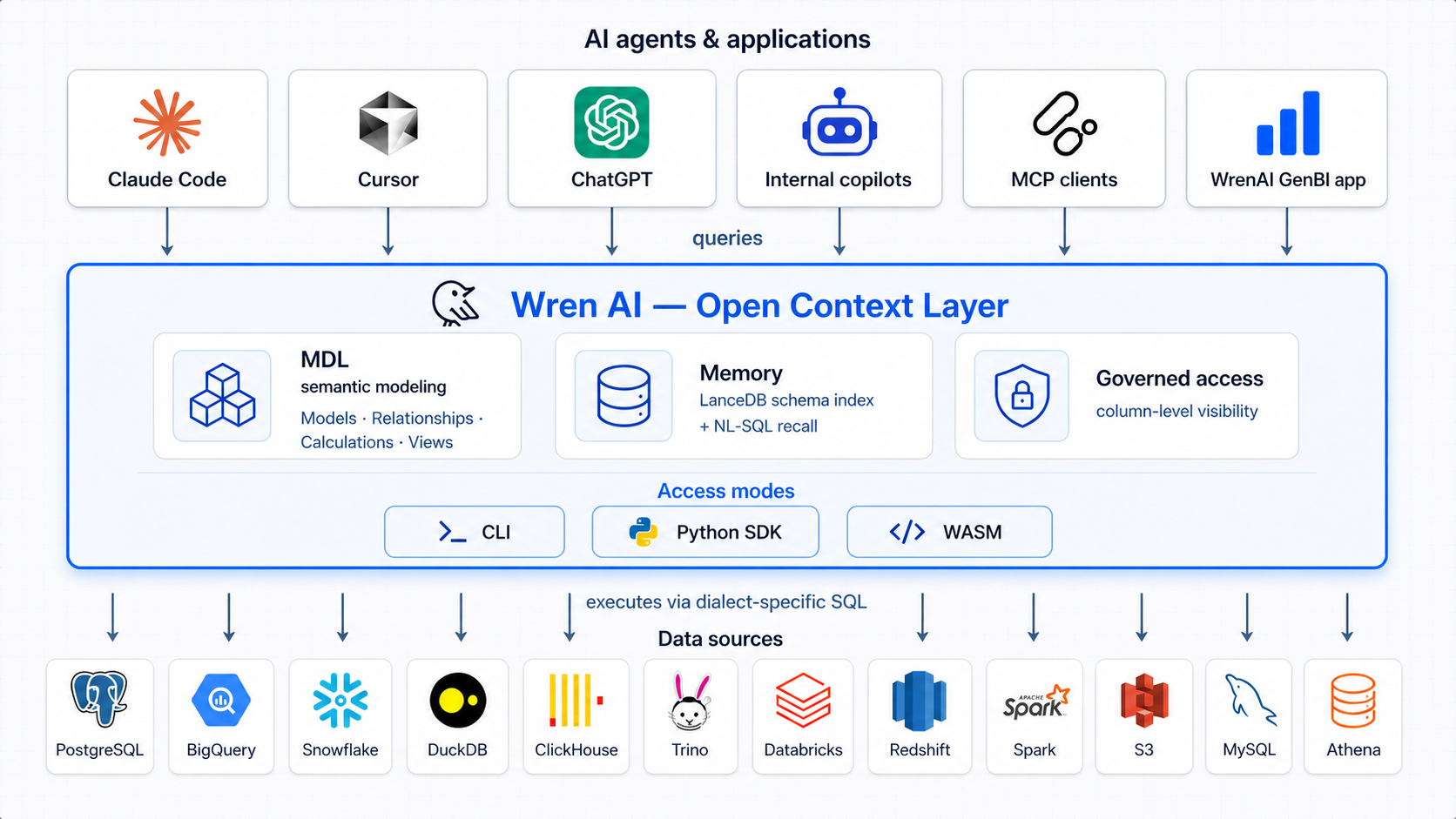
Что это такое?
 Wren AI — это open-source движок генеративной BI (GenBI): AI-агенты превращают вопросы на естественном языке в контролируемый SQL, графики и готовые к развёртыванию дашборды, работая более чем с 22 источниками данных и опираясь на семантический слой, которому можно доверять.
Wren AI — это open-source движок генеративной BI (GenBI): AI-агенты превращают вопросы на естественном языке в контролируемый SQL, графики и готовые к развёртыванию дашборды, работая более чем с 22 источниками данных и опираясь на семантический слой, которому можно доверять.Это BI-веб-приложение, которое я открываю в браузере, или инструмент для моего кодинг-агента?Здесь всё управляется агентом: это Python-CLI плюс discovery-заглушка примерно на 50 строк для вашего AI-клиента, а агент сам занимается настройкой, запросами и дашбордами. Прежнее чат-приложение BI на базе Docker живёт отдельно как Wren GenBI Classic в ветке legacy/v1.
Здесь всё управляется агентом: это Python-CLI плюс discovery-заглушка примерно на 50 строк для вашего AI-клиента, а агент сам занимается настройкой, запросами и дашбордами. Прежнее чат-приложение BI на базе Docker живёт отдельно как Wren GenBI Classic в ветке legacy/v1.Как его запустить?Установите CLI через pip, добавьте discovery-заглушку из одного файла в свой AI-клиент, а затем скажите агенту: «Use Wren to set up my Postgres database» — он создаст профиль подключения и выполнит первый запрос. Нет под рукой базы данных? Используйте встроенный демо-датасет jaffleshop.
Установите CLI через pip, добавьте discovery-заглушку из одного файла в свой AI-клиент, а затем скажите агенту: «Use Wren to set up my Postgres database» — он создаст профиль подключения и выполнит первый запрос. Нет под рукой базы данных? Используйте встроенный демо-датасет jaffleshop.С какими AI-агентами он работает?С любым агентом, который умеет читать заглушку — в README упомянуты Claude Code, Cursor и MCP-клиенты. Для других стеков есть официальные SDK: wren-langchain (LangChain/LangGraph) и wren-pydantic.
С любым агентом, который умеет читать заглушку — в README упомянуты Claude Code, Cursor и MCP-клиенты. Для других стеков есть официальные SDK: wren-langchain (LangChain/LangGraph) и wren-pydantic.В каких случаях Wren — плохой выбор?По словам самого README: пропустите Wren, если вам нужен лишь разовый график из одного CSV-файла, или если вас устраивает, что агент «угадывает» SQL без какого-либо контроля. Он рассчитан на контролируемую BI с множеством источников, а не на быстрые одноразовые графики.
По словам самого README: пропустите Wren, если вам нужен лишь разовый график из одного CSV-файла, или если вас устраивает, что агент «угадывает» SQL без какого-либо контроля. Он рассчитан на контролируемую BI с множеством источников, а не на быстрые одноразовые графики.Мой агент и так пишет SQL — что Wren даёт сверх этого?То, чего не дают схемы: бизнес-семантику, согласованные определения, примеры и память в контролируемом семантическом слое (MDL), чтобы ответы следовали вашей бизнес-логике, а не правдоподобным догадкам. Плюс он разворачивает дашборды, а не только SQL.
То, чего не дают схемы: бизнес-семантику, согласованные определения, примеры и память в контролируемом семантическом слое (MDL), чтобы ответы следовали вашей бизнес-логике, а не правдоподобным догадкам. Плюс он разворачивает дашборды, а не только SQL.Это полностью open source или open core?Open core под лицензией Apache-2.0: движок, семантический слой MDL, контролируемый text-to-SQL, MCP-сервер, CLI и более 22 коннекторов бесплатны и всегда доступны для self-hosting. Безопасность на уровне строк и столбцов, управление доступом, GenBI-интерфейс с дашбордами и агентный режим — платные (Cloud или Enterprise Plus).
Open core под лицензией Apache-2.0: движок, семантический слой MDL, контролируемый text-to-SQL, MCP-сервер, CLI и более 22 коннекторов бесплатны и всегда доступны для self-hosting. Безопасность на уровне строк и столбцов, управление доступом, GenBI-интерфейс с дашбордами и агентный режим — платные (Cloud или Enterprise Plus).К каким базам данных он подключается?Более чем к 22 источникам через движок на Apache DataFusion — BigQuery, Snowflake, PostgreSQL, ClickHouse, Amazon Redshift, Databricks, DuckDB и другие.
Более чем к 22 источникам через движок на Apache DataFusion — BigQuery, Snowflake, PostgreSQL, ClickHouse, Amazon Redshift, Databricks, DuckDB и другие.Что такое MDL?Modeling Definition Language — семантический слой Wren, дружелюбный к Git: модели, колонки, связи, представления, кубы и метрики, плюс бизнес-контекст вроде перечислений, единиц измерения и согласованных джойнов — всё это в файлы instructions.md и queries.yml под контролем версий. Каждый ответ строится на его основе.
Modeling Definition Language — семантический слой Wren, дружелюбный к Git: модели, колонки, связи, представления, кубы и метрики, плюс бизнес-контекст вроде перечислений, единиц измерения и согласованных джойнов — всё это в файлы instructions.md и queries.yml под контролем версий. Каждый ответ строится на его основе.Как он не даёт агенту написать неправильный SQL?Ответы строятся на основе MDL и проверяются через dry-plan до выполнения, а на защиту корректности работают поиск с учётом схемы, структурированные ошибки с подсказками, лимиты строк, профилирование значений и golden eval runner.
Ответы строятся на основе MDL и проверяются через dry-plan до выполнения, а на защиту корректности работают поиск с учётом схемы, структурированные ошибки с подсказками, лимиты строк, профилирование значений и golden eval runner.Могу ли я поделиться результатами с нетехническими коллегами?Да — любой ответ можно превратить в дашборд-приложение, работающее прямо в браузере на базе wren-core-wasm; агент собирает его, показывает локальный предпросмотр и разворачивает в ваш собственный аккаунт на Vercel или Cloudflare Pages, возвращая живую ссылку, которой можно поделиться.
Да — любой ответ можно превратить в дашборд-приложение, работающее прямо в браузере на базе wren-core-wasm; агент собирает его, показывает локальный предпросмотр и разворачивает в ваш собственный аккаунт на Vercel или Cloudflare Pages, возвращая живую ссылку, которой можно поделиться.What are similar projects?cube, redash, airbyte, mcp-toolbox, apowerb, dbx, perspective, tusk
cube, redash, airbyte, mcp-toolbox, apowerb, dbx, perspective, tuskWhich topics is it in?text-to-sql, databricks, snowflake, bigquery, data-warehouse, business-intelligence, duckdb, clickhouse, charts, langchain, context-engineering, sql
text-to-sql, databricks, snowflake, bigquery, data-warehouse, business-intelligence, duckdb, clickhouse, charts, langchain, context-engineering, sql