─── B ───
The Soul-Wired Desktop Companion





B is not just an AI : he is a digital lifeform designed to live on your desktop. Built with a soul-first architecture, B observes your workflow, listens with neural precision, and interacts through a high-performance, glassmorphic overlay.
Explore the Vision • Architecture • Getting Started • Contributing • Privacy
Demo
B in action - watch him observe, think, and respond.
The Vision
Traditional assistants wait for a command. B waits for a moment.
B is designed as a proactive desktop companion. Using a 60fps event-driven central nervous system, B synchronizes his emotional state with your environment. He sees your screen semantically, tracks your active focus, and intervenes only when he has something truly valuable to contribute.
- Silent by Default : B respects your deep work state.
- Emotionally Aware : A complex internal state machine drives expressions and curiosity.
- Agentic Autonomy : B doesn't just respond; he thinks, wonders, and observes.
Architecture Overview
B is built on a centralized asynchronous pub/sub event bus : the EventBus. Every module communicates exclusively through this bus. No module knows about any other module. This strict decoupling makes the system testable, maintainable, and resilient.
flowchart TB
    subgraph P["Perception Layer"]
        WT["WindowTracker"]
        SS["SemanticSensor"]
        VS["VisionSensor OCR"]
    end

    subgraph C["Cognitive Layer"]
        CE["CognitiveEngine"]
        SM["StateMachine"]
        AE["AutonomyEngine"]
    end

    subgraph O["Output Layer"]
        VE["VoiceEngine"]
        FR["FaceRenderer"]
        CB["ChatBubble"]
        KE["KinematicsEngine"]
    end

    subgraph I["Core Infrastructure"]
        EB["EventBus"]
    end

    WT -- "active_window_changed" --> EB
    SS -- "context_updated" --> EB
    VS -- "context_updated" --> EB
    EB -- "context_updated" --> CE
    EB -- "tick" --> SM
    EB -- "tick" --> KE
    CE -- "b_spoke" --> EB
    EB -- "b_spoke" --> VE
    EB -- "b_spoke" --> FR
    EB -- "b_spoke" --> CB
    CE -- "b_move_request" --> EB
    EB -- "b_move_request" --> KE
    AE -- "trigger_proactive_thought" --> EB
    EB -- "trigger_proactive_thought" --> CE
System Workflow
The data flows through B in a deterministic pipeline: Perception → Cognition → Expression.
sequenceDiagram
    participant WT as WindowTracker
    participant SS as SemanticSensor
    participant VS as VisionSensor
    participant CE as CognitiveEngine
    participant VE as VoiceEngine
    participant FR as FaceRenderer

    WT->>SS: active_window_changed
    activate SS
    SS->>SS: UIA Tree Walk
    alt Extraction Success
        SS->>CE: context_updated
    else Failure / Cooldown
        SS->>VS: semantic_extraction_failed
        VS->>VS: OCR Capture
        VS->>CE: context_updated
    end
    deactivate SS

    CE->>CE: LLM Inference
    CE->>VE: b_spoke (Text + Emotion)
    activate VE
    VE->>VE: TTS + DSP Vocoder
    VE->>FR: speaking_start
    VE->>VE: Audio Output
    VE->>FR: speaking_end
    deactivate VE
    CE->>FR: b_move_request (Spatial)
Internal Module Structure
Core Infrastructure
| Module |
File |
Responsibility |
| EventBus |
core/bus.py |
Thread-safe pub/sub message broker. All inter-module communication flows through this. |
| main.py |
main.py |
Boot sequence : instantiates all modules, starts the 60fps tick timer, registers global hotkeys. |
Perception Layer (Sensors)
| Module |
File |
Responsibility |
| WindowTracker |
sensors/window_tracker.py |
Hook-based active window change detection. Fires when the user switches focus. |
| SemanticSensor |
vision/semantic.py |
UIA-based DOM/window tree walking. Extracts structured content with quality scoring and adaptive cooldown. |
| VisionSensor |
vision/mss_capture.py |
OCR fallback pipeline using MSS + Tesseract for frameworks incompatible with UIA. |
Cognitive Layer (The Brain)
| Module |
File |
Responsibility |
| CognitiveEngine |
brain/llm.py |
LLM inference orchestration (Groq cloud or local llama-cpp). Manages context, history, spatial mapping, and streaming token parsing. |
| StateMachine |
brain/soul.py |
B's emotional state : blinking, resting, conversing. Real-time stream buffer that parses LLM output into sentences. |
| AutonomyEngine |
brain/autonomy_loop.py |
Proactive thought scheduling : decides when B should speak unprompted based on context quality and timing. |
Output Layer (Expression)
| Module |
File |
Responsibility |
| VoiceEngine |
audio/speaker.py |
Piper ONNX TTS with DSP vocoder chain (pitch shift, bitcrush, chorus) for robotic modulation. |
| FaceRenderer |
ui/face.py |
PyQt6 QPainter-based hardware-accelerated face rendering at 60fps. |
| ChatBubble |
ui/chat.py |
Glassmorphic chat overlay that displays B's spoken text. |
| KinematicsEngine |
physics/kinematics.py |
Physics-based movement with Bezier path interpolation and easing curves. |
| EarsSensor |
audio/ears.py |
Speech-to-text via Faster-Whisper with neural VAD. |
Data Flow
flowchart LR
    subgraph Input["Input"]
        A["User Types"]
        B["User Speaks"]
        C["Screen Changes"]
    end

    subgraph Process["Processing"]
        D["EventBus"]
        E["CognitiveEngine"]
        F["StateMachine"]
    end

    subgraph Output["Output"]
        G["FaceRenderer"]
        H["VoiceEngine"]
        I["ChatBubble"]
        J["Kinematics"]
    end

    A -- types --> D
    B -- speaks --> D
    C -- changes --> D
    D -- routes --> E
    E -- drives --> F
    F -- animates --> G
    F -- speaks --> H
    F -- displays --> I
    E -- moves --> J
Request Lifecycle
stateDiagram-v2
    [*] --> Idle
    Idle --> Listening : user_spoke / voice detected
    Listening --> Thinking : 1.2s delay
    Thinking --> Streaming : first token received
    Streaming --> Speaking : sentence_ready
    Speaking --> Streaming : next sentence
    Streaming --> Idle : [SILENCE] / end of response
    Speaking --> Idle : finished_speaking + linger
    Idle --> Proactive : autonomy trigger
    Proactive --> Thinking : context available
    Proactive --> Idle : no context / silence
Project Structure
B/
├── main.py                  # Entry point : boot sequence
├── core/
│   └── bus.py               # EventBus : central nervous system
├── brain/
│   ├── llm.py               # CognitiveEngine : LLM inference
│   ├── soul.py              # StateMachine : emotions & stream buffer
│   ├── autonomy_loop.py     # AutonomyEngine : proactive thought
│   ├── context.py           # Context management
│   └── work_mode.py         # Work mode prompt templates
├── vision/
│   ├── semantic.py          # SemanticSensor : UIA extraction
│   └── mss_capture.py       # VisionSensor : OCR fallback
├── sensors/
│   └── window_tracker.py    # WindowTracker : focus detection
├── audio/
│   ├── speaker.py           # VoiceEngine : TTS + DSP
│   └── ears.py              # EarsSensor : STT
├── physics/
│   └── kinematics.py        # KinematicsEngine : movement
├── ui/
│   ├── overlay.py           # WindowManager : transparent overlay
│   ├── face.py              # FaceRenderer : 60fps face
│   ├── chat.py              # ChatBubble : text overlay
│   ├── input_box.py         # InputBox : text input
│   ├── expressions.py       # Expression definitions
│   └── theme.py             # Visual theming
├── models/                  # Local GGUF models (gitignored)
├── voices/                  # Piper ONNX voice models
├── scripts/                 # Setup & download utilities
├── docs/
│   ├── ARCHITECTURE.md      # Detailed architecture docs
│   └── assets/              # Images & diagrams
├── .env                     # API keys (gitignored)
└── requirements.txt         # Python dependencies
Core Systems
| System |
Technology |
Description |
| Cognitive Engine |
Groq API / llama-cpp |
Cloud or local LLM inference for private, high-speed reasoning. |
| Semantic Vision |
UIAutomation + Tesseract OCR |
B understands the context of your active windows and screen content. |
| Neural Hearing |
Faster-Whisper |
Industry-grade transcription with neural VAD for reliable ears. |
| Vocal Synthesis |
Piper TTS + Pedalboard DSP |
Low-latency, natural-sounding voice with robotic modulation effects. |
| Kinematics |
PyQt6 QPropertyAnimation |
Smooth, 60fps movement with Bezier path interpolation and easing curves. |
| Event Bus |
PyQt6 pyqtSignal |
Thread-safe pub/sub message broker : the central nervous system. |
Agentic Work Mode
Activated via Ctrl+Shift+Alt+W, Work Mode shifts B into a high-utility state:
- Semantic Monitoring : B monitors your progress on tasks in real-time.
- Contextual Curiosity : Proactively offers insights, documentation, or suggestions based on your current focus.
- Minimalist Presence : Dims facial expressions to minimize distraction while remaining vigilant.
flowchart TB
    A["User presses Ctrl+Shift+Alt+W"] --> B["B asks: what are you working on?"]
    B --> C["User defines goal"]
    C --> D["B monitors screen context"]
    D --> E{"Relevant content?"}
    E -- "Yes" --> F["B offers insight / help"]
    E -- "No" --> G["B stays silent"]
    F --> D
    G --> D
Hotkeys
| Shortcut |
Action |
Ctrl+Shift+Alt+Q |
Kill switch : immediately terminates B and releases all system hooks. |
Ctrl+Shift+Alt+B |
Toggle input box : type messages to B. |
Ctrl+Shift+Alt+V |
Toggle speak mode : talk to B via microphone. |
Ctrl+Shift+Alt+W |
Toggle work mode : B becomes a proactive assistant. |
Installation
Clone the repository:
git clone https://github.com/Ahmad-Hassan-0/B---desktop-companion.git
cd B---desktop-companion
Set up the environment:
python -m venv venv
venv\Scripts\activate      # Windows
source venv/bin/activate   # Linux/macOS
pip install -r requirements.txt
Configure API keys:
cp .env.example .env
# Edit .env with your Groq API key (get one at https://console.groq.com/)
Awaken B:
python main.py
Safety
[!CAUTION]
Global Kill Switch: Ctrl+Shift+Alt+Q
This hotkey immediately terminates B and releases all system hooks. Use this if B becomes over-eager or if you need an instant exit.
Because B lives on a transparent, click-through overlay without a standard close button, the kill switch is the only way to exit. It is registered at the Win32 level and works even if the Qt event loop is unresponsive.
Technical Constraints
| Constraint |
Target |
| CPU |
Intel i5 (Quad-Core) or equivalent |
| RAM |
16 GB |
| Display |
Any resolution (adaptive) |
| OS |
Windows 10/11 (primary), Linux/macOS (experimental) |
| Tick Rate |
60 fps (16ms interval) |
| Inference |
Groq API (cloud) or llama-cpp (local, 4GB+ model) |

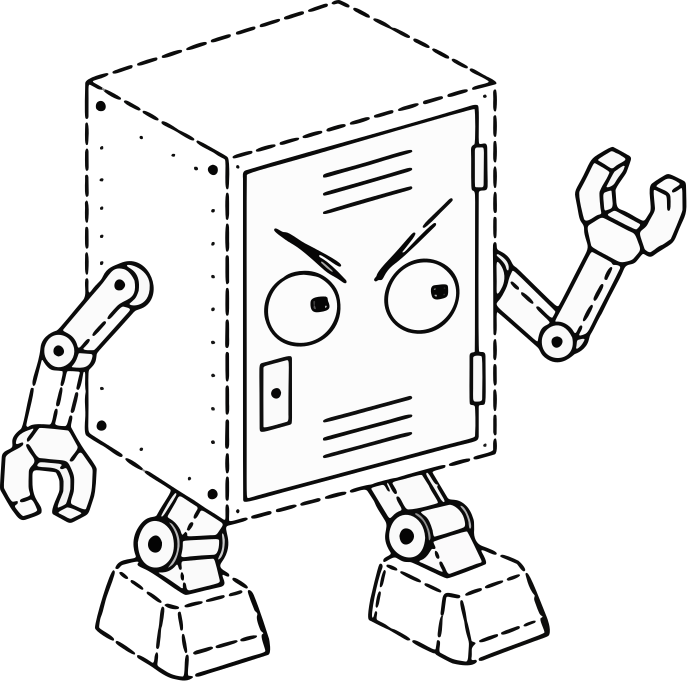 B 是一个自主运行的 AI 桌面伙伴,以动画悬浮脸的形式待在你的屏幕上。它会查看你正在使用的窗口和屏幕内容,听你说话,并在有用的内容要说时主动开口。