


What is this?
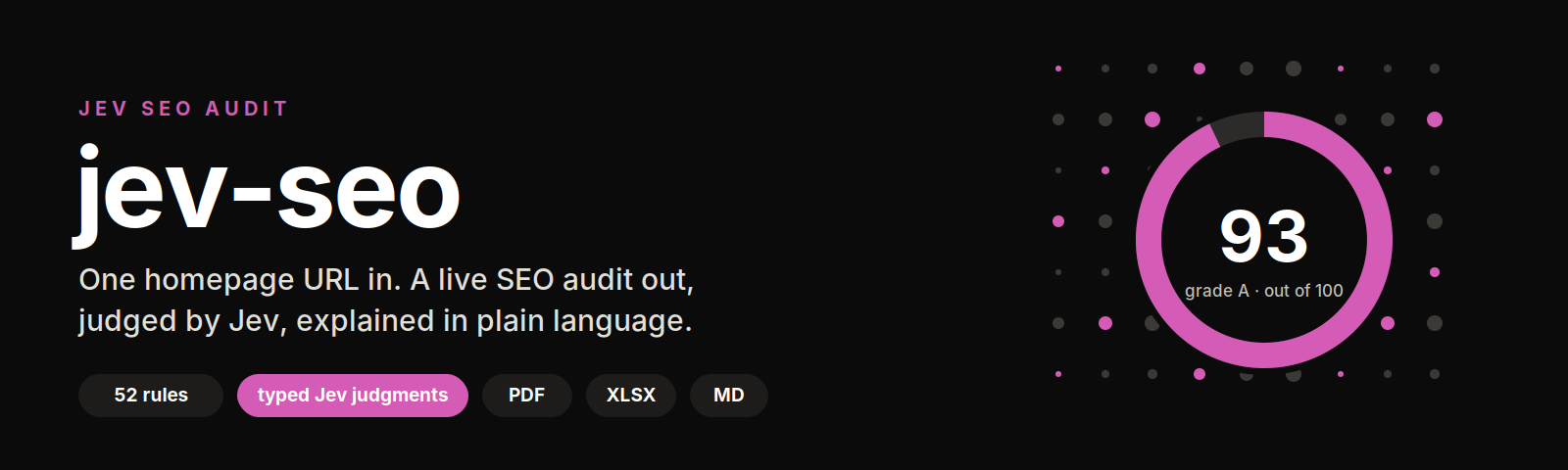
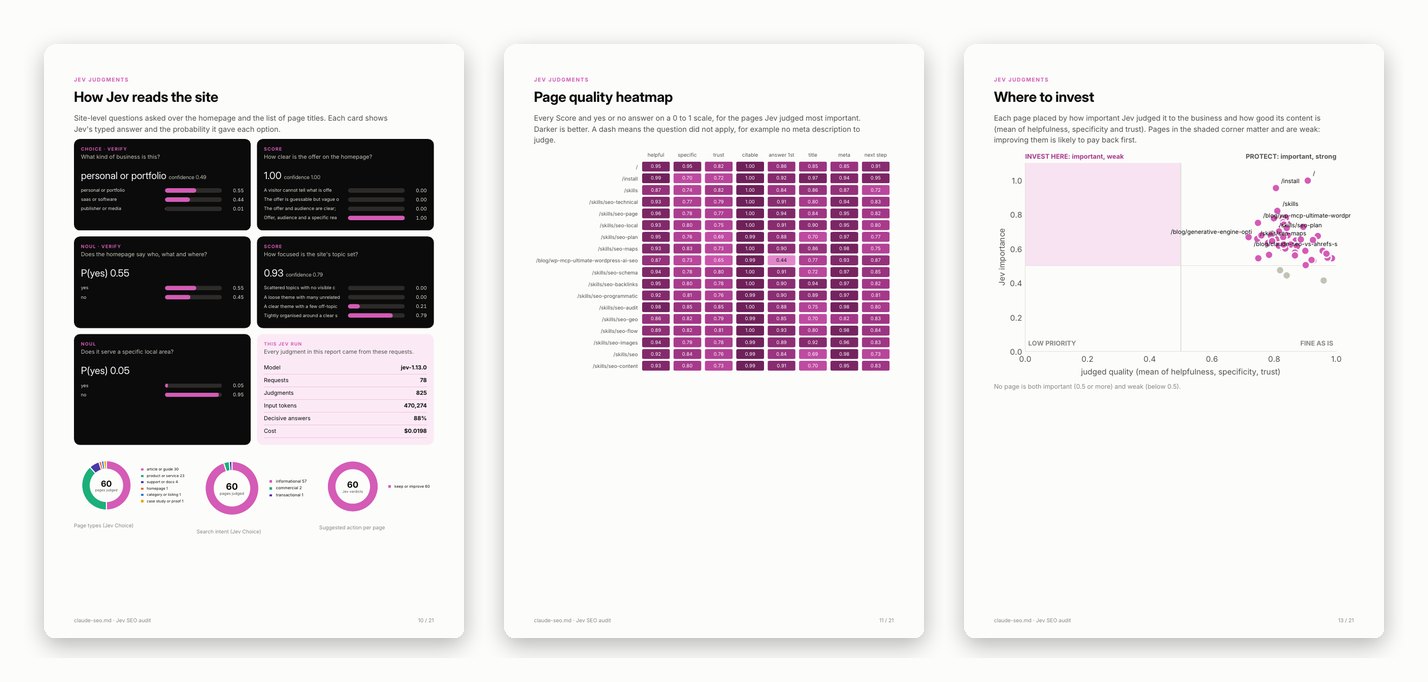
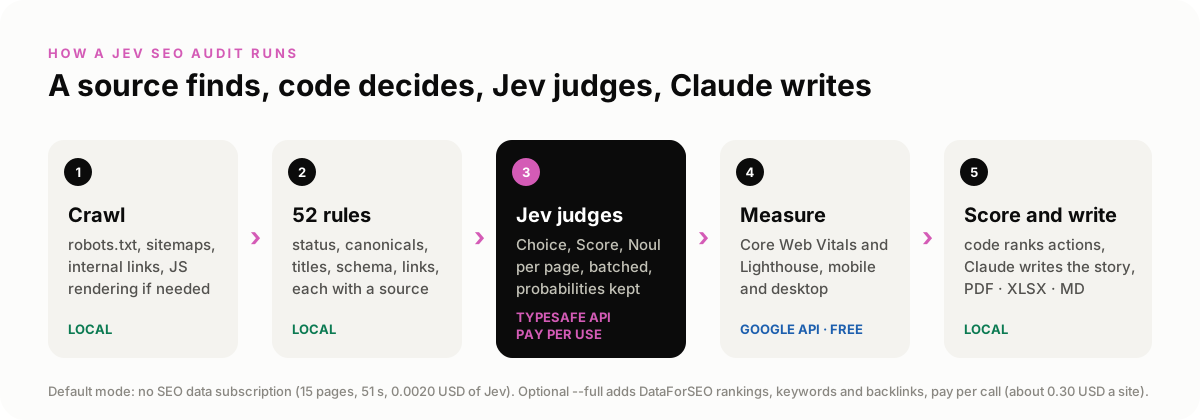
 jev-seo is a live SEO auditor that crawls a site from one homepage URL, checks it against 52 rules tied to Google Search Central, measures Core Web Vitals, and asks Jev (TypeSafe's System One model) typed questions about every page, producing a PDF, an XLSX action tracker and a Markdown report from the same audit data.
jev-seo is a live SEO auditor that crawls a site from one homepage URL, checks it against 52 rules tied to Google Search Central, measures Core Web Vitals, and asks Jev (TypeSafe's System One model) typed questions about every page, producing a PDF, an XLSX action tracker and a Markdown report from the same audit data.Is this a standalone CLI tool or only a Claude Code skill?Both: it runs as a regular Python command-line tool and also as a Claude Code skill (/jev-seo) that drives the same audit in the background and relays progress.
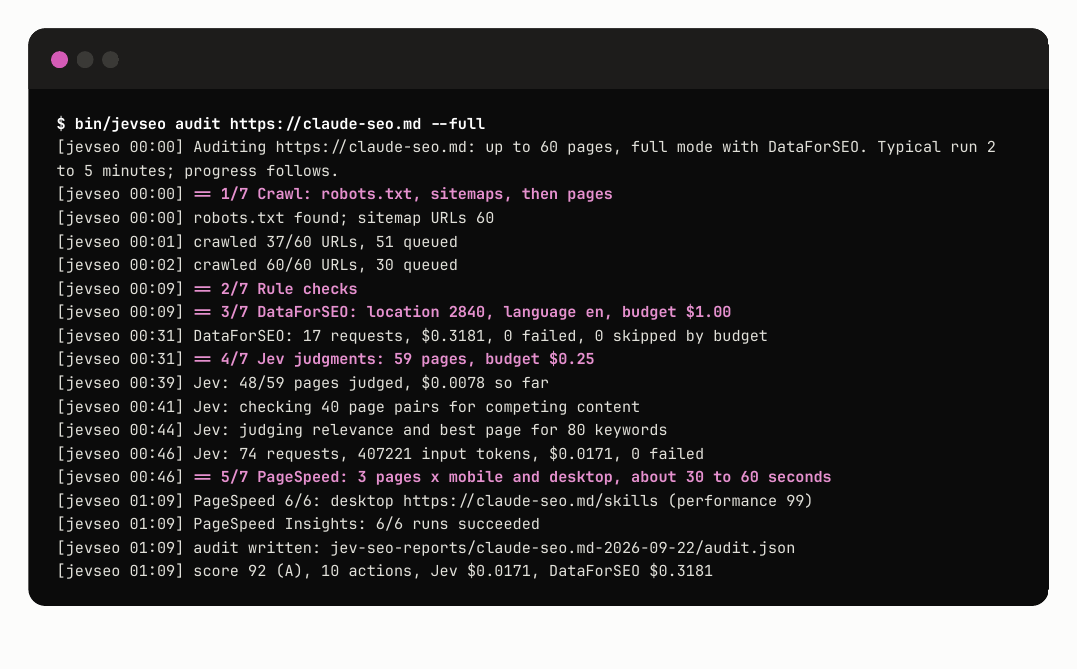
Both: it runs as a regular Python command-line tool and also as a Claude Code skill (/jev-seo) that drives the same audit in the background and relays progress.How do I run my first audit?Install Python 3.10+ and the Pango library WeasyPrint needs (apt install on Debian/Ubuntu, brew install pango on macOS), then run it from the command line, or link it as a Claude Code skill with 'ln -s "$PWD" ~/.claude/skills/jev-seo' and run '/jev-seo'. Reports land in jev-seo-reports/.
Install Python 3.10+ and the Pango library WeasyPrint needs (apt install on Debian/Ubuntu, brew install pango on macOS), then run it from the command line, or link it as a Claude Code skill with 'ln -s "$PWD" ~/.claude/skills/jev-seo' and run '/jev-seo'. Reports land in jev-seo-reports/.Do I need an API key for the Jev-judged parts?Yes, a TYPESAFEAPIKEY is needed for Jev's page and site judgments (about $0.00015/page); PAGESPEEDAPIKEY is optional for Core Web Vitals, and DATAFORSEOUSERNAME/PASSWORD are only required for the paid --full mode. Without the TypeSafe key the audit still runs but marks those sections unassessed.
Yes, a TYPESAFEAPIKEY is needed for Jev's page and site judgments (about $0.00015/page); PAGESPEEDAPIKEY is optional for Core Web Vitals, and DATAFORSEOUSERNAME/PASSWORD are only required for the paid --full mode. Without the TypeSafe key the audit still runs but marks those sections unassessed.Does it audit the whole site no matter how big it is?No, large sites are sampled at a page cap of 60 pages by default and the report states when sampling happened; PageSpeed lab scores can vary between runs, and Jev's scoring thresholds haven't yet been tuned against human labels.
No, large sites are sampled at a page cap of 60 pages by default and the report states when sampling happened; PageSpeed lab scores can vary between runs, and Jev's scoring thresholds haven't yet been tuned against human labels.Does it work on Windows, or just Linux and macOS?Install instructions only cover Debian/Ubuntu, Fedora and macOS (via apt or brew for the Pango library); Windows isn't mentioned in the setup steps.
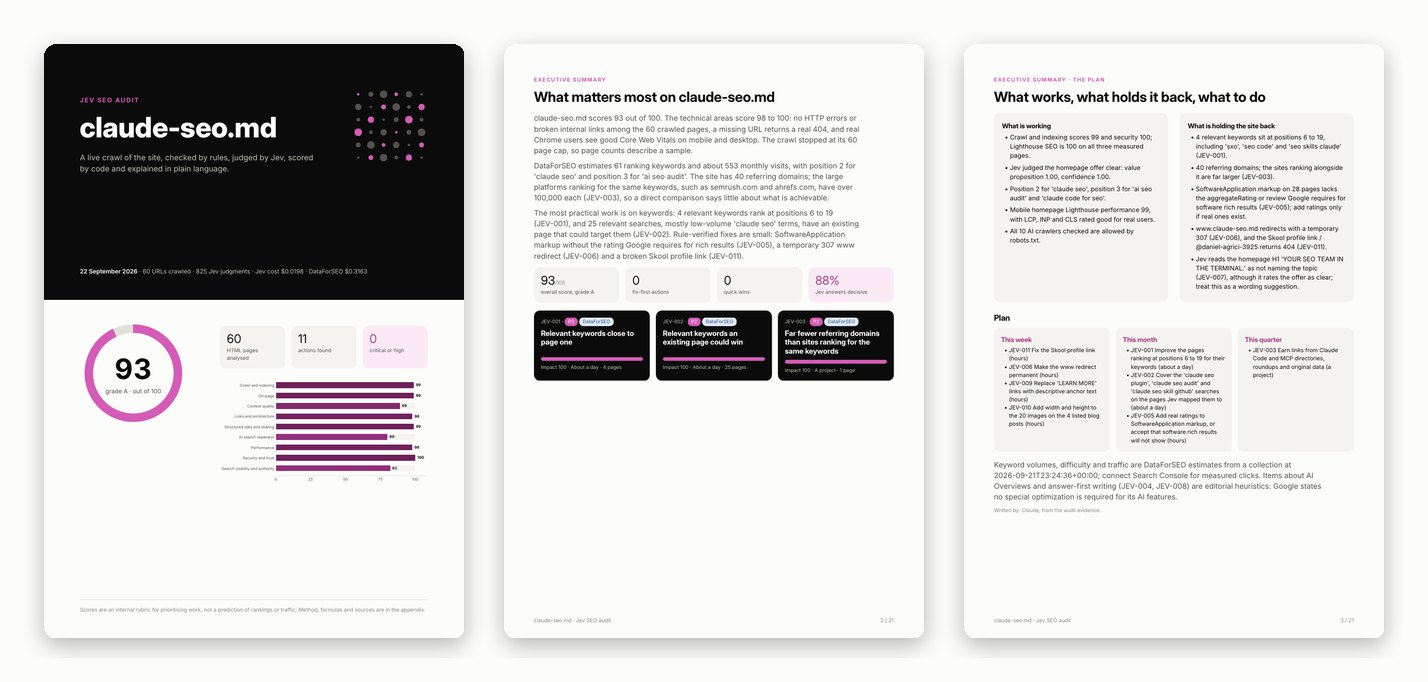
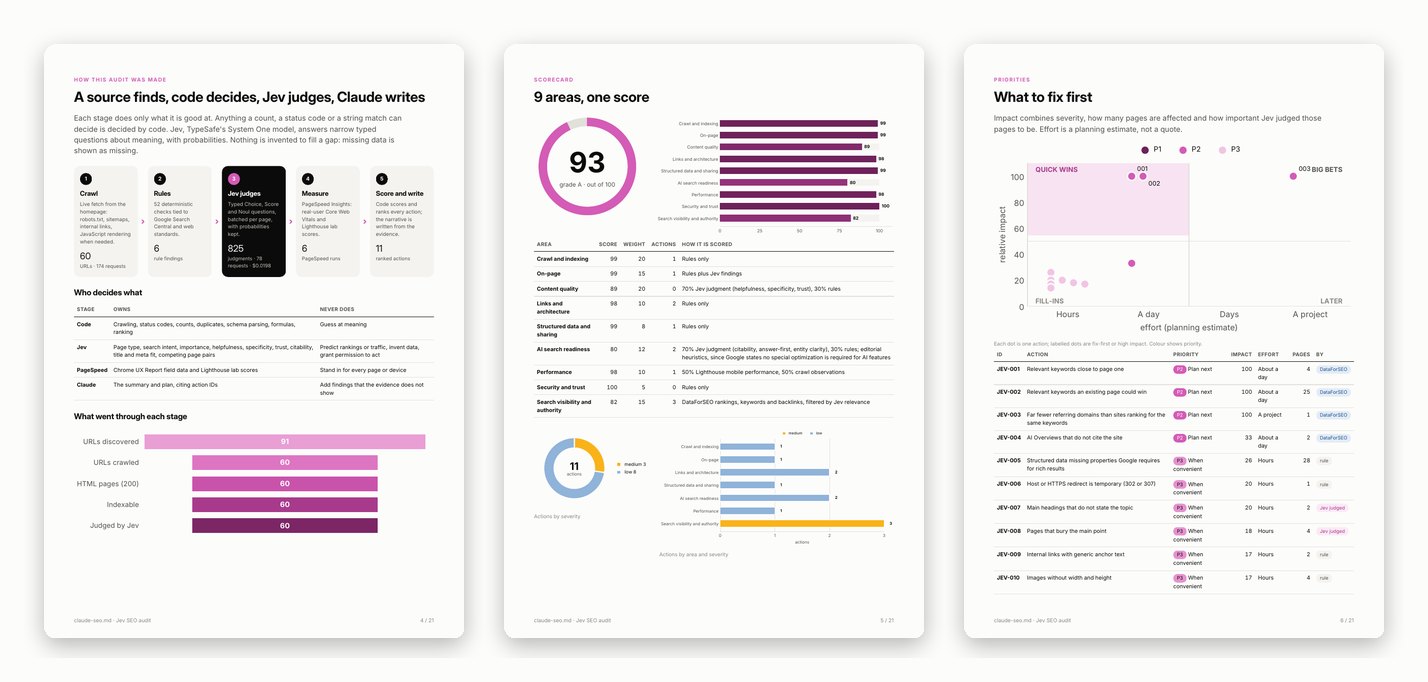
Install instructions only cover Debian/Ubuntu, Fedora and macOS (via apt or brew for the Pango library); Windows isn't mentioned in the setup steps.What's actually in the three report formats?The PDF has a cover, summary, scorecard, impact-versus-effort chart and priorities for clients; the XLSX has an editable Actions tracker with dropdowns plus raw Jev judgments and probabilities; the Markdown version renders with Mermaid charts on GitHub or in Obsidian. All three come from the same audit.json.
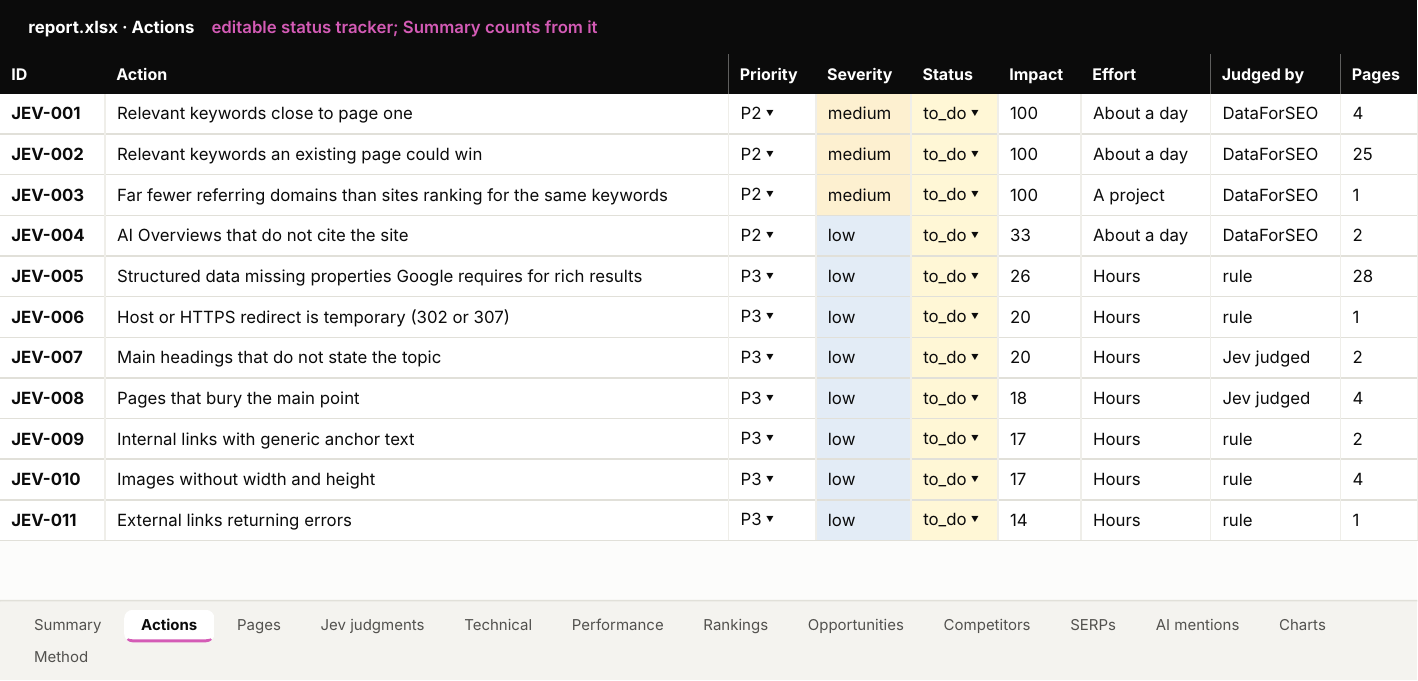
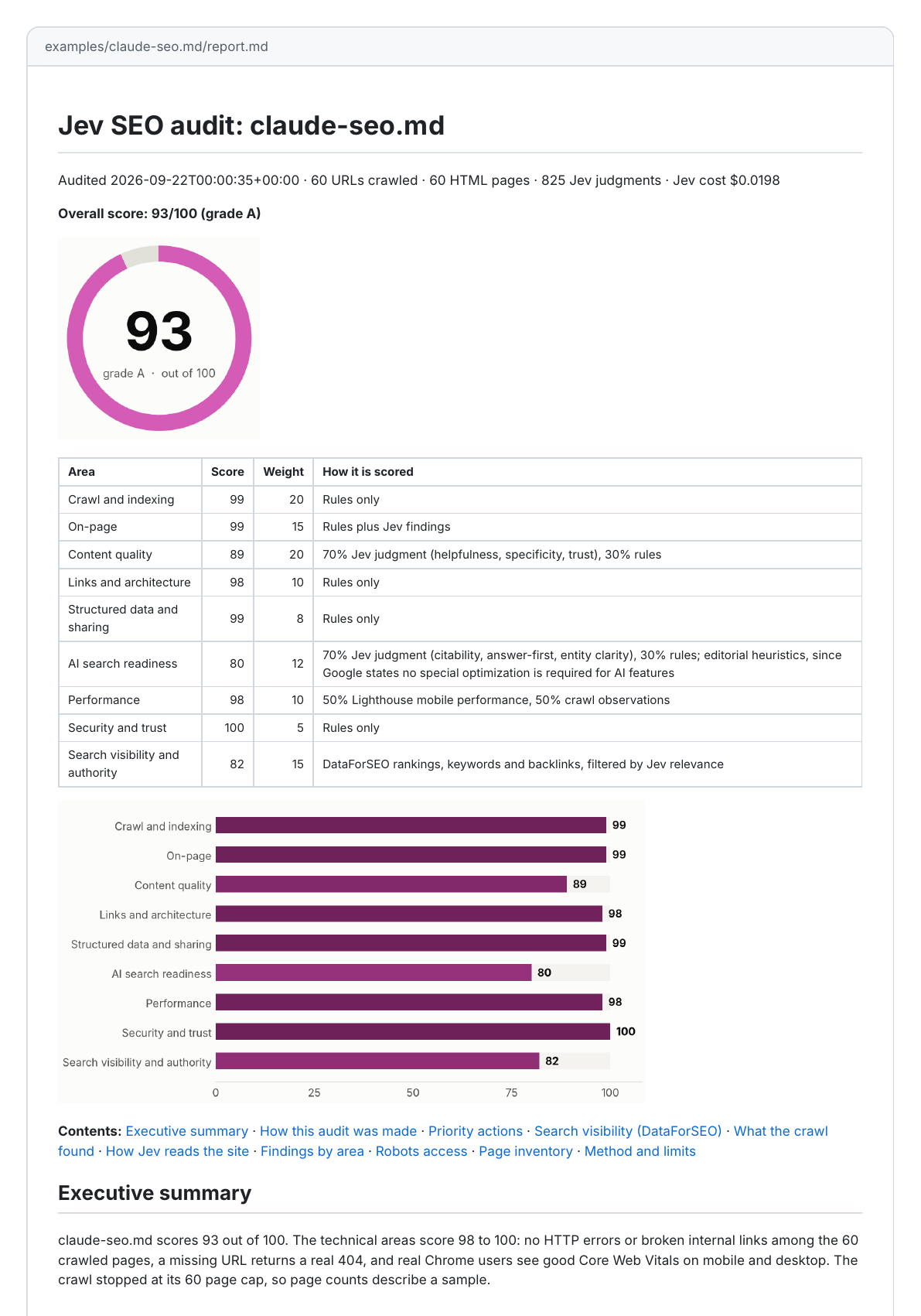
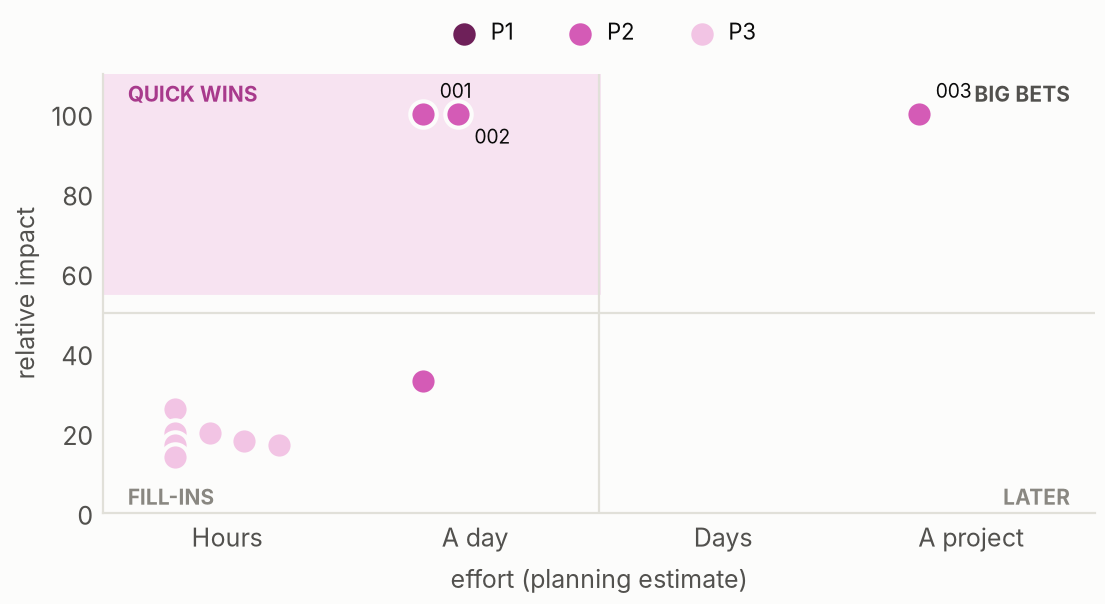
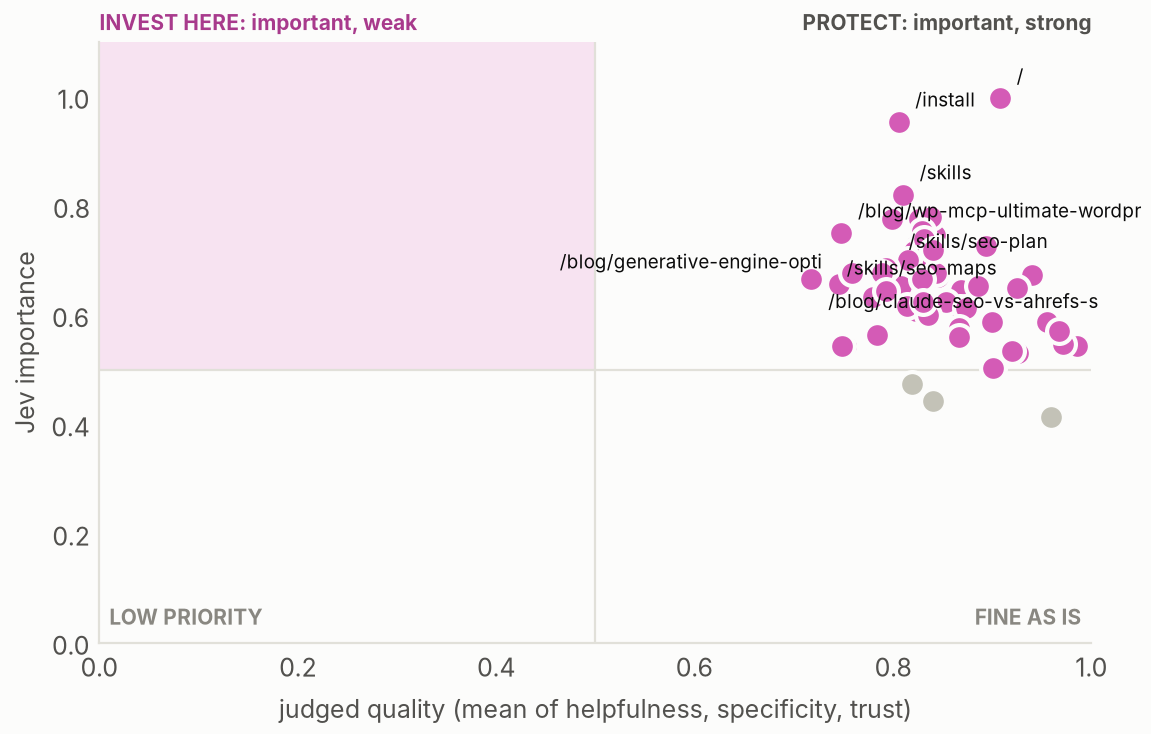
The PDF has a cover, summary, scorecard, impact-versus-effort chart and priorities for clients; the XLSX has an editable Actions tracker with dropdowns plus raw Jev judgments and probabilities; the Markdown version renders with Mermaid charts on GitHub or in Obsidian. All three come from the same audit.json.How reliable are Jev's judgments?Repeated runs on the same 59 pages moved scores by 0.03 or less on average and agreed on confident page types 44 out of 44 times, and a separate blind model judge agreed with Jev's decisive answers on most checks, though this shows consistency, not proven correctness.
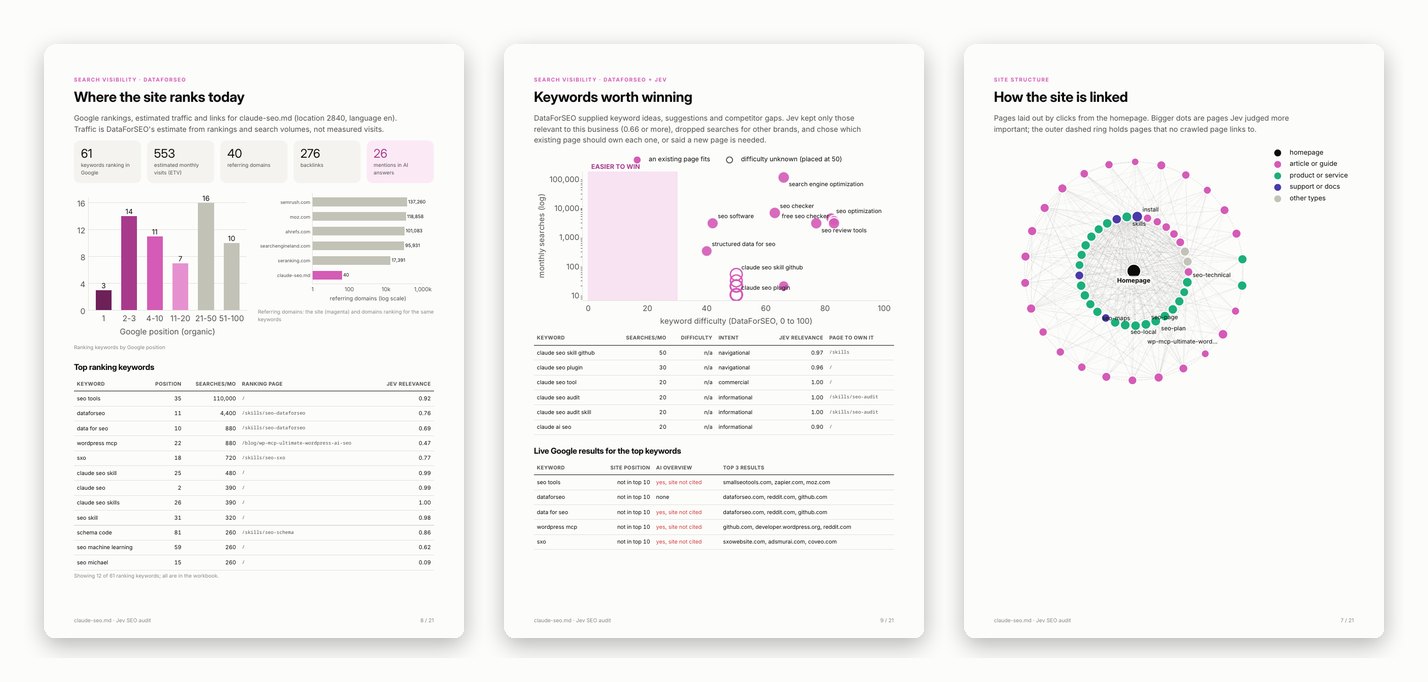
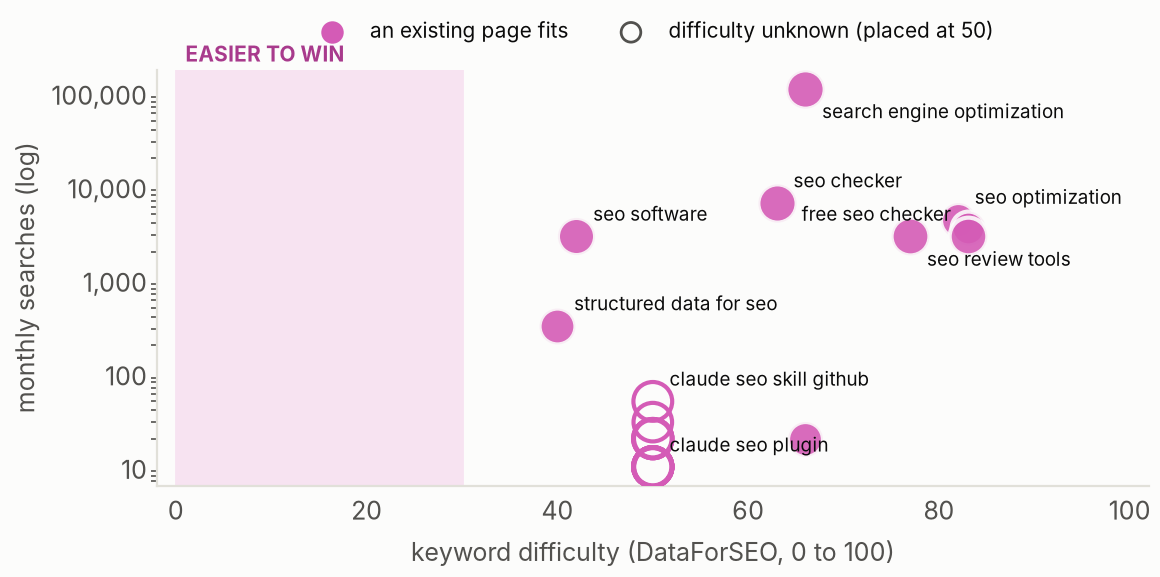
Repeated runs on the same 59 pages moved scores by 0.03 or less on average and agreed on confident page types 44 out of 44 times, and a separate blind model judge agreed with Jev's decisive answers on most checks, though this shows consistency, not proven correctness.What does --full mode add?The --full flag pulls rankings, keywords, competitors, referring domains, live SERPs and AI-mentions from the DataForSEO API for about $0.30 per site, on top of the free crawl and ~$0.01 Jev-only standard audit.
The --full flag pulls rankings, keywords, competitors, referring domains, live SERPs and AI-mentions from the DataForSEO API for about $0.30 per site, on top of the free crawl and ~$0.01 Jev-only standard audit.What kind of checks does the free crawl cover?It politely crawls robots.txt and sitemaps, records redirects and host/HTTPS probes, checks for soft 404s and llms.txt, and runs 52 rules across indexing, on-page content, links, structured data, AI crawler access, performance and security.
It politely crawls robots.txt and sitemaps, records redirects and host/HTTPS probes, checks for soft 404s and llms.txt, and runs 52 rules across indexing, on-page content, links, structured data, AI crawler access, performance and security.What are similar projects?seo-monster, geo-seo-claude, rankme.fast, qiaomu-anything-to-notebooklm, open-seo-mcp-skills, seo-landing, SenseNova-Skills, new-term-radar
seo-monster, geo-seo-claude, rankme.fast, qiaomu-anything-to-notebooklm, open-seo-mcp-skills, seo-landing, SenseNova-Skills, new-term-radarWhich topics is it in?core-web-vitals, seo-audit, seo-optimization, seo-tools, web-crawler, xlsx, excel, charts, analytics, google, web-scraping, skill
core-web-vitals, seo-audit, seo-optimization, seo-tools, web-crawler, xlsx, excel, charts, analytics, google, web-scraping, skill