10K ·GitHub
What is this?
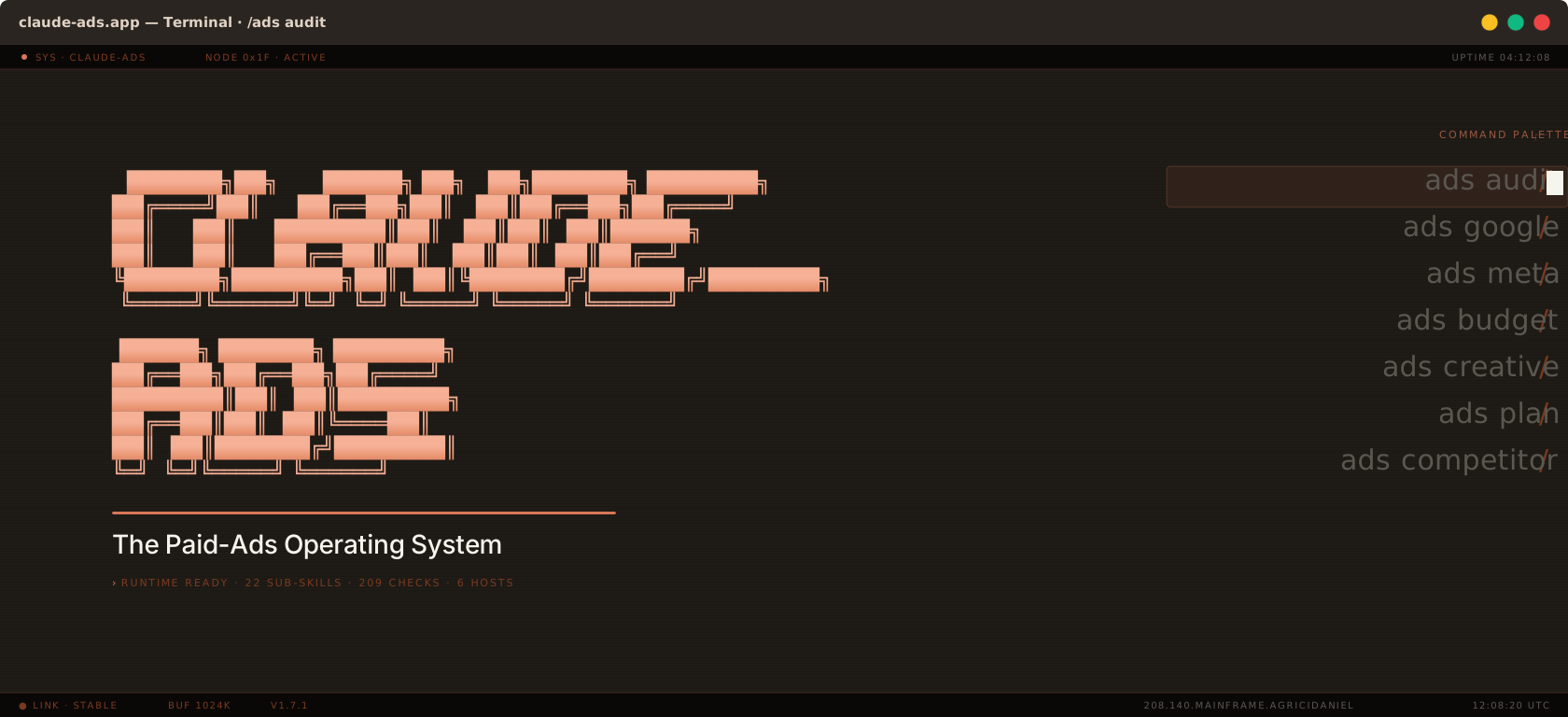
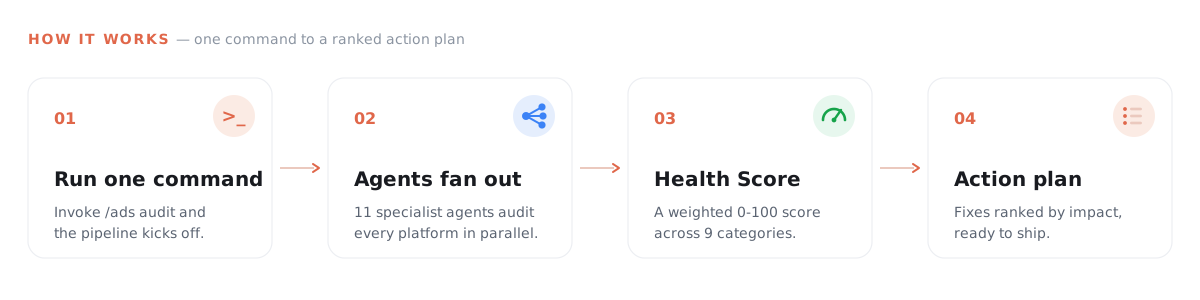
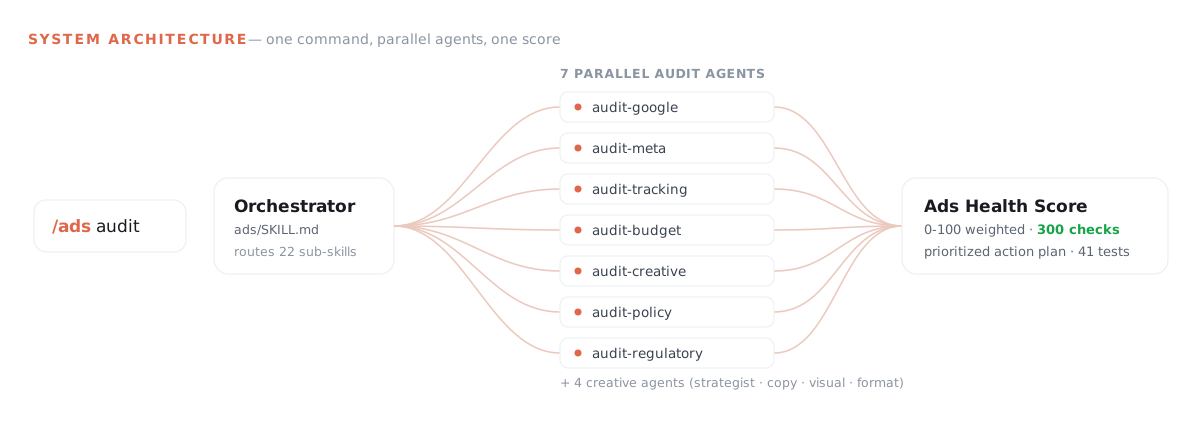
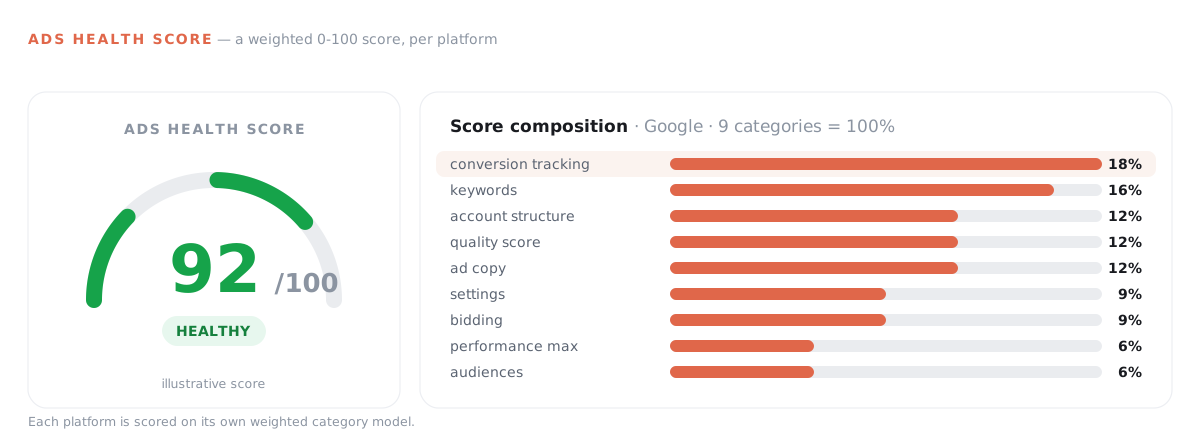
 A Claude Code skill for paid-media operations: it turns authorized ad-account exports or reads into source-grounded audits, campaign plans, creative briefs, experiments, monitoring, and versioned reports across 12 ad platforms.
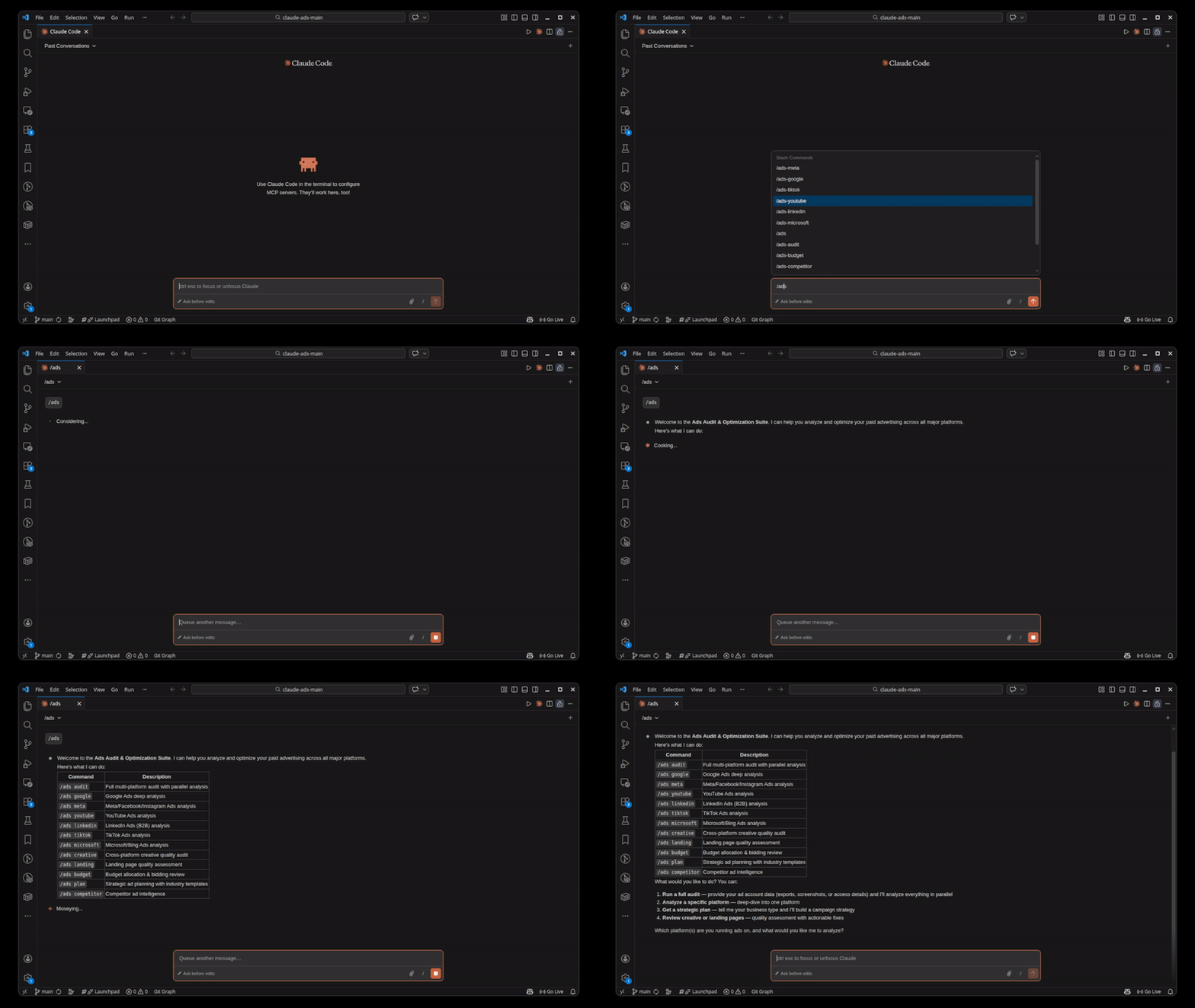
A Claude Code skill for paid-media operations: it turns authorized ad-account exports or reads into source-grounded audits, campaign plans, creative briefs, experiments, monitoring, and versioned reports across 12 ad platforms.Is this a standalone app or something that lives inside Claude Code?It is a skill, not an app: Claude Code is the canonical runtime, and Codex, Gemini, Cursor, Windsurf, and Goose can consume the same skill files where their runtime supports them. Standalone installs use /ads commands; Claude Code plugins use /claude-ads:ads.
It is a skill, not an app: Claude Code is the canonical runtime, and Codex, Gemini, Cursor, Windsurf, and Goose can consume the same skill files where their runtime supports them. Standalone installs use /ads commands; Claude Code plugins use /claude-ads:ads.Are there extra dependencies I have to install myself for everything to work?Yes, two: browser capture needs an operator-installed Playwright browser payload, and PDF rendering needs the host's WeasyPrint and Pango system libraries. Both are documented in the external runtime dependency manifest.
Yes, two: browser capture needs an operator-installed Playwright browser payload, and PDF rendering needs the host's WeasyPrint and Pango system libraries. Both are documented in the external runtime dependency manifest.Can it actually make changes in my ad accounts, or is it analysis only?It is read-only by default. Live changes stay disabled until the exact platform operation passes capability, approval, idempotency, verification, audit, and rollback gates — missing ceilings mean no write, and permanent deletion is not supported in v2.
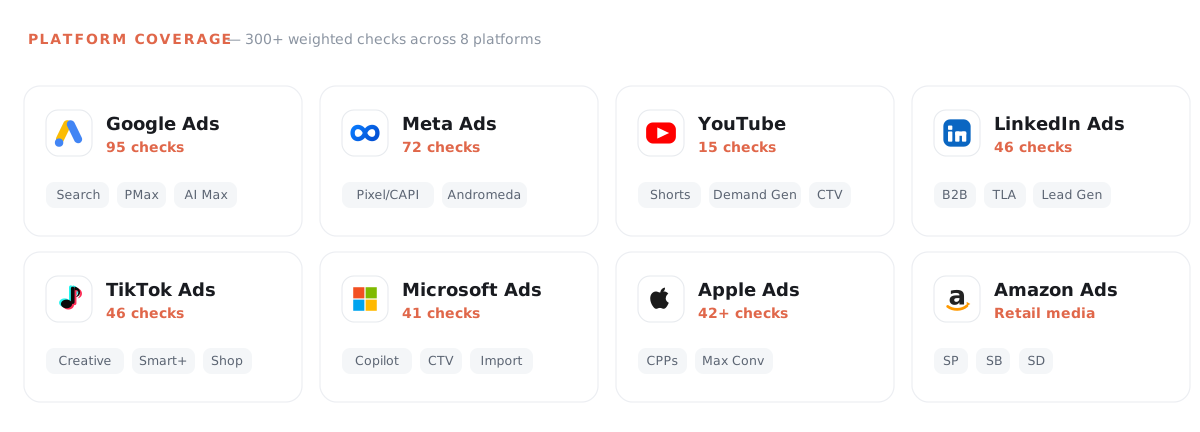
It is read-only by default. Live changes stay disabled until the exact platform operation passes capability, approval, idempotency, verification, audit, and rollback gates — missing ceilings mean no write, and permanent deletion is not supported in v2.Which ad platforms does it cover?Twelve: Google, Meta, YouTube, LinkedIn, TikTok, Microsoft, Reddit, Snapchat, and X Ads on the social side, plus Apple, Amazon, and Pinterest Ads for commerce and retail media. Each platform gets its own focused skill, audit worker, and capability manifest.
Twelve: Google, Meta, YouTube, LinkedIn, TikTok, Microsoft, Reddit, Snapchat, and X Ads on the social side, plus Apple, Amazon, and Pinterest Ads for commerce and retail media. Each platform gets its own focused skill, audit worker, and capability manifest.Where do my credentials and client data end up?Credentials belong in environment variables, an OS keychain, or an approved secret manager — never in the repository, profiles, reports, or logs. Client data, account exports, and agent transcripts must never enter Git history, reports, or release archives.
Credentials belong in environment variables, an OS keychain, or an approved secret manager — never in the repository, profiles, reports, or logs. Client data, account exports, and agent transcripts must never enter Git history, reports, or release archives.Is it free to use for client work?Yes — the public release is MIT-licensed with no membership required, so agency and in-house commercial use is fine. Third-party APIs, trademarks, and cited artifacts remain under their own terms.
Yes — the public release is MIT-licensed with no membership required, so agency and in-house commercial use is fine. Third-party APIs, trademarks, and cited artifacts remain under their own terms.What is the difference between this repo and the AI Marketing Hub mirror?The public release here is MIT with no membership required. The AI-Marketing-Hub/claude-ads community mirror is where AI Marketing Hub Pro members get early access and direct collaboration.
The public release here is MIT with no membership required. The AI-Marketing-Hub/claude-ads community mirror is where AI Marketing Hub Pro members get early access and direct collaboration.What does 'source-grounded' actually mean in practice?Claims need dated sources: no source means no current platform claim, and no implementation, fixture, and test means no capability claim. Reports also flag missing data, stale sources, contradictions, and partial failures instead of papering over them.
Claims need dated sources: no source means no current platform claim, and no implementation, fixture, and test means no capability claim. Reports also flag missing data, stale sources, contradictions, and partial failures instead of papering over them.Can it handle several client accounts at once?Yes. /ads setup creates the client, account, KPI, privacy, and guardrail profile, and scoring works at portfolio level — a failed platform is excluded from portfolio scoring and marks the whole run partial.
Yes. /ads setup creates the client, account, KPI, privacy, and guardrail profile, and scoring works at portfolio level — a failed platform is excluded from portfolio scoring and marks the whole run partial.Why are launch and optimize draft-only commands?/ads launch --draft and /ads optimize --draft produce a human-readable before/after diff with blast radius, so an owner can approve within account-defined ceilings before anything is applied. Missing ceilings mean no write.
/ads launch --draft and /ads optimize --draft produce a human-readable before/after diff with blast radius, so an owner can approve within account-defined ceilings before anything is applied. Missing ceilings mean no write.What are similar projects?handout-remake, marketingskills, marketing-os, linkedin-agent-skill, huashu-art-motion, google-ads-meta-ads-mcp, marketing-skills, geo-seo-claude
handout-remake, marketingskills, marketing-os, linkedin-agent-skill, huashu-art-motion, google-ads-meta-ads-mcp, marketing-skills, geo-seo-claudeWhich topics is it in?marketing-automation, claude-code-skill, playwright, analytics, claude-skills, json, pdf, gemini, monitoring, agent-skills, codex, privacy
marketing-automation, claude-code-skill, playwright, analytics, claude-skills, json, pdf, gemini, monitoring, agent-skills, codex, privacy