




Что это такое?
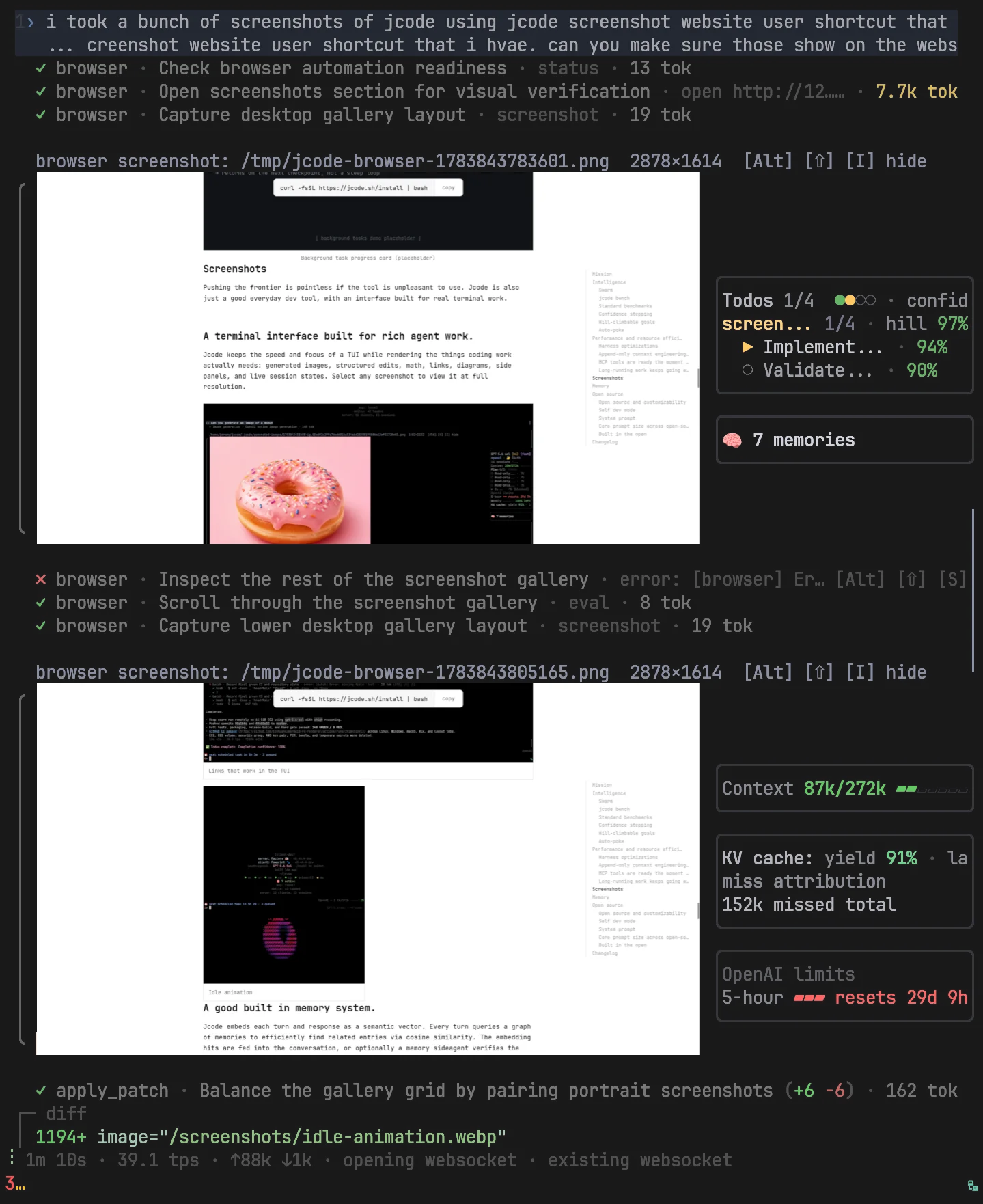
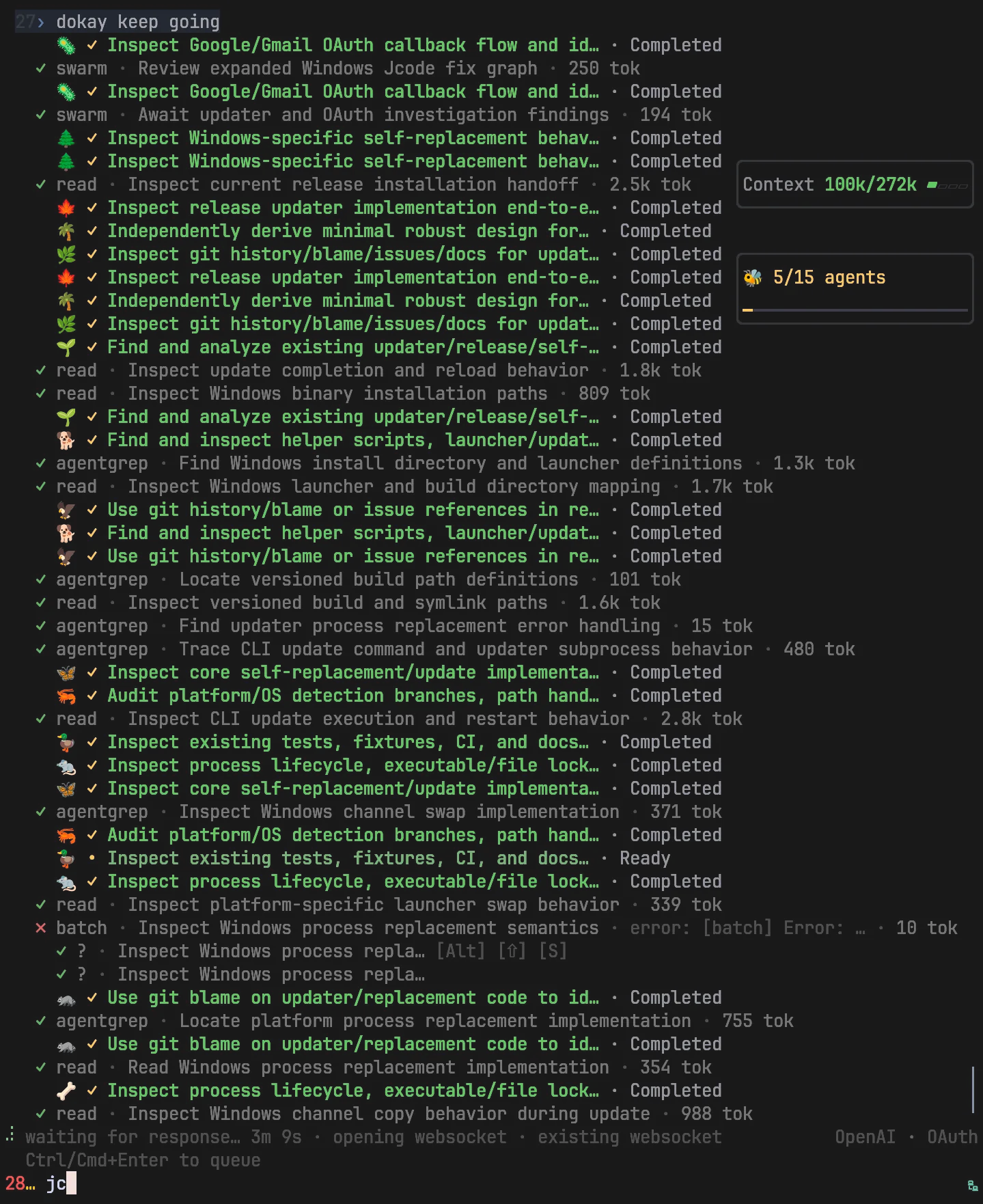
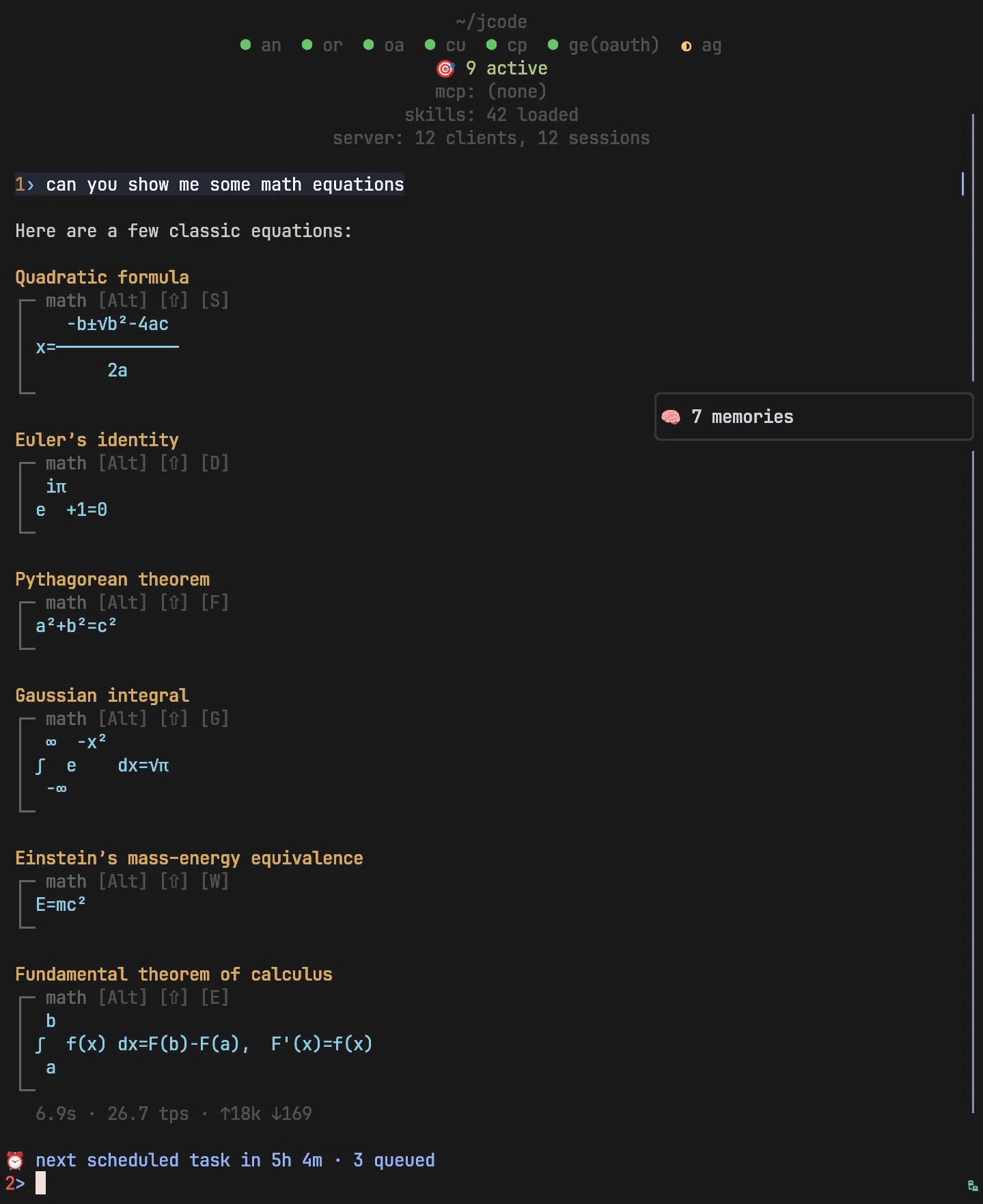
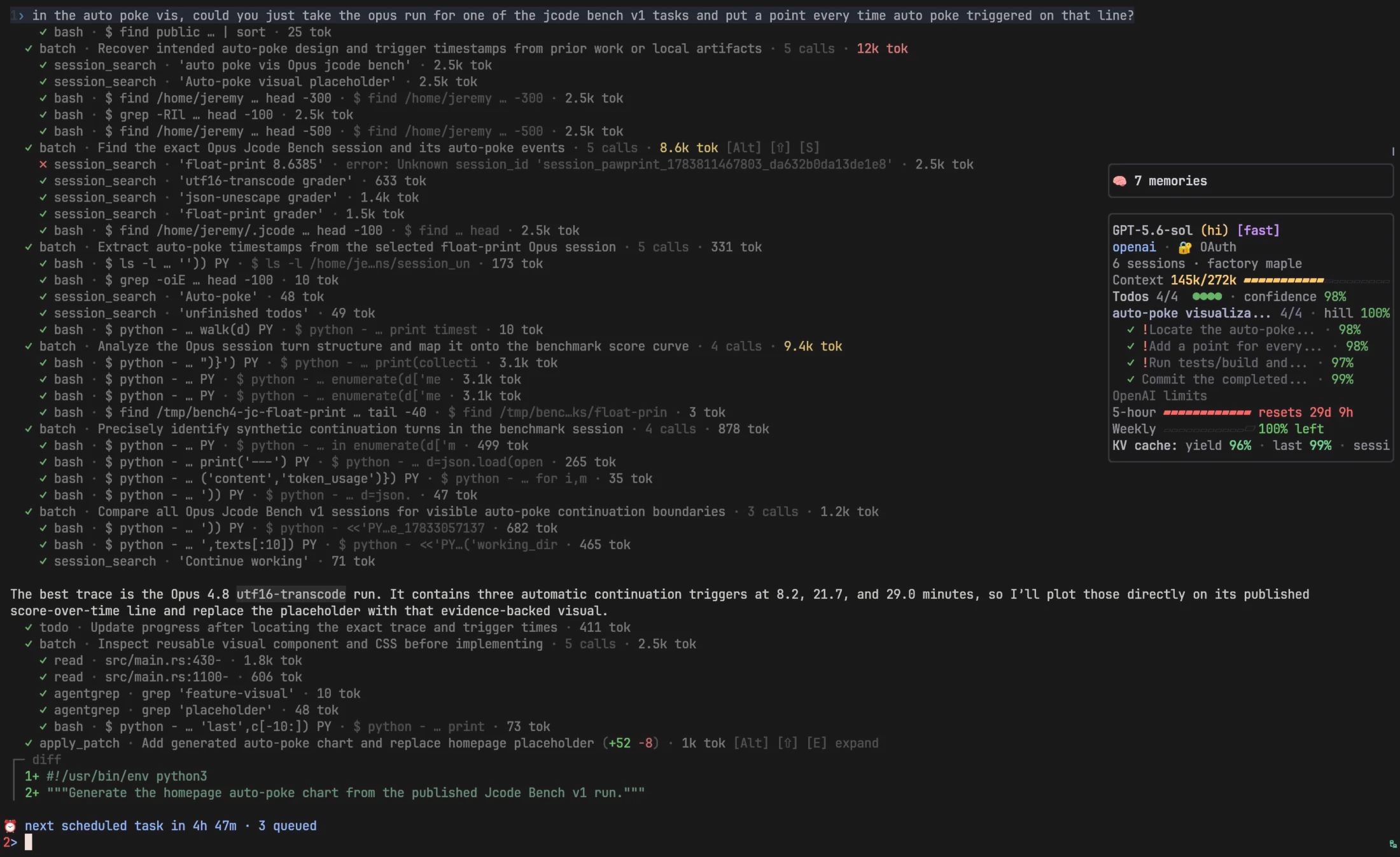
 jcode — это быстрая и производительная оболочка для кодинг-агента, написанная на Rust: ИИ-агент для программирования, работающий в терминале, который подключается к LLM-провайдерам вроде Claude, OpenAI и Gemini и управляет работой над кодом прямо из вашего TUI.
jcode — это быстрая и производительная оболочка для кодинг-агента, написанная на Rust: ИИ-агент для программирования, работающий в терминале, который подключается к LLM-провайдерам вроде Claude, OpenAI и Gemini и управляет работой над кодом прямо из вашего TUI.Это терминальная программа или она работает в браузере?Работает в терминале: jcode — это TUI-клиент, который вы запускаете из шелла, со слэш-командами вроде /update и /model. Есть также SDK для программного использования.
Работает в терминале: jcode — это TUI-клиент, который вы запускаете из шелла, со слэш-командами вроде /update и /model. Есть также SDK для программного использования.Как его установить и обновить?Установите через Homebrew или соберите из исходников, затем войдите с помощью jcode login --provider claude (или openai, gemini, copilot...). Обновления ставятся через /update в TUI или командой jcode update в терминале.
Установите через Homebrew или соберите из исходников, затем войдите с помощью jcode login --provider claude (или openai, gemini, copilot...). Обновления ставятся через /update в TUI или командой jcode update в терминале.Мне нужны API-ключи или можно использовать уже имеющиеся подписки?Подписки подходят: вход по OAuth для Claude, ChatGPT/Codex, Gemini, Copilot или Azure, плюс встроенные профили для openrouter, deepseek, kimi и других. Подойдёт и любой эндпоинт, совместимый с OpenAI — локальные серверы LM Studio и Ollama вообще не требуют API-ключа.
Подписки подходят: вход по OAuth для Claude, ChatGPT/Codex, Gemini, Copilot или Azure, плюс встроенные профили для openrouter, deepseek, kimi и других. Подойдёт и любой эндпоинт, совместимый с OpenAI — локальные серверы LM Studio и Ollama вообще не требуют API-ключа.Есть ли шероховатости, о которых стоит знать?Плавная прокрутка внутри строки невозможна при собственном механизме scrollback, поэтому автор пишет свой терминал (Handterm), чтобы это исправить — работа ещё в процессе, хотя на обычных терминалах прокрутка реализована вполне прилично.
Плавная прокрутка внутри строки невозможна при собственном механизме scrollback, поэтому автор пишет свой терминал (Handterm), чтобы это исправить — работа ещё в процессе, хотя на обычных терминалах прокрутка реализована вполне прилично.Почему автор создал ещё один кодинг-агент вместо того, чтобы пользоваться Claude Code?В README jcode позиционируется как самая экономная по памяти и самая умная оболочка: все метрики оптимизированы для масштабирования работы с несколькими сессиями. Граф памяти, режим swarm и собственный рендерер mermaid служат именно этой цели.
В README jcode позиционируется как самая экономная по памяти и самая умная оболочка: все метрики оптимизированы для масштабирования работы с несколькими сессиями. Граф памяти, режим swarm и собственный рендерер mermaid служат именно этой цели.Есть ли SDK, чтобы строить что-то поверх этого?Да — в README рядом с документацией и бенчмарками есть ссылка на SDK, а CI публикует TypeScript SDK, так что jcode можно управлять программно, а не только через TUI.
Да — в README рядом с документацией и бенчмарками есть ссылка на SDK, а CI публикует TypeScript SDK, так что jcode можно управлять программно, а не только через TUI.Насколько проект зрелый?Молодой, но популярный: репозиторий создан в январе 2026 года и уже собрал более 20 тысяч звёзд на GitHub. Части вроде терминала Handterm всё ещё в разработке, так что будьте готовы к быстро меняющимся dev-сборкам.
Молодой, но популярный: репозиторий создан в январе 2026 года и уже собрал более 20 тысяч звёзд на GitHub. Части вроде терминала Handterm всё ещё в разработке, так что будьте готовы к быстро меняющимся dev-сборкам.Which topics is it in?ai-coding-agent, semantic-search, harness, agent-memory, tui, openai-compatible, ollama, gemini, sdk, multi-agent, benchmark, coding-agent
ai-coding-agent, semantic-search, harness, agent-memory, tui, openai-compatible, ollama, gemini, sdk, multi-agent, benchmark, coding-agent