Что это такое?
 OpenScion — это система контроля версий с открытым исходным кодом и серверным ядром, созданная для очень больших монорепозиториев, где основными клиентами выступают ИИ-агенты и CI-задачи, а не разработчики за ноутбуками. Она смоделирована по внутренней системе Anthropic под названием Scion, описанной в их статье «Redesigning source control».
Это замена Git или инструмент поверх него?Это полноценная система контроля версий, которая должна заменить Git для нагрузок с большим количеством агентов, а не плагин: история, blame, коммиты, rebase и слияния выполняются на сервере, а клиенты общаются с ним через RPC API вместо обмена packfile.
Это полноценная система контроля версий, которая должна заменить Git для нагрузок с большим количеством агентов, а не плагин: история, blame, коммиты, rebase и слияния выполняются на сервере, а клиенты общаются с ним через RPC API вместо обмена packfile.Как установить и попробовать?Установите клиент командой 'cargo install openscion' — она даст бинарный файл 'opnscn'. Сервер, CLI и GUI работают через один и тот же API, описанный в крейте openscion-proto.
Установите клиент командой 'cargo install openscion' — она даст бинарный файл 'opnscn'. Сервер, CLI и GUI работают через один и тот же API, описанный в крейте openscion-proto.Нужен ли мне Rust, чтобы пользоваться этим?Да, распространяется это как крейт Rust через cargo, а референсное серверное хранилище работает в памяти или на локальной файловой системе/SQLite, поэтому один узел работает без каких-либо облачных сервисов.
Да, распространяется это как крейт Rust через cargo, а референсное серверное хранилище работает в памяти или на локальной файловой системе/SQLite, поэтому один узел работает без каких-либо облачных сервисов.Можно ли уже сейчас использовать это вместо Git в продакшен-монорепозиториях?Это проект на раннем этапе (119 звёзд, создан в октябре 2026 года), а в документации явно ведётся дорожная карта «что уже есть, что будет дальше, что вне рамок», поэтому это пока не прямая замена для устоявшихся рабочих процессов Git.
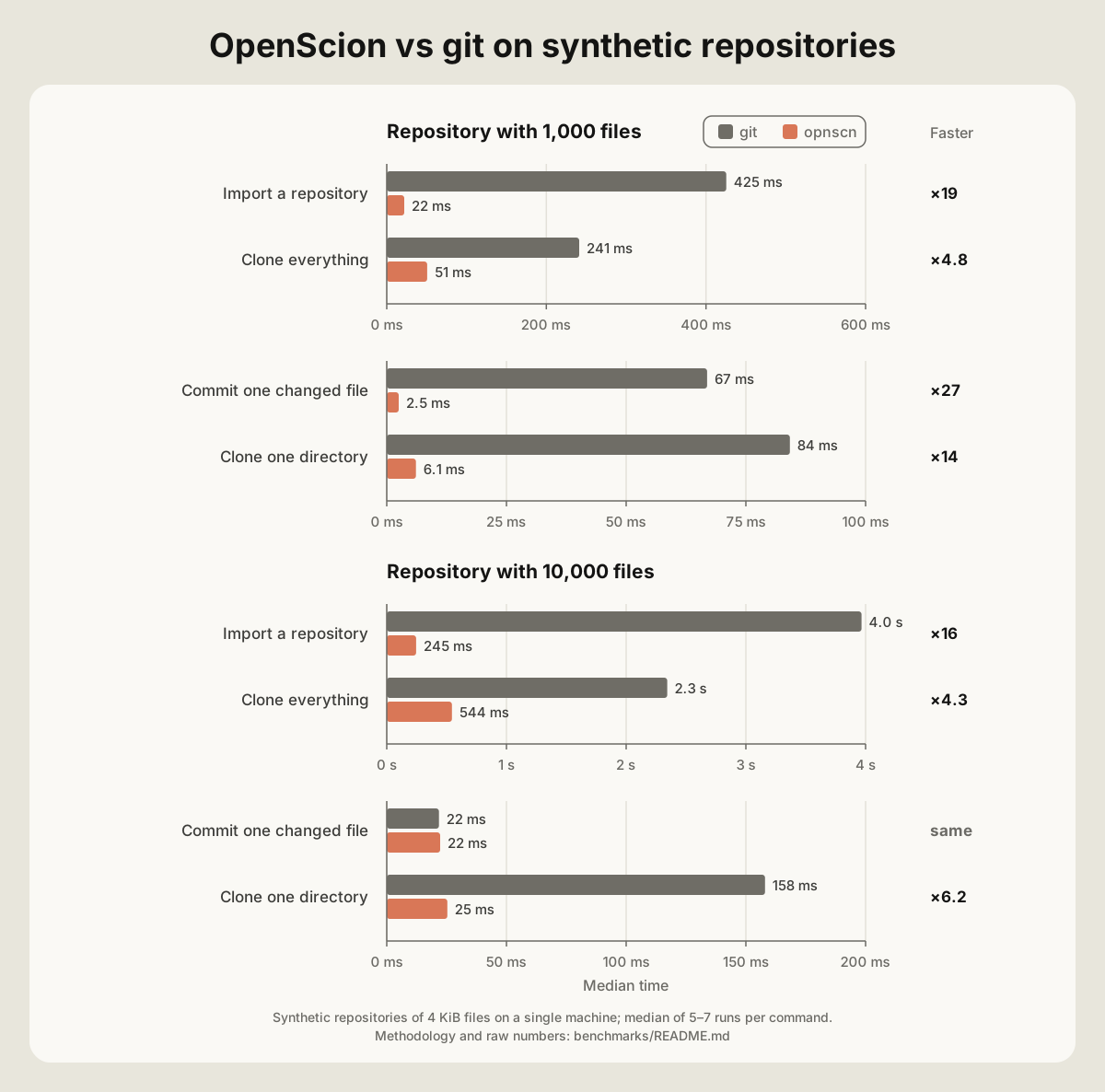
Это проект на раннем этапе (119 звёзд, создан в октябре 2026 года), а в документации явно ведётся дорожная карта «что уже есть, что будет дальше, что вне рамок», поэтому это пока не прямая замена для устоявшихся рабочих процессов Git.Почему OpenScion быстрее Git на больших репозиториях?Операции выполняются на сервере, а клиенты загружают только деревья и файлы по запрошенному пути, поэтому клонирование одной директории стоит размера этого фрагмента, а не всего репозитория. Бенчмарки показывают, что на синтетических репозиториях импорт и клонирование идут в несколько раз быстрее, чем в git.
Операции выполняются на сервере, а клиенты загружают только деревья и файлы по запрошенному пути, поэтому клонирование одной директории стоит размера этого фрагмента, а не всего репозитория. Бенчмарки показывают, что на синтетических репозиториях импорт и клонирование идут в несколько раз быстрее, чем в git.Что такое changeset и чем он отличается от снимка?Changeset перечисляет только те файлы, которые изменились относительно его первого родителя, поэтому его создание стоит размера изменения, а не размера всего дерева репозитория.
Changeset перечисляет только те файлы, которые изменились относительно его первого родителя, поэтому его создание стоит размера изменения, а не размера всего дерева репозитория.Зачем это создавали, а не просто масштабировали Git?Монорепозиторий Anthropic вырос примерно до 100 ГБ, с более чем 30 000 слияний изменений в день и 25 миллионами CI-чекаутов, что нарушило предположение Git о том, что каждый клиент хранит полную офлайн-историю, и потребовало сотен зеркал git, чтобы справляться с нагрузкой.
Монорепозиторий Anthropic вырос примерно до 100 ГБ, с более чем 30 000 слияний изменений в день и 25 миллионами CI-чекаутов, что нарушило предположение Git о том, что каждый клиент хранит полную офлайн-историю, и потребовало сотен зеркал git, чтобы справляться с нагрузкой.Как принятие изменений обходится без глобальной блокировки слияния?Ссылки двигаются только через compare-and-swap: принятие изменения — это серверный rebase и одна атомарная замена записи, которая повторяется при конфликте, поэтому тысячи параллельных клиентов не блокируются на одном замке.
Ссылки двигаются только через compare-and-swap: принятие изменения — это серверный rebase и одна атомарная замена записи, которая повторяется при конфликте, поэтому тысячи параллельных клиентов не блокируются на одном замке.В каких он темах?version-control, monorepo, ci, distributed-systems, sqlite, database, benchmark, gplv3, performance, command-line-tool, rust, api
version-control, monorepo, ci, distributed-systems, sqlite, database, benchmark, gplv3, performance, command-line-tool, rust, api