








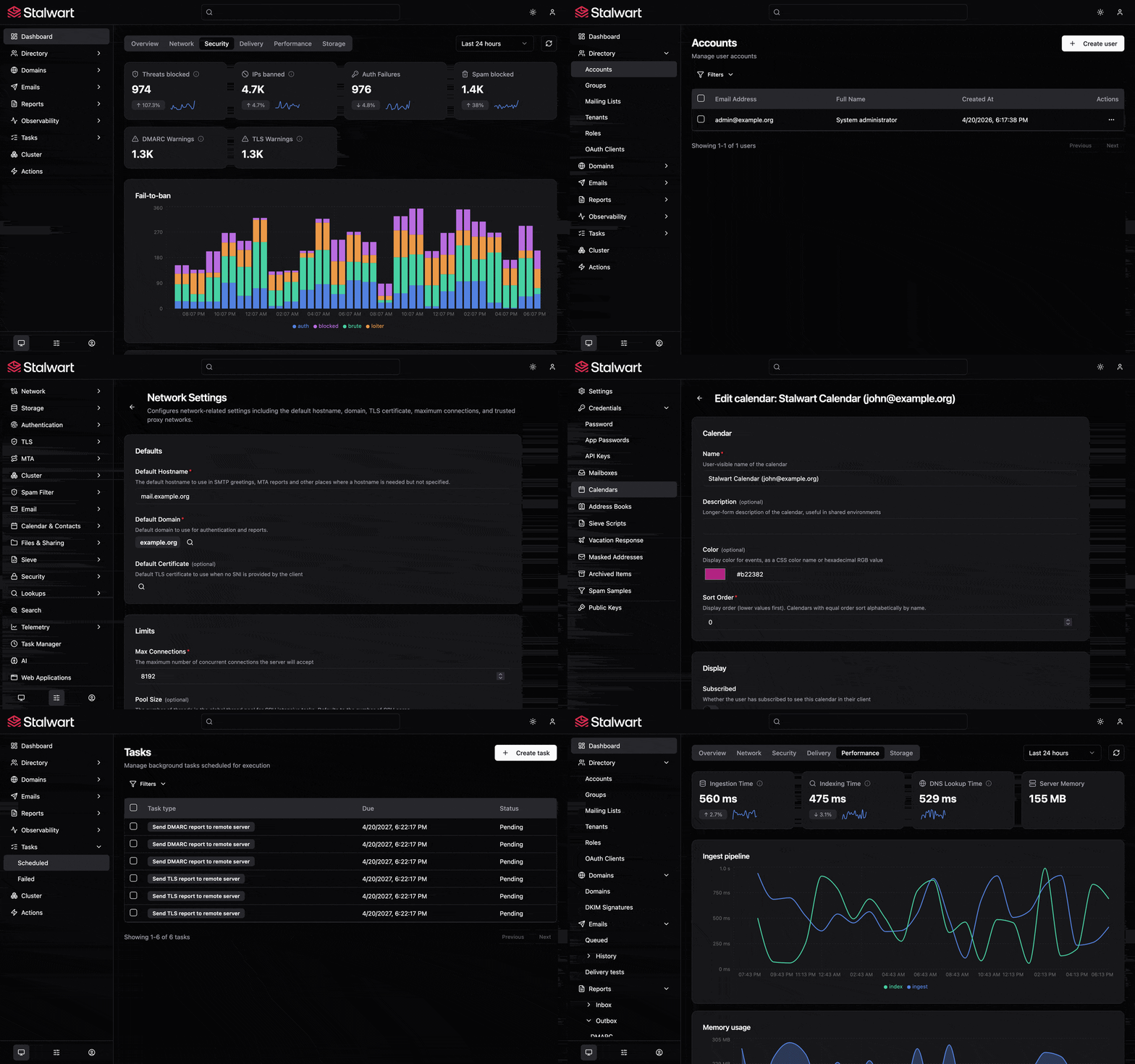
What is this?
 Stalwart is an all-in-one, open-source mail and collaboration server written in Rust that supports email (JMAP, IMAP4, POP3, SMTP), calendaring (CalDAV), contacts (CardDAV) and file storage/sharing (WebDAV) in a single binary.
Stalwart is an all-in-one, open-source mail and collaboration server written in Rust that supports email (JMAP, IMAP4, POP3, SMTP), calendaring (CalDAV), contacts (CardDAV) and file storage/sharing (WebDAV) in a single binary.Is this a library or a self-hosted server I run myself?It is a self-hosted server application you deploy on your own machine, VM or cluster, not a library or SaaS product.
It is a self-hosted server application you deploy on your own machine, VM or cluster, not a library or SaaS product.How do I get it running?You install it on Linux, macOS, FreeBSD or Windows, or run it via Docker; the full setup instructions live in the official docs site.
You install it on Linux, macOS, FreeBSD or Windows, or run it via Docker; the full setup instructions live in the official docs site.Which storage backends does it need?None are mandatory beyond a storage backend of your choice: it supports RocksDB, FoundationDB, PostgreSQL, MySQL, SQLite, S3-compatible, Azure and Redis, plus optional external search engines like Meilisearch or Elasticsearch.
None are mandatory beyond a storage backend of your choice: it supports RocksDB, FoundationDB, PostgreSQL, MySQL, SQLite, S3-compatible, Azure and Redis, plus optional external search engines like Meilisearch or Elasticsearch.Is every feature free, or is some of it enterprise-only?The core is free under AGPL-3.0, but Stalwart Labs also sells a proprietary Stalwart Enterprise License (SELv2) that unlocks additional features and commercial flexibility; priority support requires a paid Enterprise License.
The core is free under AGPL-3.0, but Stalwart Labs also sells a proprietary Stalwart Enterprise License (SELv2) that unlocks additional features and commercial flexibility; priority support requires a paid Enterprise License.Which operating systems can it run on?It runs natively on Linux, macOS and FreeBSD, on Windows, or anywhere via Docker containers.
It runs natively on Linux, macOS and FreeBSD, on Windows, or anywhere via Docker containers.Does encryption-at-rest protect stored mail?Yes, Stalwart supports encrypting stored data at rest using S/MIME or OpenPGP.
Yes, Stalwart supports encrypting stored data at rest using S/MIME or OpenPGP.Does it have built-in spam and phishing protection?Yes, it includes DNSBLs checks, a statistical spam classifier, Pyzor collaborative filtering, greylisting, spam traps and homographic-URL phishing detection, plus optional LLM-driven spam analysis.
Yes, it includes DNSBLs checks, a statistical spam classifier, Pyzor collaborative filtering, greylisting, spam traps and homographic-URL phishing detection, plus optional LLM-driven spam analysis.Is there a web admin dashboard?Yes, a web-based dashboard provides real-time statistics, account/domain/mailing-list management, SMTP queue management, DMARC/TLS-RPT report visualization and a log viewer.
Yes, a web-based dashboard provides real-time statistics, account/domain/mailing-list management, SMTP queue management, DMARC/TLS-RPT report visualization and a log viewer.How does it scale across multiple servers?It coordinates cluster nodes peer-to-peer or via Kafka, Redpanda, NATS or Redis, and supports Kubernetes, Apache Mesos and Docker Swarm for orchestration, with read replicas and sharded blob storage for high availability.
It coordinates cluster nodes peer-to-peer or via Kafka, Redpanda, NATS or Redis, and supports Kubernetes, Apache Mesos and Docker Swarm for orchestration, with read replicas and sharded blob storage for high availability.What authentication methods are supported?It supports OpenID Connect, OAuth 2.0, LDAP, SQL or built-in auth backends, SCIM v2 provisioning, TOTP two-factor authentication and application passwords.
It supports OpenID Connect, OAuth 2.0, LDAP, SQL or built-in auth backends, SCIM v2 provisioning, TOTP two-factor authentication and application passwords.What are similar projects?casdoor, Termix, zitadel, docker-mailserver, labtether, JeecgBoot, kratos, NodePilot
casdoor, Termix, zitadel, docker-mailserver, labtether, JeecgBoot, kratos, NodePilotWhich topics is it in?mail, imap, ldap, smtp, webdav, 2fa, multi-tenant, oidc, prometheus, sso, self-hosting, rbac
mail, imap, ldap, smtp, webdav, 2fa, multi-tenant, oidc, prometheus, sso, self-hosting, rbac