
261 ·GitHub
Что это такое?
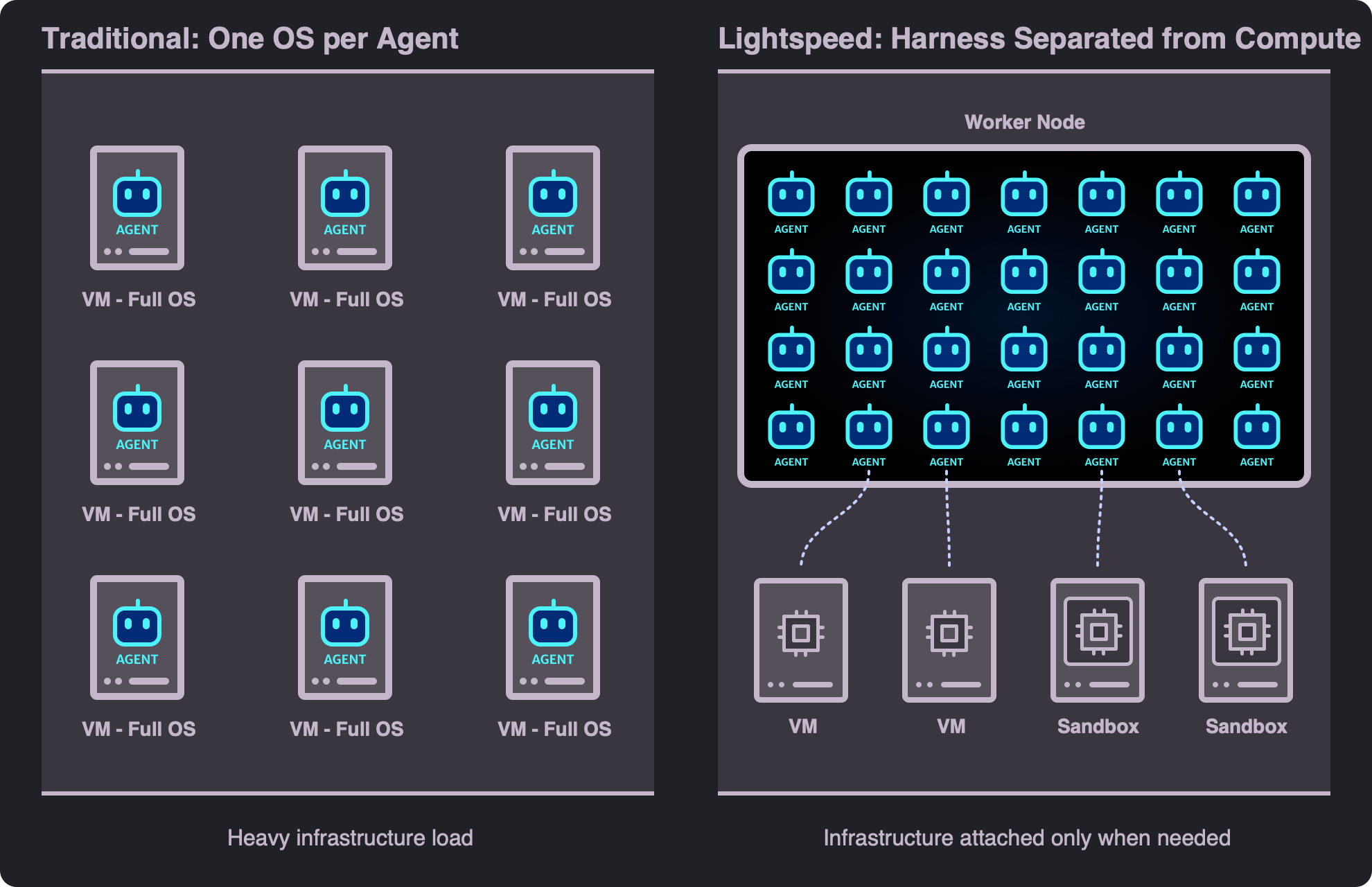
 Lightspeed — это open-source-инфраструктура для запуска множества ИИ-агентов в виде долгоживущих рабочих процессов: сессии агентов переживают перезапуски, могут работать от недель до месяцев и почти ничего не стоят в простое, занимая реальную машину только тогда, когда задаче она действительно нужна.
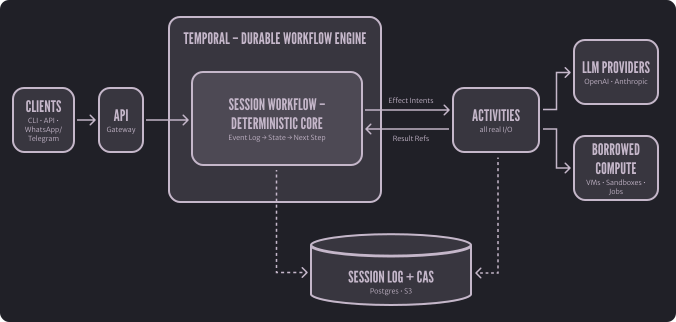
Lightspeed — это open-source-инфраструктура для запуска множества ИИ-агентов в виде долгоживущих рабочих процессов: сессии агентов переживают перезапуски, могут работать от недель до месяцев и почти ничего не стоят в простое, занимая реальную машину только тогда, когда задаче она действительно нужна.Это библиотека, которую я встраиваю в своё приложение, или сервис, который я разворачиваю и использую?Полноценный self-hosted-продукт, а не библиотека: ядро на Rust работает поверх Temporal, производственные данные хранятся в Postgres (опционально с S3), а фронтенд на TypeScript и React управляется через интерфейс или JSON-RPC API.
Полноценный self-hosted-продукт, а не библиотека: ядро на Rust работает поверх Temporal, производственные данные хранятся в Postgres (опционально с S3), а фронтенд на TypeScript и React управляется через интерфейс или JSON-RPC API.Как запустить локальный экземпляр?Установите Rust с поддержкой edition 2024, Node.js 24+ и Docker с Compose, затем запустите лаунчер: он установит зависимости, поднимет локальную инфраструктуру и процессы приложения, применит миграции и выведет данные для входа в режиме разработки ([email protected]). Ключи API для LLM задайте в интерфейсе или через переменные окружения.
Установите Rust с поддержкой edition 2024, Node.js 24+ и Docker с Compose, затем запустите лаунчер: он установит зависимости, поднимет локальную инфраструктуру и процессы приложения, применит миграции и выведет данные для входа в режиме разработки ([email protected]). Ключи API для LLM задайте в интерфейсе или через переменные окружения.Какие LLM-провайдеры и ключи мне понадобятся?OpenAI и Anthropic работают сразу из коробки — ключи задаются в интерфейсе или через переменные окружения. Также поддерживаются серверы, совместимые с OpenAI: OpenRouter, DeepSeek, vLLM и Ollama, каждый со своим endpoint и учётными данными, плюс автоматическое кэширование промптов.
OpenAI и Anthropic работают сразу из коробки — ключи задаются в интерфейсе или через переменные окружения. Также поддерживаются серверы, совместимые с OpenAI: OpenRouter, DeepSeek, vLLM и Ollama, каждый со своим endpoint и учётными данными, плюс автоматическое кэширование промптов.У агентов сразу есть настоящая оболочка и файловая система?Нет — без подключённой машины агенты работают через виртуальную файловую систему и веб-доступ, размещённый у провайдера. Оболочка, выполнение кода и полноценная файловая система доступны только в подключённых окружениях: существующая машина, виртуальная машина, созданная через Incus, или любой хост с запущенным демоном lightspeed-envd.
Нет — без подключённой машины агенты работают через виртуальную файловую систему и веб-доступ, размещённый у провайдера. Оболочка, выполнение кода и полноценная файловая система доступны только в подключённых окружениях: существующая машина, виртуальная машина, созданная через Incus, или любой хост с запущенным демоном lightspeed-envd.Что с этим реально делают люди?Долгоживущие парки агентов: персональные ассистенты для тысяч пользователей без отдельной простаивающей ВМ на каждого, автономные «программные фабрики», неделями создающие и проверяющие фичи, дежурные ops-агенты, разбирающиеся с алертами, и исследовательские агенты, следящие за долгими экспериментами.
Долгоживущие парки агентов: персональные ассистенты для тысяч пользователей без отдельной простаивающей ВМ на каждого, автономные «программные фабрики», неделями создающие и проверяющие фичи, дежурные ops-агенты, разбирающиеся с алертами, и исследовательские агенты, следящие за долгими экспериментами.Можно ли запустить это как одно self-hosted-развёртывание для многих пользователей?Да — продукт для этого и создан: можно изолировать клиентов (тенантов) в universes на одном развёртывании или завести отдельные для каждого, а один backend-бинарник способен выполнять все роли в одном процессе или масштабировать роли независимо на разных Temporal-воркерах.
Да — продукт для этого и создан: можно изолировать клиентов (тенантов) в universes на одном развёртывании или завести отдельные для каждого, а один backend-бинарник способен выполнять все роли в одном процессе или масштабировать роли независимо на разных Temporal-воркерах.Как обрабатываются мои API-ключи и секреты?Учётные данные шифруются при хранении, OAuth-токены обновляются автоматически, а окружения и задачи получают секреты через credential injection, не раскрывая их модели. Развёртывания по умолчанию многопользовательские, с изоляцией через universes.
Учётные данные шифруются при хранении, OAuth-токены обновляются автоматически, а окружения и задачи получают секреты через credential injection, не раскрывая их модели. Развёртывания по умолчанию многопользовательские, с изоляцией через universes.Сессии правда могут идти месяцами и переживать перезапуски?Да — сессии длятся от недель до месяцев и переживают перезапуски. Пока выполнение идёт, его можно отменить, направить в другую сторону или поставить следующее сообщение в очередь, а сами сессии можно форкать или клонировать, чтобы ответвиться от сохранённой истории.
Да — сессии длятся от недель до месяцев и переживают перезапуски. Пока выполнение идёт, его можно отменить, направить в другую сторону или поставить следующее сообщение в очередь, а сами сессии можно форкать или клонировать, чтобы ответвиться от сохранённой истории.Поддерживаются ли MCP-серверы и суб-агенты?И то, и другое. MCP подключает локальные или удалённые серверы с API-ключами или через OAuth, причём вызовы инструментов обрабатывает либо провайдер модели, либо сама Lightspeed — включая постепенное обнаружение через поиск инструментов. Суб-агенты позволяют агенту делегировать задачи подчинённым дочерним агентам с настраиваемыми профилями и лимитами.
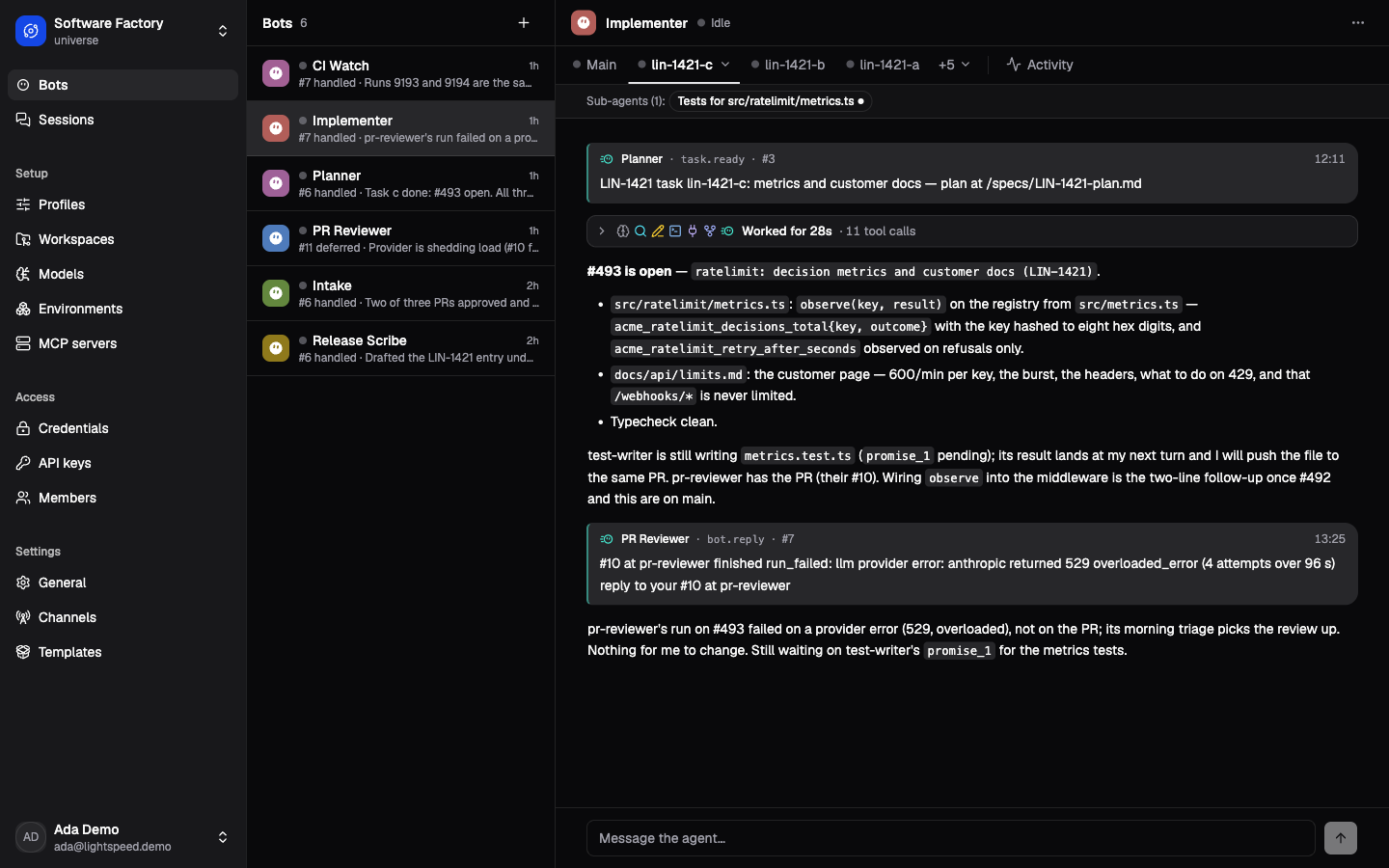
И то, и другое. MCP подключает локальные или удалённые серверы с API-ключами или через OAuth, причём вызовы инструментов обрабатывает либо провайдер модели, либо сама Lightspeed — включая постепенное обнаружение через поиск инструментов. Суб-агенты позволяют агенту делегировать задачи подчинённым дочерним агентам с настраиваемыми профилями и лимитами.Могут ли боты действовать сами, без команды от человека?Да — боты это постоянно работающие агенты, которые просыпаются по расписанию, входящим вебхукам, изменениям данных или сообщениям в чате. Они могут сами управлять своими расписаниями, вебхуками и поллерами, координироваться с другими ботами, а общаться с ними можно через Telegram и WhatsApp.
Да — боты это постоянно работающие агенты, которые просыпаются по расписанию, входящим вебхукам, изменениям данных или сообщениям в чате. Они могут сами управлять своими расписаниями, вебхуками и поллерами, координироваться с другими ботами, а общаться с ними можно через Telegram и WhatsApp.Чем детерминированное ядро на event sourcing настолько важно?Ядро воспроизводит лог сессии, чтобы определить каждый следующий шаг, и само не выполняет никаких операций ввода-вывода — именно это делает его совместимым с движком долгоживущих рабочих процессов вроде Temporal. Большие данные отправляются в хранилище с адресацией по содержимому, благодаря чему истории workflow остаются небольшими.
Ядро воспроизводит лог сессии, чтобы определить каждый следующий шаг, и само не выполняет никаких операций ввода-вывода — именно это делает его совместимым с движком долгоживущих рабочих процессов вроде Temporal. Большие данные отправляются в хранилище с адресацией по содержимому, благодаря чему истории workflow остаются небольшими.What are similar projects?evenfire, hermes-agent, hive, ruflo, brigade, DeskcommCRM, openfang, ARTEX
evenfire, hermes-agent, hive, ruflo, brigade, DeskcommCRM, openfang, ARTEXWhich topics is it in?event-sourcing, durable-execution, rust-lang, whatsapp, vps, bot, s3, agent-harness, telegram, autonomous-agents, workflow, agent-orchestration
event-sourcing, durable-execution, rust-lang, whatsapp, vps, bot, s3, agent-harness, telegram, autonomous-agents, workflow, agent-orchestration