 Hola, mi nombre es Brais Moure.





What is this?
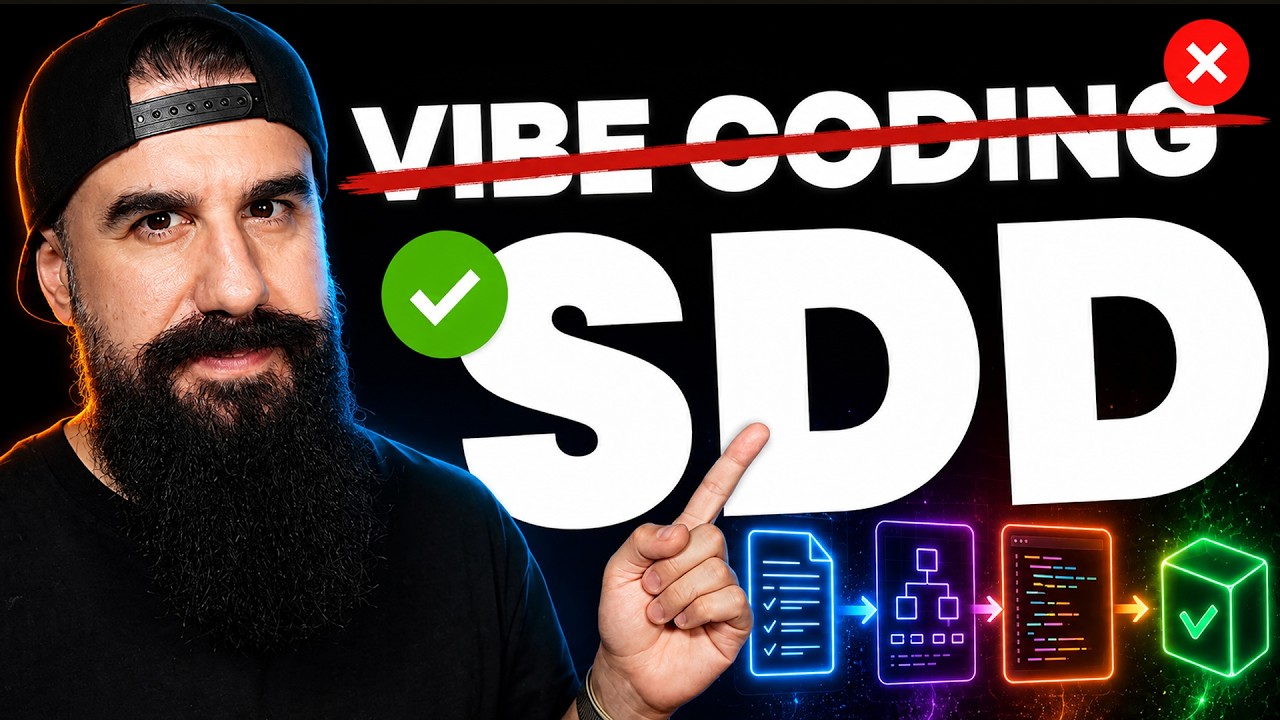
 This is MoureDev's course on Spec-Driven Development (SDD): building software with AI agents starting from an agreed specification instead of improvising prompts. The repo holds the course's reusable templates plus a complete example project built step by step using the SDD method.
This is MoureDev's course on Spec-Driven Development (SDD): building software with AI agents starting from an agreed specification instead of improvising prompts. The repo holds the course's reusable templates plus a complete example project built step by step using the SDD method.Is this a course, a template kit, or a working app?All three: samples/ has reusable templates (AGENTS.md, spec.md, prompts.md), and habits-cli/ is a real, complete Python CLI built live as a teaching example of the SDD flow.
All three: samples/ has reusable templates (AGENTS.md, spec.md, prompts.md), and habits-cli/ is a real, complete Python CLI built live as a teaching example of the SDD flow.How do I follow the SDD flow with this repo?Copy the templates from samples/ (AGENTS.md, spec.md, prompts.md) into your own project and move through the stages: Constitution, Spec, Clarification, Plan, Tasks, Implementation, Validation, Change, using the matching prompt from prompts.md at each step.
Copy the templates from samples/ (AGENTS.md, spec.md, prompts.md) into your own project and move through the stages: Constitution, Spec, Clarification, Plan, Tasks, Implementation, Validation, Change, using the matching prompt from prompts.md at each step.Do I need to watch the course video first?Yes, the README states it's essential to watch the course to understand the repo, since the templates and the habits-cli example are explained there rather than fully documented in the README.
Yes, the README states it's essential to watch the course to understand the repo, since the templates and the habits-cli example are explained there rather than fully documented in the README.What does habits-cli actually do?It's a minimal Python CLI using only the standard library, with three commands (habits add, habits done, habits list) to log study habits and track a streak of consecutive days.
It's a minimal Python CLI using only the standard library, with three commands (habits add, habits done, habits list) to log study habits and track a streak of consecutive days.Who is this course for?Developers who already prompt AI coding agents and want to replace ad-hoc 'vibe coding' with a disciplined spec-first workflow for building real projects.
Developers who already prompt AI coding agents and want to replace ad-hoc 'vibe coding' with a disciplined spec-first workflow for building real projects.Where does the habits-cli example run?It's a plain Python standard-library CLI, so it runs anywhere Python runs, including Linux, macOS and Windows.
It's a plain Python standard-library CLI, so it runs anywhere Python runs, including Linux, macOS and Windows.What artifact does each SDD step leave in the habits-cli example?Constitution produces docs/constitution.md; Specification produces specs/001-habits-mvp/spec.md with EARS-style numbered requirements; Planning produces plan.md; Tasks produces tasks.md with checkboxes; Implementation produces the habits/ code and tests/; Validation is a requirement-by-requirement review matching each RF to its test.
Constitution produces docs/constitution.md; Specification produces specs/001-habits-mvp/spec.md with EARS-style numbered requirements; Planning produces plan.md; Tasks produces tasks.md with checkboxes; Implementation produces the habits/ code and tests/; Validation is a requirement-by-requirement review matching each RF to its test.What is the spec-generator skill?A reusable Claude/opencode skill (.claude/skills/spec-generator/, also linked under .opencode/skill/) that interviews you about requirements and generates the spec.md file following the course's template.
A reusable Claude/opencode skill (.claude/skills/spec-generator/, also linked under .opencode/skill/) that interviews you about requirements and generates the spec.md file following the course's template.What are similar projects?pstack, shuohao-skills, OpenSpec, pstack-claude, ouroboros, chinese-novelist-skill, explainer, Manware-s-AI-Learning-Toolkit
pstack, shuohao-skills, OpenSpec, pstack-claude, ouroboros, chinese-novelist-skill, explainer, Manware-s-AI-Learning-ToolkitWhich topics is it in?spanish, spec-driven-development, specification, templates, claude-code-skill, curriculum, opencode, prompt-engineering, skill, beginner-friendly, agentic-ai, learning-resources
spanish, spec-driven-development, specification, templates, claude-code-skill, curriculum, opencode, prompt-engineering, skill, beginner-friendly, agentic-ai, learning-resources