































What is this?
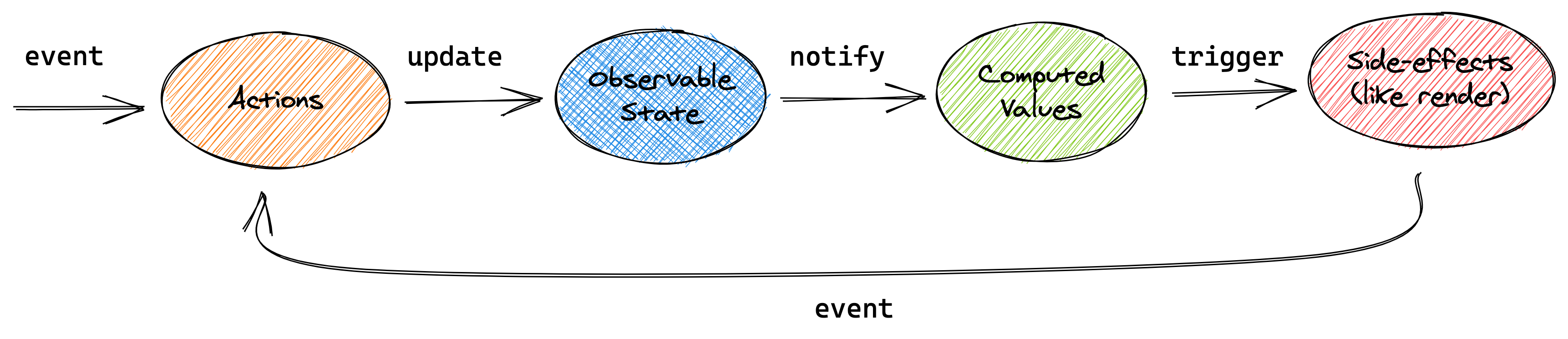
 MobX is a state management library for JavaScript apps that makes anything derived from application state update automatically, using transparent functional reactive programming.
MobX is a state management library for JavaScript apps that makes anything derived from application state update automatically, using transparent functional reactive programming.Is it a framework or a library?It is a library, not a framework. It is unopinionated and can manage state outside of any UI framework, though it is commonly paired with React.
It is a library, not a framework. It is unopinionated and can manage state outside of any UI framework, though it is commonly paired with React.How do I add it to a project?Install it via npm and wrap observable state with 'observable' and reactive components with the 'observer' wrapper so they auto-update when dependencies change.
Install it via npm and wrap observable state with 'observable' and reactive components with the 'observer' wrapper so they auto-update when dependencies change.Do I need React to use it?No, MobX itself has no dependencies and works standalone; React bindings are just one common use case.
No, MobX itself has no dependencies and works standalone; React bindings are just one common use case.Do I need to manually optimize re-renders?No, MobX automatically builds a dependency tree at runtime so only components that actually depend on changed state re-render, without manual memoization or selectors.
No, MobX automatically builds a dependency tree at runtime so only components that actually depend on changed state re-render, without manual memoization or selectors.Why is it called a signal-based library?MobX tracks state at runtime and builds a dependency graph so changes propagate precisely and synchronously to only the computations and UI parts that depend on them, similar to how spreadsheets recalculate.
MobX tracks state at runtime and builds a dependency graph so changes propagate precisely and synchronously to only the computations and UI parts that depend on them, similar to how spreadsheets recalculate.What inspired MobX's design?MobX draws on reactive programming principles used in spreadsheets and MVVM frameworks like Meteor's Tracker, Knockout, and Vue.js, implementing transparent functional reactive programming in a glitch-free, synchronous way.
MobX draws on reactive programming principles used in spreadsheets and MVVM frameworks like Meteor's Tracker, Knockout, and Vue.js, implementing transparent functional reactive programming in a glitch-free, synchronous way.Where can I learn MobX beyond the README?The official docs live at mobx.js.org, and there's also a 10-minute interactive React+MobX tutorial, an Egghead.io course, and a paid MobX Quick Start Guide book for deeper learning.
The official docs live at mobx.js.org, and there's also a 10-minute interactive React+MobX tutorial, an Egghead.io course, and a paid MobX Quick Start Guide book for deeper learning.Which topics is it in?reactive-programming, state-management, vue, react, npm, frontend, library, typescript, javascript, web
reactive-programming, state-management, vue, react, npm, frontend, library, typescript, javascript, web