
antialgorithm README

项目的 README,来自 github.com/mankidev/antialgorithm。合并为一个 markdown 文件:README.md。

antialgorithm

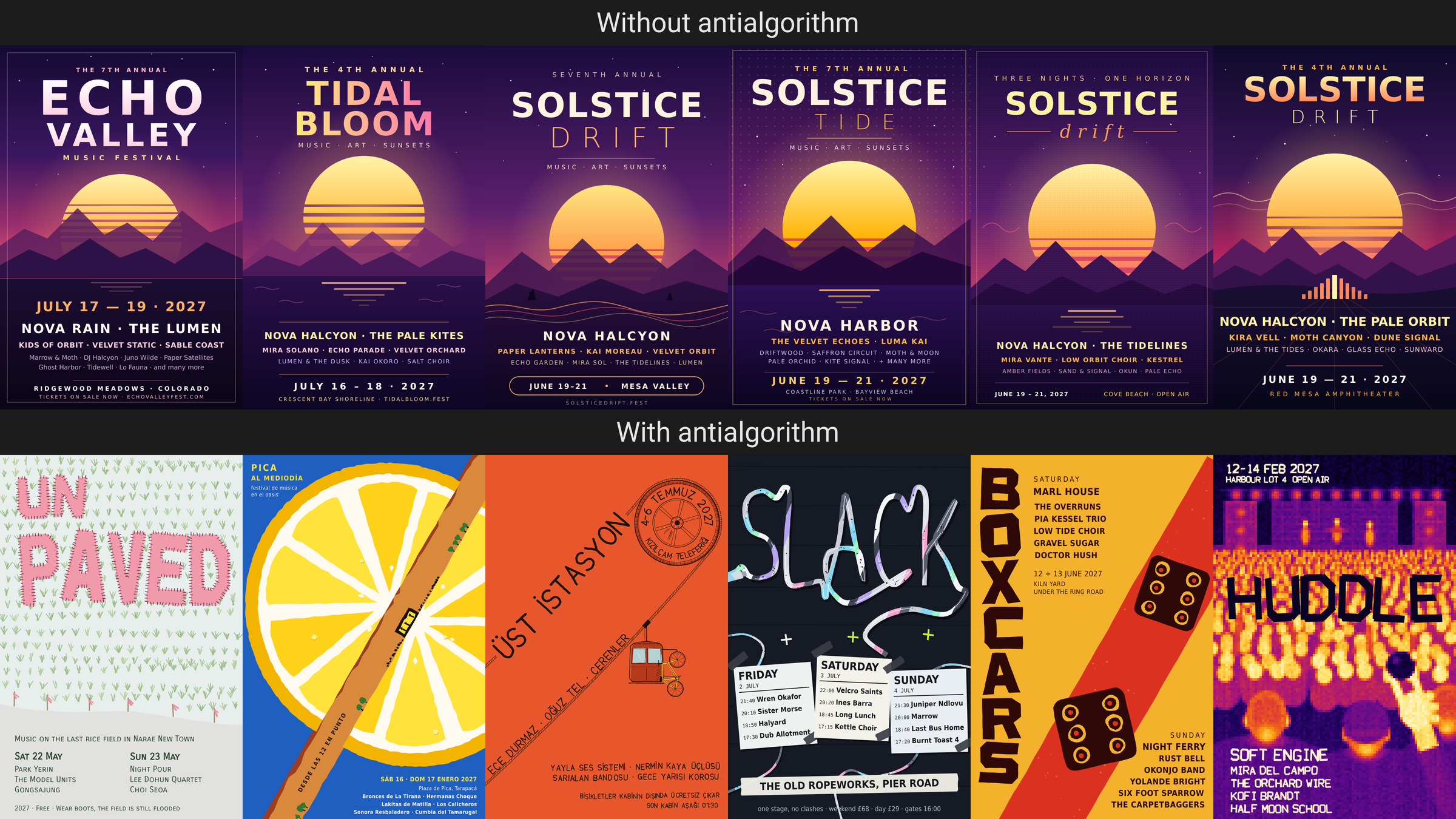
Six posters without the skill on top, six with it below

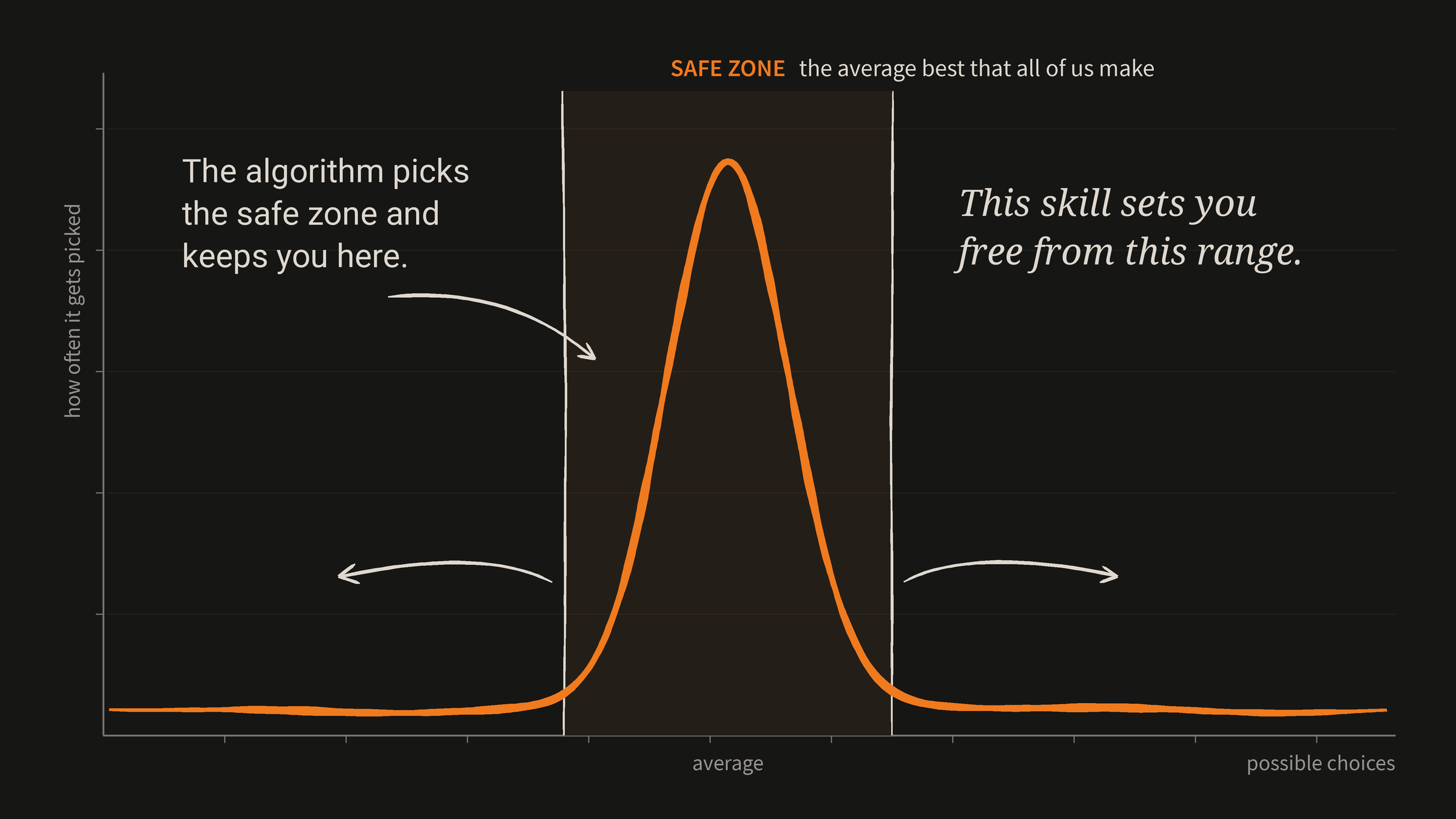
Claude Code skill for creative work: names, copy, story, game ideas, posters, UI. It makes the model name its first, most average pick, then move away from it for a reason taken from the project.

Both rows came from the same prompt: Design a poster for a music festival as a 400x600 SVG. Save the final SVG as final.svg in the current folder. The top row is one batch of six runs without the skill, none left out. The bottom row is picked from about a dozen runs made while the skill was still being written.

Chart of how often a choice gets picked: a tall peak around the average marked as the safe zone, flat on both sides

Install

git clone https://github.com/mankidev/antialgorithm ~/.claude/skills/antialgorithm

The scripts need Python 3. check.py also needs numpy, Pillow and rsvg-convert (or the cairosvg package).

Scripts

seed.py rolls a starting point when the request is thin. A visual seed gives a making method, colors, layout, type, a verb and a scale for the idea, a setting, a region and, half the time, an object. A text seed gives a voice, a way in and a register. An idea seed gives a verb, a constraint, a scale and a pressure. It draws from system randomness, so two people sending the same prompt start in different places. It also saves each seed to history.jsonl in the skill folder and skips values from the last few, so your own seeds don't repeat from one session to the next. --keep "axis=value" holds an axis fixed, which lets you keep a subject and roll only the look.

moves.py keeps a short log of the main move behind each off-default answer, such as "neon tube wall, almost no type". The model reads it before showing new work, so it doesn't reuse a move that worked last time just because it worked.

rough.py takes an SVG and shakes its straight lines, shapes and letters, and breaks the even spacing of repeated marks, so a hand-made look drawn in code stops looking plotted. It is only for hand-made methods such as print, paint, stamps and ink; screen, camera and render looks keep their own marks.

check.py renders an SVG at full size and at icon size and lists text that runs off an edge, sits under a shape, has low contrast or is too small. The size limit fits posters; for an app screen use --min-text 0.6.

Visual rules live in visuals.md, which the model reads only for visual work, so a name or a slogan doesn't load them.

License

MIT

antialgorithm (mankidev/antialgorithm)

正在搜索数据库…

这是什么?这是一个 Claude Code 技能,用来防止模型在命名、文案、游戏创意、海报和界面等创意工作中停留在第一个、最普通的想法上。它会让模型先说出那个显而易见的选择,然后基于项目本身的理由,转向别的方向。
它是库、应用还是别的东西?它是 Claude Code 的一个技能,不是库,也不是应用:由模型阅读的一组指令,加上四个小型 Python 脚本,供其在创意工作中运行。
我该怎么把它跑起来?README 中的 Install 部分只列出了依赖要求,所以先安装 Python 3。它没有说明如何在 Claude Code 中注册这个技能,这一点请查看仓库中的技能文件。
所有功能都需要额外安装包吗?不需要。只有 render-and-lint 脚本 check.py 需要 numpy、Pillow 和 rsvg-convert(或 cairosvg 包)。其他脚本只用普通的 Python 3 即可运行。
它会在我的电脑上存储任何东西吗?会。seed.py 会把每个种子保存到技能文件夹里的 history.jsonl 中,moves.py 也会记录一份简短的操作日志。两者都是本地文件,README 中没有提到任何网络使用。
它如何让模型脱离第一个想法?模型先说出它最显而易见的选择,然后基于项目本身的理由转向别处,因此最终答案就不那么普通了。
四个脚本实际上做什么?seed.py 在请求信息不足时随机生成一个起点;moves.py 记录每个选择背后的主要操作;rough.py 为 SVG 线条和文字加上手绘般的抖动效果;check.py 渲染 SVG 并标出文字问题。
模型每次任务都会重新读取视觉规则吗?不会。visuals.md 只在视觉类工作时才会读取,因此请求起名或口号时不会加载它。
README 中的示例展示了什么?同一个音乐节提示词生成的两排海报,尺寸为 400x600 的 SVG:上一排是未使用该技能的六次运行结果,下一排是使用该技能后挑选出的一组。
作者
mankidev
大小
2.2 MB
星标
425
更新
提交Nov 18
时长
4天
提交 · 90 天