


What is this?
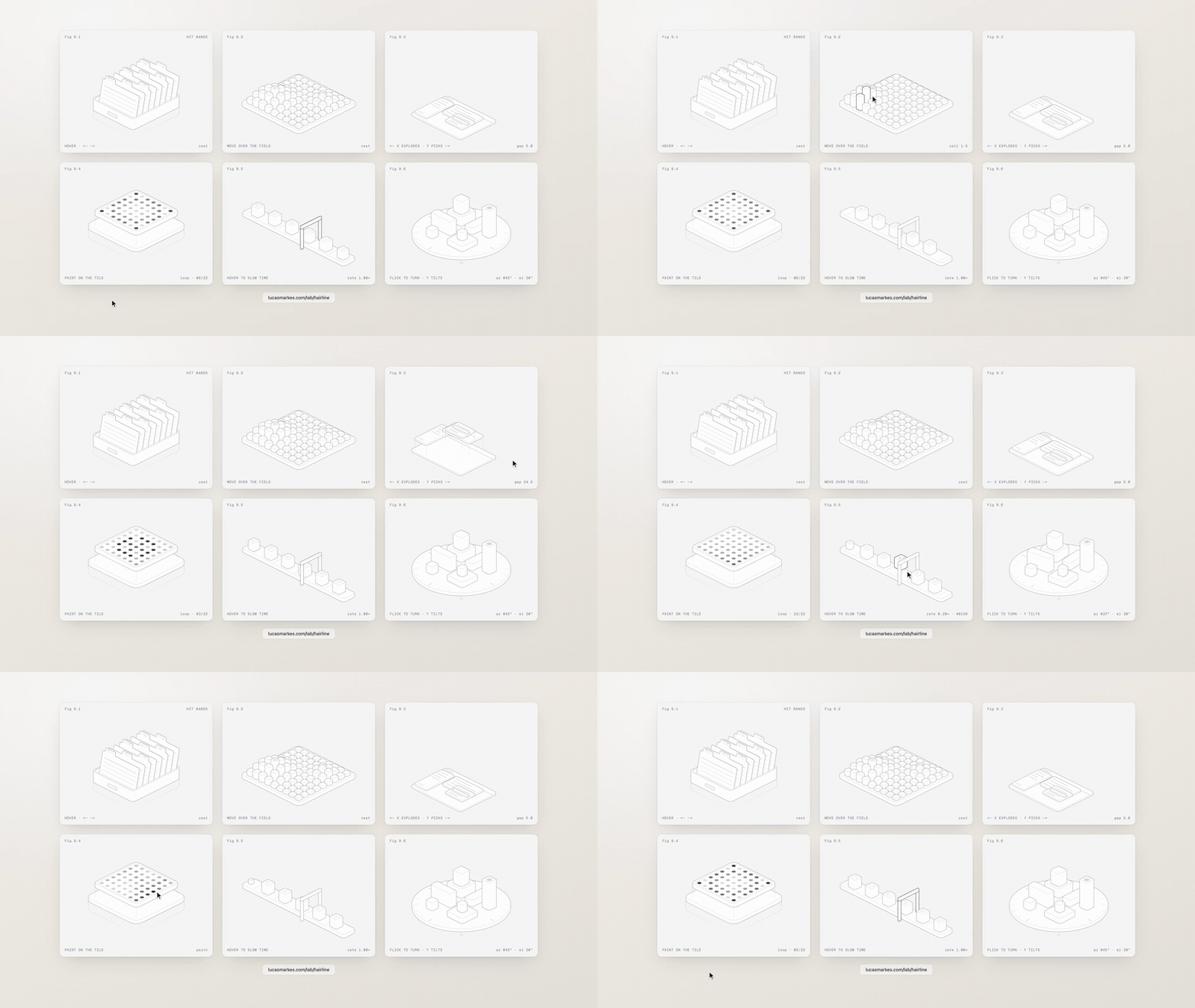
 Hairline is a collection of nineteen small isometric line figures - like a keyboard, vault, laptop or router - that animate live as you move the pointer over them. It ships as a tiny library you can use in React or drop into any plain DOM project.
Hairline is a collection of nineteen small isometric line figures - like a keyboard, vault, laptop or router - that animate live as you move the pointer over them. It ships as a tiny library you can use in React or drop into any plain DOM project.Is this a React-only library or does it work with plain JavaScript too?It is framework-agnostic at its core: each figure is a plain function that draws into any DOM element and exposes update/destroy, and React is only an optional peer needed for the separate @lucasmarkes/hairline/react entry with ready-made components.
It is framework-agnostic at its core: each figure is a plain function that draws into any DOM element and exposes update/destroy, and React is only an optional peer needed for the separate @lucasmarkes/hairline/react entry with ready-made components.How do I add it to a project?Install the package (zero dependencies, ESM only), then either render a React component such as Riffle or call a figure's function on a DOM element and use its update/destroy methods; a shadcn command can also add the package plus a themed wrapper that reads your design tokens.
Install the package (zero dependencies, ESM only), then either render a React component such as Riffle or call a figure's function on a DOM element and use its update/destroy methods; a shadcn command can also add the package plus a themed wrapper that reads your design tokens.Does it work with server-side rendering?Yes: on the server a component just renders as an empty box reserving the figure's 5:4 aspect ratio so nothing shifts, but the actual drawing code needs a real DOM, so you have to trigger it inside an effect, onMount, or a script that runs after the element exists.
Yes: on the server a component just renders as an empty box reserving the figure's 5:4 aspect ratio so nothing shifts, but the actual drawing code needs a real DOM, so you have to trigger it inside an effect, onMount, or a script that runs after the element exists.Does prefers-reduced-motion turn the figures off completely?No, figures that animate on their own (Phosphor and Slow) hold still under prefers-reduced-motion, but every figure still responds when you move the pointer over it.
No, figures that animate on their own (Phosphor and Slow) hold still under prefers-reduced-motion, but every figure still responds when you move the pointer over it.Can I restyle the figures to match my site's colors?Yes, each figure exposes six CSS custom properties you set on the element or an ancestor, with --hairline-plate being the key one since plates are filled shapes that should match your actual background.
Yes, each figure exposes six CSS custom properties you set on the element or an ancestor, with --hairline-plate being the key one since plates are filled shapes that should match your actual background.Will having many figures on one page hurt performance?All figures share a single requestAnimationFrame loop, and any figure that's off-screen or at rest does no work, so the loop only runs while something is actually animating.
All figures share a single requestAnimationFrame loop, and any figure that's off-screen or at rest does no work, so the loop only runs while something is actually animating.Can I use Hairline with Svelte even though there's no dedicated Svelte package?Yes, the update/destroy functions a figure returns match the exact shape Svelte expects from an action, so you can bind a figure directly as a Svelte action without any extra wrapper.
Yes, the update/destroy functions a figure returns match the exact shape Svelte expects from an action, so you can bind a figure directly as a Svelte action without any extra wrapper.What are similar projects?canvas-ui, arc-library, bolt-slides, loadersz-core, lottie, Libraries.dev, drawably, heroui
canvas-ui, arc-library, bolt-slides, loadersz-core, lottie, Libraries.dev, drawably, herouiWhich topics is it in?svg-animation, shadcn, dom, svelte, interactive, svg, accessibility, component-library, skill, cursor, ui-components, animation
svg-animation, shadcn, dom, svelte, interactive, svg, accessibility, component-library, skill, cursor, ui-components, animation