






Что это такое?
 LoopX — открытый провайдер-независимый слой управления, который работает поверх агентных харнесов вроде Codex, Claude Code и Cursor. Он надёжно сохраняет цели, гейты, список задач, доказательства, квоты и передачи работы между ходами и сессиями, чтобы долгая работа ИИ-агентов не терялась.
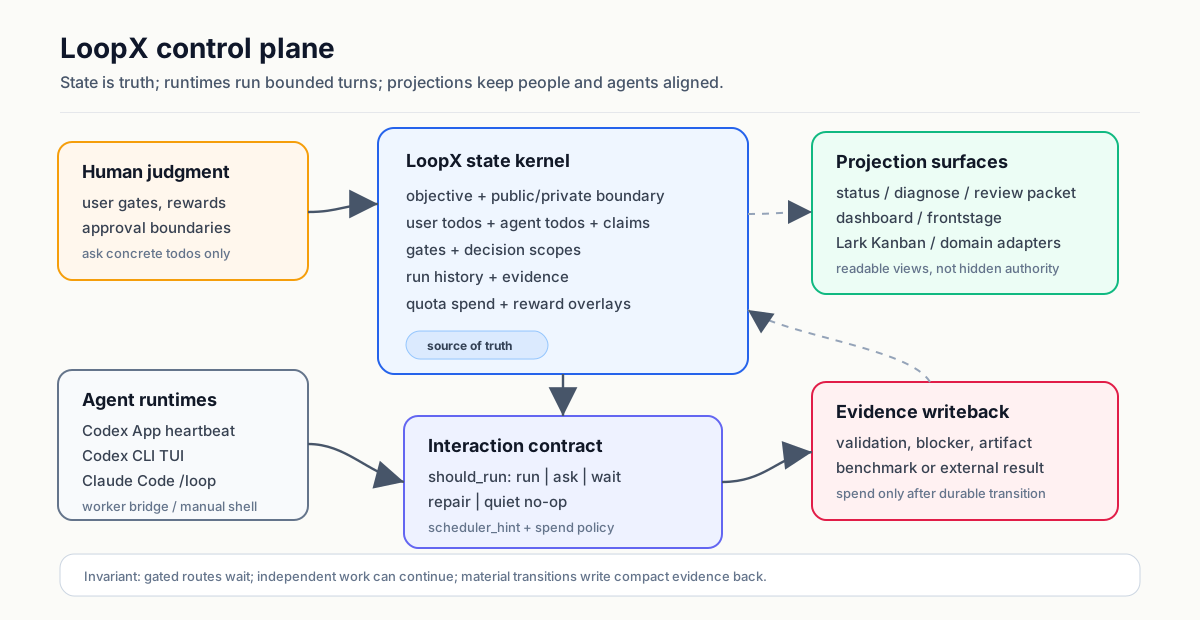
LoopX — открытый провайдер-независимый слой управления, который работает поверх агентных харнесов вроде Codex, Claude Code и Cursor. Он надёжно сохраняет цели, гейты, список задач, доказательства, квоты и передачи работы между ходами и сессиями, чтобы долгая работа ИИ-агентов не терялась.Это фреймворк для агентов, который заменяет Codex или Claude Code, или что-то другое?Ни фреймворк для агентов, ни оркестрационная среда под конкретного провайдера. LoopX — тонкий слой состояния, который работает поверх существующих харнесов: харнес по-прежнему выполняет работу, а LoopX определяет, что будет дальше. По сути это канбан-доска для агентов, где его собственное состояние является источником истины.
Ни фреймворк для агентов, ни оркестрационная среда под конкретного провайдера. LoopX — тонкий слой состояния, который работает поверх существующих харнесов: харнес по-прежнему выполняет работу, а LoopX определяет, что будет дальше. По сути это канбан-доска для агентов, где его собственное состояние является источником истины.Как установить LoopX и подключить его к проекту?Установите релиз с PyPI (клонировать ничего не нужно), затем из корня проекта выполните команду connect. LoopX обнаружит уже существующее состояние и не перезапишет его, а если его нет, проведёт вас через пошаговую инициализацию. Также доступны панель в браузере (PWA) и предварительные версии нативных десктопных приложений для macOS и Windows.
Установите релиз с PyPI (клонировать ничего не нужно), затем из корня проекта выполните команду connect. LoopX обнаружит уже существующее состояние и не перезапишет его, а если его нет, проведёт вас через пошаговую инициализацию. Также доступны панель в браузере (PWA) и предварительные версии нативных десктопных приложений для macOS и Windows.Что нужно установить перед запуском LoopX?Обязательны Python 3.11+ и Node.js 22.6+ (рекомендуется 24 LTS). Node запускает управляемое ядро на TypeScript (Effect), которое LoopX стартует автоматически. Git нужен только участникам проекта для работы с клонированием и canary-сборками, а для нативной Windows вместо POSIX-оболочки требуется PowerShell 7.
Обязательны Python 3.11+ и Node.js 22.6+ (рекомендуется 24 LTS). Node запускает управляемое ядро на TypeScript (Effect), которое LoopX стартует автоматически. Git нужен только участникам проекта для работы с клонированием и canary-сборками, а для нативной Windows вместо POSIX-оболочки требуется PowerShell 7.Десктопное приложение уже готово к использованию?Приложение для macOS на Apple Silicon подписано ad-hoc (без нотаризации), а установщик предварительной версии для Windows пока требует ручных обновлений и отдельно установленного CLI. LoopX также прямо не является автономным контроллером для продакшена: опасные права доступа, публикация и записи в продакшен остаются за человеком.
Приложение для macOS на Apple Silicon подписано ad-hoc (без нотаризации), а установщик предварительной версии для Windows пока требует ручных обновлений и отдельно установленного CLI. LoopX также прямо не является автономным контроллером для продакшена: опасные права доступа, публикация и записи в продакшен остаются за человеком.Какие хосты агентов поддерживает LoopX?LoopX имеет нативные или фасадные интеграции с Codex App, Codex CLI, Claude Code, KunlunCode, OpenCode, Pi, ZCode, Antigravity CLI (agy) и Kiro CLI. У каждой из них своя рекомендуемая команда запуска и свой драйвер цикла.
LoopX имеет нативные или фасадные интеграции с Codex App, Codex CLI, Claude Code, KunlunCode, OpenCode, Pi, ZCode, Antigravity CLI (agy) и Kiro CLI. У каждой из них своя рекомендуемая команда запуска и свой драйвер цикла.Мои данные проекта остаются на моём компьютере?Да: LoopX описан как локальное рабочее пространство, где цели, то, что требует внимания, разговоры, задачи, файлы, расписания и данные для восстановления надёжно хранятся на вашем компьютере между перезапусками и харнесами. Авторитетным остаётся собственное состояние LoopX, а не браузер.
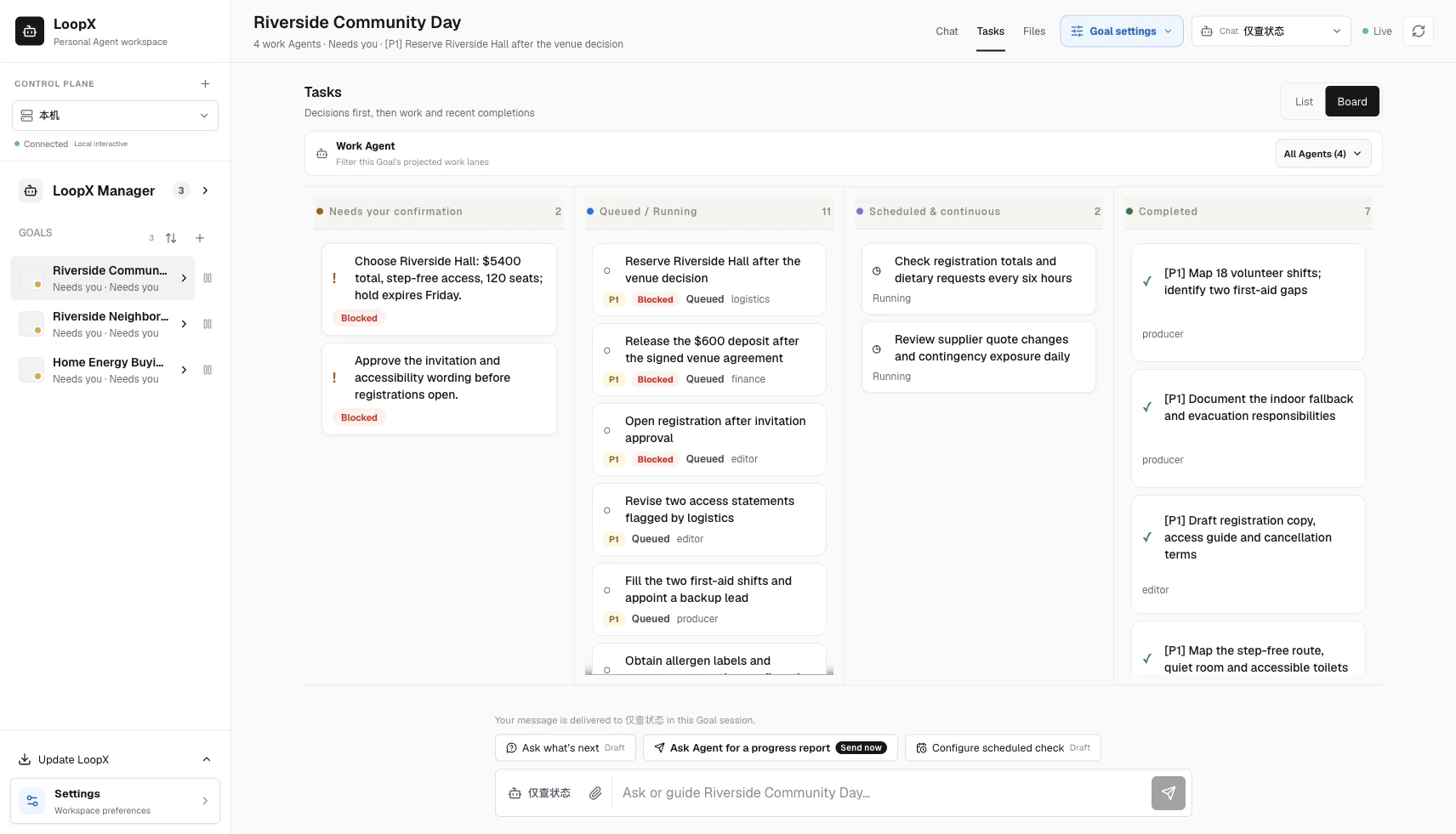

Да: LoopX описан как локальное рабочее пространство, где цели, то, что требует внимания, разговоры, задачи, файлы, расписания и данные для восстановления надёжно хранятся на вашем компьютере между перезапусками и харнесами. Авторитетным остаётся собственное состояние LoopX, а не браузер.Что такое Personal Agent Workspace?Это панель LoopX для долгосрочной работы: одно место, где видно, что требует внимания, что запущено или запланировано, можно настроить возможности Goal, направлять текущий ход в реальном времени и просматривать защищённые изменения с явным подтверждением до их применения.
Это панель LoopX для долгосрочной работы: одно место, где видно, что требует внимания, что запущено или запланировано, можно настроить возможности Goal, направлять текущий ход в реальном времени и просматривать защищённые изменения с явным подтверждением до их применения.Что подтверждает, что LoopX действительно работает на длинных циклах?В README приведены: серия из более чем 200 часов публичных вкладов в open-source в виде исправления issue; обезличенная демонстрация экспериментов Auto ML длительностью более 200 часов; воспроизводимая встроенная демонстрация exact-KNN; а также несколько независимых отзывов пользователей, в том числе о 4-дневном прогоне без присмотра и рефакторинге движка из 7 слитых PR.
В README приведены: серия из более чем 200 часов публичных вкладов в open-source в виде исправления issue; обезличенная демонстрация экспериментов Auto ML длительностью более 200 часов; воспроизводимая встроенная демонстрация exact-KNN; а также несколько независимых отзывов пользователей, в том числе о 4-дневном прогоне без присмотра и рефакторинге движка из 7 слитых PR.Почему «инженерия циклов», а не просто более длинный промпт для агента?Памяти чата и таймера недостаточно, когда цели меняются, решения накапливаются, данные устаревают, а работа передаётся между агентами. LoopX хранит это долговечное управляющее состояние в одном компактном слое, чтобы длинные циклы оставались понятными для проверки и могли быть перезапущены.
Памяти чата и таймера недостаточно, когда цели меняются, решения накапливаются, данные устаревают, а работа передаётся между агентами. LoopX хранит это долговечное управляющее состояние в одном компактном слое, чтобы длинные циклы оставались понятными для проверки и могли быть перезапущены.Есть ли быстрый способ попробовать без подключения реального проекта?Да: из исходников репозитория можно выполнить python -m demo.workspace serve и изучить воспроизводимое демо-рабочее пространство с примерами рабочих ролей, задач, решений и наблюдений.
Да: из исходников репозитория можно выполнить python -m demo.workspace serve и изучить воспроизводимое демо-рабочее пространство с примерами рабочих ролей, задач, решений и наблюдений.What are similar projects?1code, holaOS, openrig, shipyard, ekko-studio, AutoDesign, adhdev, munder-difflin
1code, holaOS, openrig, shipyard, ekko-studio, AutoDesign, adhdev, munder-difflinWhich topics is it in?long-horizon-agents, personal-agent, rsi, loop-engineering, kanban, agent-harness, pwa, dsh-plugin, workflow-automation, orchestration, multi-agent, dashboard
long-horizon-agents, personal-agent, rsi, loop-engineering, kanban, agent-harness, pwa, dsh-plugin, workflow-automation, orchestration, multi-agent, dashboard