

29.1K ·GitHub
Что это такое?
 Swift Algorithm Club — это собранная сообществом коллекция реализаций популярных алгоритмов и структур данных на Swift, и к каждой из них прилагается подробное объяснение того, как она работает.
Swift Algorithm Club — это собранная сообществом коллекция реализаций популярных алгоритмов и структур данных на Swift, и к каждой из них прилагается подробное объяснение того, как она работает.Это библиотека, которую я могу встроить в своё приложение, или скорее учебный справочник?В первую очередь это учебный справочник: проект намеренно ставит на первое место понятный и читаемый код, а не создание библиотеки для повторного использования. Хотя большинство фрагментов можно применять и в продакшене, немного доработав их.
В первую очередь это учебный справочник: проект намеренно ставит на первое место понятный и читаемый код, а не создание библиотеки для повторного использования. Хотя большинство фрагментов можно применять и в продакшене, немного доработав их.Как устроен список и с чего новичку лучше начать?Записи сгруппированы по темам: поиск, поиск по строкам, сортировка, сжатие, математика, машинное обучение и структуры данных (массивы, очереди, списки, деревья, хеширование, множества, графы), а также раздел «Головоломки» с задачами в духе собеседований. Новичкам рекомендуется начать со стека, очереди, сортировки вставками, бинарного поиска и бинарного дерева поиска, сортировки слиянием и поиска по строкам Бойера–Мура.
Записи сгруппированы по темам: поиск, поиск по строкам, сортировка, сжатие, математика, машинное обучение и структуры данных (массивы, очереди, списки, деревья, хеширование, множества, графы), а также раздел «Головоломки» с задачами в духе собеседований. Новичкам рекомендуется начать со стека, очереди, сортировки вставками, бинарного поиска и бинарного дерева поиска, сортировки слиянием и поиска по строкам Бойера–Мура.Для какой версии Xcode и Swift написан код?Код написан для Xcode 10 и Swift 4.2, а авторы говорят, что планируют поддерживать его в актуальном состоянии с выходом новых версий Swift.
Код написан для Xcode 10 и Swift 4.2, а авторы говорят, что планируют поддерживать его в актуальном состоянии с выходом новых версий Swift.Годится ли код отсюда для продакшена в том виде, в котором он есть?В основном да, но без гарантий «из коробки»: авторы говорят, что фрагмент, возможно, придётся подогнать под вашу кодовую базу, ведь главным приоритетом при разработке была ясность, а не возможность повторного использования.
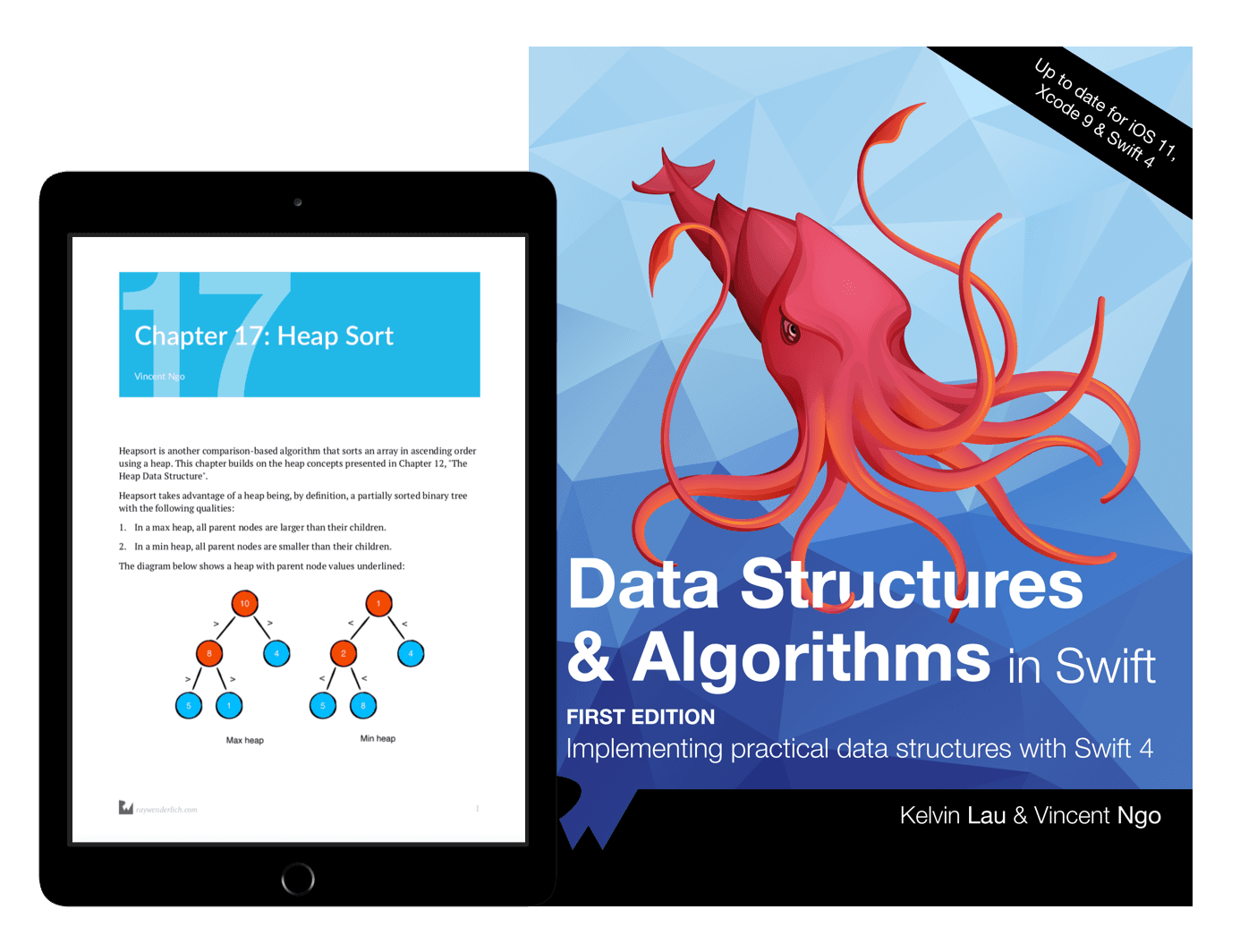
В основном да, но без гарантий «из коробки»: авторы говорят, что фрагмент, возможно, придётся подогнать под вашу кодовую базу, ведь главным приоритетом при разработке была ясность, а не возможность повторного использования.Что такое сопутствующая книга «Data Structures & Algorithms in Swift»?Это официальная платная книга от команды Swift Algorithm Club. В ней разбираются те же связные списки, деревья, сортировки и графовые алгоритмы с практическими реализациями на Swift. Книга продаётся в магазине raywenderlich.com.
Это официальная платная книга от команды Swift Algorithm Club. В ней разбираются те же связные списки, деревья, сортировки и графовые алгоритмы с практическими реализациями на Swift. Книга продаётся в магазине raywenderlich.com.А есть ли здесь алгоритмы машинного обучения?Да, в отдельном разделе машинного обучения есть кластеризация методом k-средних, алгоритм k-ближайших соседей, линейная и логистическая регрессия, нейронные сети, PageRank, наивный байесовский классификатор и имитация отжига.
Да, в отдельном разделе машинного обучения есть кластеризация методом k-средних, алгоритм k-ближайших соседей, линейная и логистическая регрессия, нейронные сети, PageRank, наивный байесовский классификатор и имитация отжига.Есть ли задачи для тренировки в духе собеседований?Да, в разделе «Головоломки» собраны классические вопросы с собеседований: Two-Sum, FizzBuzz, задача Монти Холла, задача о яйцах (Egg Drop) и задача об обедающих философах.
Да, в разделе «Головоломки» собраны классические вопросы с собеседований: Two-Sum, FizzBuzz, задача Монти Холла, задача о яйцах (Egg Drop) и задача об обедающих философах.What are similar projects?hello-algorithm, leetcode, interview, leetcode, Go, apachecn-algo-zh, algorithm-base, awesome-algorithms
hello-algorithm, leetcode, interview, leetcode, Go, apachecn-algo-zh, algorithm-base, awesome-algorithmsWhich topics is it in?coding-interview, interview-questions, data-structures, interview, interview-preparation, algorithms, computer-science, programming, book, swift, beginner-friendly, learning-resources
coding-interview, interview-questions, data-structures, interview, interview-preparation, algorithms, computer-science, programming, book, swift, beginner-friendly, learning-resources