

这是什么?
 Micrograd 是一个微型的标量自动求导引擎,它在动态构建的有向无环图(DAG)上实现反向传播(反向模式自动微分),并在其之上提供一个类似 PyTorch API 的小型神经网络库。
Micrograd 是一个微型的标量自动求导引擎,它在动态构建的有向无环图(DAG)上实现反向传播(反向模式自动微分),并在其之上提供一个类似 PyTorch API 的小型神经网络库。这是像 PyTorch 那样完整的深度学习框架,还是更小的东西?它是一个极简的教学用库,而不是生产级框架:核心自动求导引擎约 100 行代码,其上的神经网络库约 50 行。
它是一个极简的教学用库,而不是生产级框架:核心自动求导引擎约 100 行代码,其上的神经网络库约 50 行。我该怎么试用它?先安装该包,然后使用 demo.ipynb 笔记本在 moons 数据集上训练一个两层 MLP 二分类器;或者直接使用 micrograd.nn 模块编写你自己的标量运算。
先安装该包,然后使用 demo.ipynb 笔记本在 moons 数据集上训练一个两层 MLP 二分类器;或者直接使用 micrograd.nn 模块编写你自己的标量运算。除了 Python,使用它还需要别的东西吗?使用引擎本身不需要额外依赖;但如果你想运行单元测试,就需要安装 PyTorch,因为测试会以 PyTorch 的梯度结果作为参考进行比对。
使用引擎本身不需要额外依赖;但如果你想运行单元测试,就需要安装 PyTorch,因为测试会以 PyTorch 的梯度结果作为参考进行比对。它在底层是如何处理神经网络层的?它只对标量值进行运算,因此每个神经元都会被拆分成一个个微小的加法和乘法,而不是使用向量化的张量运算。这让它简单明了,但不适合真实场景下的训练,性能较差。
它只对标量值进行运算,因此每个神经元都会被拆分成一个个微小的加法和乘法,而不是使用向量化的张量运算。这让它简单明了,但不适合真实场景下的训练,性能较差。我能把计算图可视化吗?可以。tracegraph.ipynb 笔记本会生成 DAG 的 graphviz 可视化图,通过对你的表达式调用 drawdot,显示每个节点上的数据值和梯度。
可以。tracegraph.ipynb 笔记本会生成 DAG 的 graphviz 可视化图,通过对你的表达式调用 drawdot,显示每个节点上的数据值和梯度。有没有基于它构建的更大项目?有。microgpt 在此基础上扩展出一个类似 GPT-2 的完整 Transformer,它使用纯 Python 实现、无任何依赖,并采用了更高效版本的自动求导引擎。
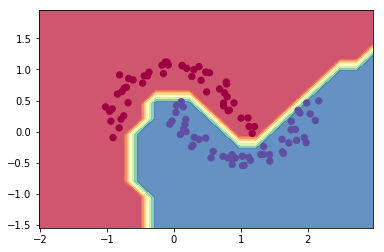
有。microgpt 在此基础上扩展出一个类似 GPT-2 的完整 Transformer,它使用纯 Python 实现、无任何依赖,并采用了更高效版本的自动求导引擎。内置的神经网络实际能做什么?演示中训练了一个两层 MLP,它包含两个 16 节点的隐藏层,作为二分类器,使用 SVM 最大间隔损失和 SGD 进行训练,并在 moons 数据集上得到了决策边界。
演示中训练了一个两层 MLP,它包含两个 16 节点的隐藏层,作为二分类器,使用 SVM 最大间隔损失和 SGD 进行训练,并在 moons 数据集上得到了决策边界。What are similar projects?spinningup, fastbook, MLAlgorithms, DeepLearning, llama3-from-scratch, homemade-machine-learning, ai-edu, pytorch-tutorial
spinningup, fastbook, MLAlgorithms, DeepLearning, llama3-from-scratch, homemade-machine-learning, ai-edu, pytorch-tutorialWhich topics is it in?graph, algorithms, neural-network, jupyter notebook, beginner-friendly, pytorch, learning, tutorial, deep-learning, research, machine-learning, education
graph, algorithms, neural-network, jupyter notebook, beginner-friendly, pytorch, learning, tutorial, deep-learning, research, machine-learning, education