



What is this?
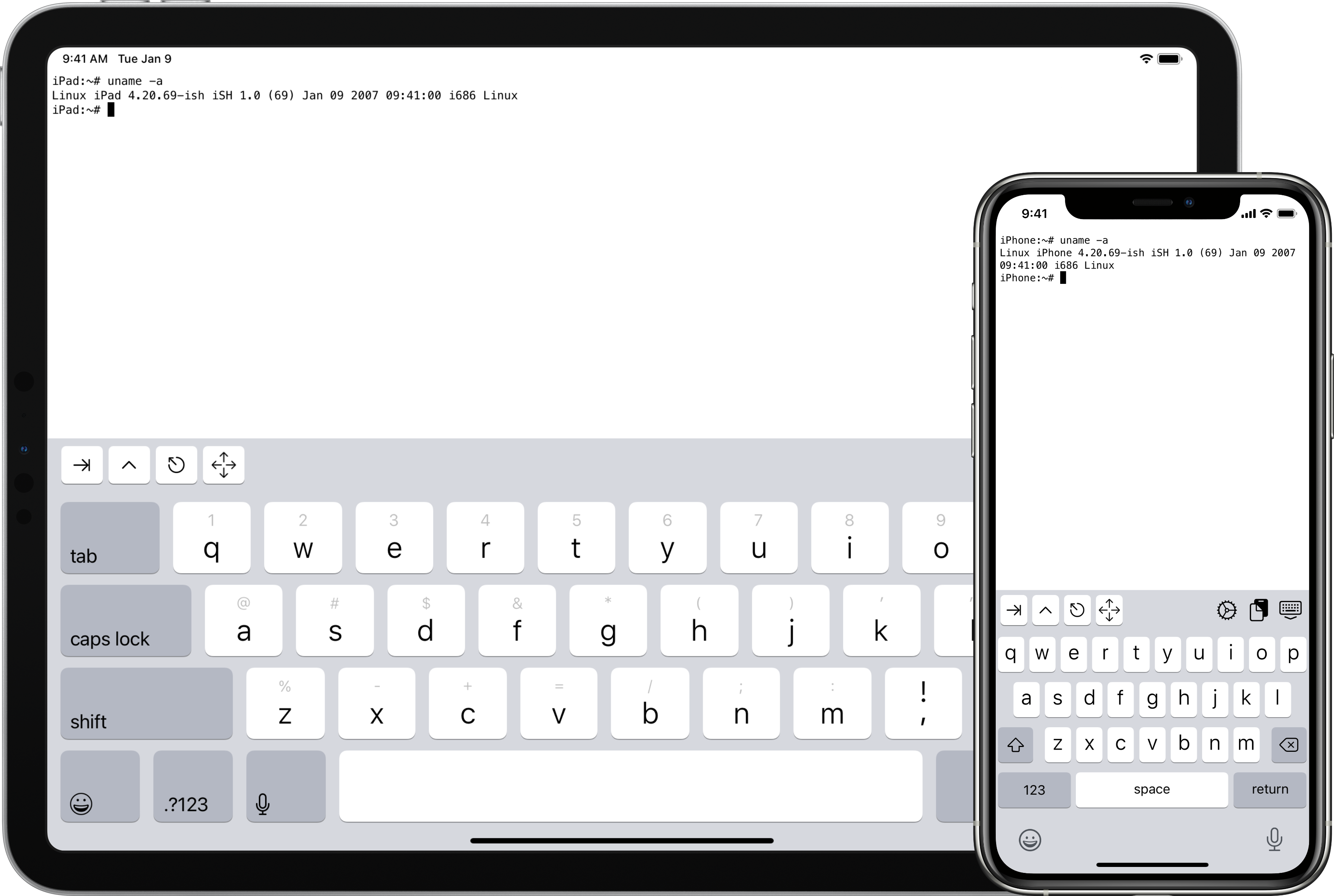
 iSH is an open-source iOS app that gives you a Linux shell on your iPhone or iPad. It emulates an x86 processor in usermode and translates Linux syscalls, so Linux command-line programs run on iOS as they are.
iSH is an open-source iOS app that gives you a Linux shell on your iPhone or iPad. It emulates an x86 processor in usermode and translates Linux syscalls, so Linux command-line programs run on iOS as they are.Is this an app I install on my iPhone, or something I run on a computer?It's a regular iOS app: the README links to its App Store page and a TestFlight beta, so no jailbreak is needed. There is also a separate command-line version that developers build and run on macOS or Linux for testing.
It's a regular iOS app: the README links to its App Store page and a TestFlight beta, so no jailbreak is needed. There is also a separate command-line version that developers build and run on macOS or Linux for testing.What do I need to have installed to build it?Python 3 with Meson, Ninja, Clang and LLD, sqlite3 and libarchive — on a Mac that's brew install llvm plus brew install libarchive, with Xcode for the iOS build itself.
Python 3 with Meson, Ninja, Clang and LLD, sqlite3 and libarchive — on a Mac that's brew install llvm plus brew install libarchive, with Xcode for the iOS build itself.Is it a real, full Linux system running on my phone?It's usermode only: iSH emulates the x86 instruction set and translates syscalls, so you get a Linux userspace environment rather than a booted Linux kernel. For what currently works, the README points to the issues tab and commit logs.
It's usermode only: iSH emulates the x86 instruction set and translates syscalls, so you get a Linux userspace environment rather than a booted Linux kernel. For what currently works, the README points to the issues tab and commit logs.Would a non-developer get anything out of this, or is it strictly for terminal people?It's mainly for developers and Unix fans who want a portable Linux command line, but the project links a wiki with help and tutorials, so a curious beginner can find their way around it too.
It's mainly for developers and Unix fans who want a portable Linux command line, but the project links a wiki with help and tutorials, so a curious beginner can find their way around it too.Does it work on iPads too, or just iPhones?iSH is an iOS app, so it runs on iPhone and iPad via the App Store or TestFlight. The only other way to run it is the command-line testing build, which compiles on macOS or Linux.
iSH is an iOS app, so it runs on iPhone and iPad via the App Store or TestFlight. The only other way to run it is the command-line testing build, which compiles on macOS or Linux.How does the emulation actually work under the hood?There's no JIT. iSH generates an array of pointers to functions called gadgets, and each gadget ends with a tailcall to the next one — the same threaded-code technique some Forth interpreters use. Nearly all of those gadgets are hand-written assembly.
There's no JIT. iSH generates an array of pointers to functions called gadgets, and each gadget ends with a tailcall to the next one — the same threaded-code technique some Forth interpreters use. Nearly all of those gadgets are hand-written assembly.Can I run iSH on a Mac or Linux machine for testing?Yes. Run meson build, then ninja inside the build directory, turn an Alpine minirootfs tarball into a filesystem with tools/fakefsify, and start it with ./ish -f alpine /bin/sh. For debugging there's tools/ptraceomatic, which single-steps the program in a real process and compares registers — it requires 64-bit Linux 4.11 or later.
Yes. Run meson build, then ninja inside the build directory, turn an Alpine minirootfs tarball into a filesystem with tools/fakefsify, and start it with ./ish -f alpine /bin/sh. For debugging there's tools/ptraceomatic, which single-steps the program in a real process and compares registers — it requires 64-bit Linux 4.11 or later.Which Linux distro does it actually run?It's built around Alpine Linux: you download the Alpine minirootfs tarball for i386 and convert it into a self-contained filesystem directory with tools/fakefsify, and that's the filesystem the shell runs inside.
It's built around Alpine Linux: you download the Alpine minirootfs tarball for i386 and convert it into a self-contained filesystem directory with tools/fakefsify, and that's the filesystem the shell runs inside.Is the source code pleasant to work with?The author himself warns you off: cryptic names like ss, s and a, assembler macros nested beyond belief, and almost no comments. The README literally says long-term exposure to this code may cause loss of sanity and nightmares about GAS macros and linker errors.
The author himself warns you off: cryptic names like ss, s and a, assembler macros nested beyond belief, and almost no comments. The README literally says long-term exposure to this code may cause loss of sanity and nightmares about GAS macros and linker errors.What are similar projects?lytlnyblOS, ir, cpu-performance-engineering, os-tutorial, Husk, rr, linux-insides, darwin-xnu
lytlnyblOS, ir, cpu-performance-engineering, os-tutorial, Husk, rr, linux-insides, darwin-xnuWhich topics is it in?alpine-linux, terminal-emulator, assembly, x86, ios-app, emulator, unix, low-level, systems-programming, mobile-app, c, command-line
alpine-linux, terminal-emulator, assembly, x86, ios-app, emulator, unix, low-level, systems-programming, mobile-app, c, command-line