

10.4K ·GitHub
What is this?
 The Concise TypeScript Book: a free, open-source book giving a succinct overview of TypeScript, from its powerful type system to advanced language features.
The Concise TypeScript Book: a free, open-source book giving a succinct overview of TypeScript, from its powerful type system to advanced language features.Is this a book I read online, or do I need to install anything?It's a book, not software: read it as a website in your browser or download the EPUB. The GitHub repo holds the open-source text itself.
It's a book, not software: read it as a website in your browser or download the EPUB. The GitHub repo holds the open-source text itself.Is the entire book free, or is some of it behind a paywall?The whole book is free and open source. The Plus Edition is a separate paid companion with exclusive content, sold for readers who want to go beyond the free edition.
The whole book is free and open source. The Plus Edition is a separate paid companion with exclusive content, sold for readers who want to go beyond the free edition.Is it meant for TypeScript beginners or for experienced developers?Both — it's written for beginners and experienced developers alike, and works as a full learning guide as well as a quick reference.
Both — it's written for beginners and experienced developers alike, and works as a full learning guide as well as a quick reference.Is the book really open source — can I reuse or share the content?It's explicitly free and open source, but GitHub detects no standard license (NOASSERTION), so check the repo's license terms before redistributing the content.
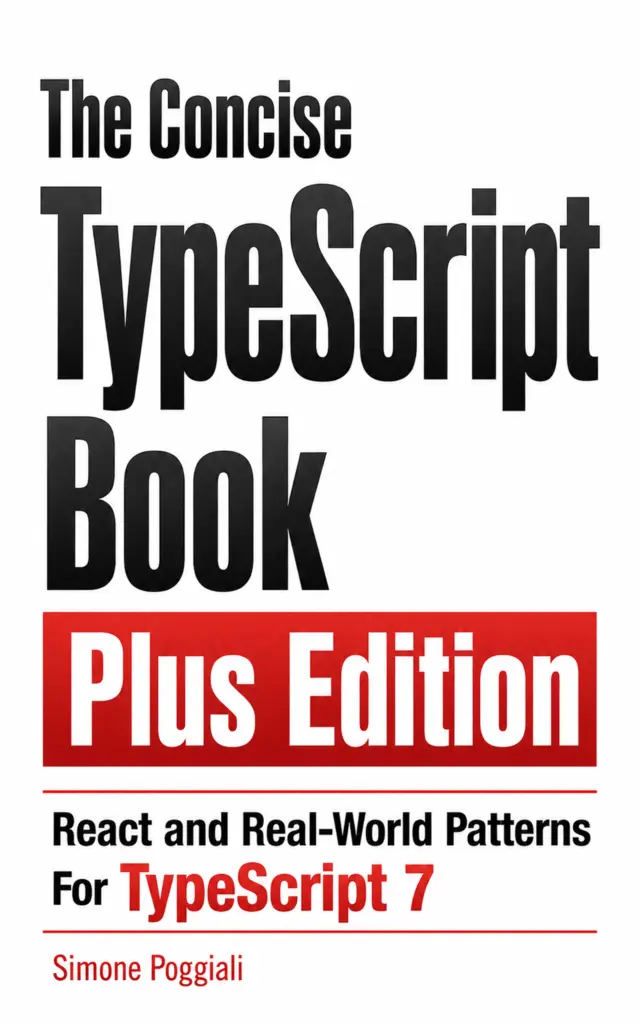
It's explicitly free and open source, but GitHub detects no standard license (NOASSERTION), so check the repo's license terms before redistributing the content.What does the paid Plus Edition add over the free book?It is updated for TypeScript 7 and adds practical React typing guidance (components, props, hooks, events, refs) plus real-world TypeScript recipes. It is sold in English and Italian on Amazon.
It is updated for TypeScript 7 and adds practical React typing guidance (components, props, hooks, events, refs) plus real-world TypeScript recipes. It is sold in English and Italian on Amazon.Where should a beginner start reading?From the beginning: 'TypeScript Introduction' explains what TypeScript is and why to use it, then 'Getting Started With TypeScript' covers installation and configuration before the deep type-system chapters.
From the beginning: 'TypeScript Introduction' explains what TypeScript is and why to use it, then 'Getting Started With TypeScript' covers installation and configuration before the deep type-system chapters.How can I support the project if the book is free?Pay what you want (the author suggests $5), sponsor a coffee, or buy the Plus Edition — purchases directly support the continued development and maintenance of the free book.
Pay what you want (the author suggests $5), sponsor a coffee, or buy the Plus Edition — purchases directly support the continued development and maintenance of the free book.What are similar projects?typescript-book, en.javascript.info, rust-course, HowToBeAProgrammer, rust-learning, book, the-way-to-go_ZH_CN, build-web-application-with-golang
typescript-book, en.javascript.info, rust-course, HowToBeAProgrammer, rust-learning, book, the-way-to-go_ZH_CN, build-web-application-with-golangWhich topics is it in?study-guide, ebook, programming, multilingual, book, reference, beginner-friendly, guide, learning-resources, developers, learning, web-development
study-guide, ebook, programming, multilingual, book, reference, beginner-friendly, guide, learning-resources, developers, learning, web-development