

Что это такое?
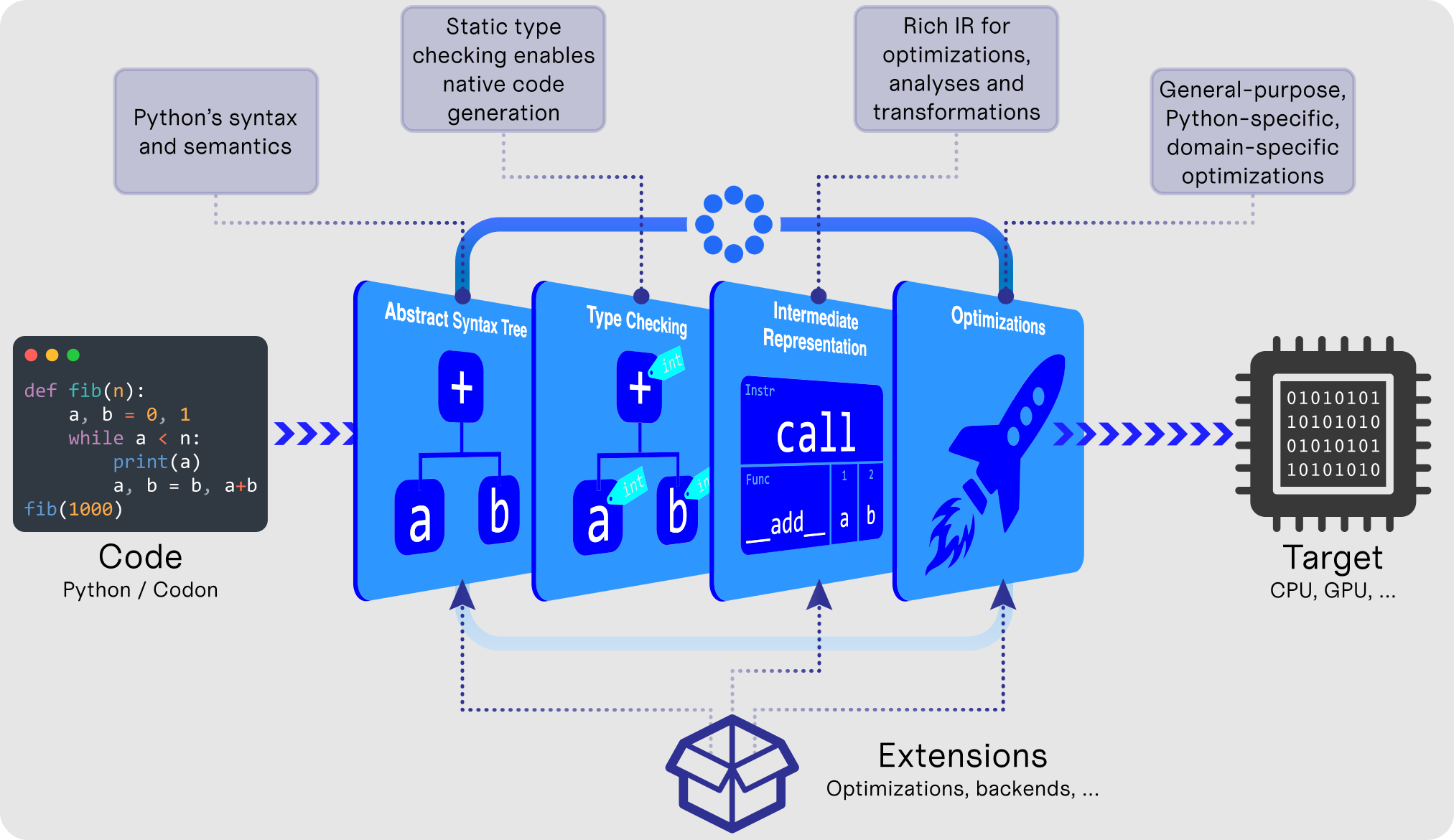
 Codon — это высокопроизводительная реализация Python, которая компилирует ваш код прямо в нативный машинный код: на одном потоке это обычно в 10–100 раз быстрее обычного Python и на уровне C/C++.
Так это отдельный язык, который придётся учить, или я пишу обычный Python?Вы пишете обычный Python: Codon компилирует его заранее (ahead-of-time), и многие программы на Python работают почти без изменений или вовсе без них. Новый синтаксис почти не вводится — за парой исключений, например для описания параллелизма.
Вы пишете обычный Python: Codon компилирует его заранее (ahead-of-time), и многие программы на Python работают почти без изменений или вовсе без них. Новый синтаксис почти не вводится — за парой исключений, например для описания параллелизма.Как его запустить?Установите одной командой из раздела Quick start — после этого у вас появится команда codon. Запускайте скрипты через codon run file.py (добавьте -release для оптимизаций) или соберите автономный исполняемый файл командой codon build -release file.py.
Установите одной командой из раздела Quick start — после этого у вас появится команда codon. Запускайте скрипты через codon run file.py (добавьте -release для оптимизаций) или соберите автономный исполняемый файл командой codon build -release file.py.А мои уже установленные пакеты Python — будут работать?Да, через 'from python import'. Задайте переменную окружения CODON_PYTHON, указав на разделяемую библиотеку CPython, — и эти модули будут выполняться на настоящем CPython, а остальной код компилируется в нативный.
Да, через 'from python import'. Задайте переменную окружения CODON_PYTHON, указав на разделяемую библиотеку CPython, — и эти модули будут выполняться на настоящем CPython, а остальной код компилируется в нативный.Подойдёт ли для любой программы на Python, или есть ограничения?Это не полная замена CPython: возможности Python, которые плохо подходят для статической компиляции, не поддерживаются (см. 'Differences with Python' в документации). Для крупных кодовых баз есть JIT-декоратор, бэкенд в виде расширения для Python и полная совместимость с Python.
Это не полная замена CPython: возможности Python, которые плохо подходят для статической компиляции, не поддерживаются (см. 'Differences with Python' в документации). Для крупных кодовых баз есть JIT-декоратор, бэкенд в виде расширения для Python и полная совместимость с Python.А на GPU код запустить можно?Да — Codon позволяет писать и выполнять GPU-ядра (kernels), в том числе через ту же аннотацию @par с параметром @par(gpu=True). В README показан пример ядра для множества Мандельброта, а реализация NumPy тоже работает с GPU и многопоточностью.
Да — Codon позволяет писать и выполнять GPU-ядра (kernels), в том числе через ту же аннотацию @par с параметром @par(gpu=True). В README показан пример ядра для множества Мандельброта, а реализация NumPy тоже работает с GPU и многопоточностью.Правда, что туда встроен свой NumPy?Да — это полнофункциональная полностью компилируемая нативная реализация NumPy с тем же API. Поскольку она живёт внутри компилятора, Codon может применять оптимизации вроде инлайнинга, слияния (fusion) и исключения операций выделения памяти, а ещё он интегрируется с PyTorch.
Да — это полнофункциональная полностью компилируемая нативная реализация NumPy с тем же API. Поскольку она живёт внутри компилятора, Codon может применять оптимизации вроде инлайнинга, слияния (fusion) и исключения операций выделения памяти, а ещё он интегрируется с PyTorch.Как устроен параллелизм — потоками придётся управлять самому?Нет. В Codon есть нативная многопоточность на базе OpenMP и без GIL: пометьте цикл for аннотацией @par (можно задать расписание, размер чанка и число потоков), и компилятор распараллелит его, автоматически превращая накопления в теле цикла в атомарные редукции, чтобы избежать гонок данных.
Нет. В Codon есть нативная многопоточность на базе OpenMP и без GIL: пометьте цикл for аннотацией @par (можно задать расписание, размер чанка и число потоков), и компилятор распараллелит его, автоматически превращая накопления в теле цикла в атомарные редукции, чтобы избежать гонок данных.Когда лучше взять Codon, а не просто запускать CPython?Для вычислительно тяжёлых задач: числодробилка, работа с большими массивами NumPy или циклы, которые иначе пришлось бы оптимизировать вручную. Там, где обычный Python слишком медленный, а переписывать на C/C++ или Rust слишком накладно, — Codon сохраняет синтаксис Python и даёт скорость низкоуровневых языков, а с потоками или GPU — ещё больше.
Для вычислительно тяжёлых задач: числодробилка, работа с большими массивами NumPy или циклы, которые иначе пришлось бы оптимизировать вручную. Там, где обычный Python слишком медленный, а переписывать на C/C++ или Rust слишком накладно, — Codon сохраняет синтаксис Python и даёт скорость низкоуровневых языков, а с потоками или GPU — ещё больше.Which topics is it in?aot, parallel-programming, llvm, gpu-programming, scientific-computing, multithreading, runtime, numpy, optimization, high-performance, compiler, pytorch
aot, parallel-programming, llvm, gpu-programming, scientific-computing, multithreading, runtime, numpy, optimization, high-performance, compiler, pytorch