




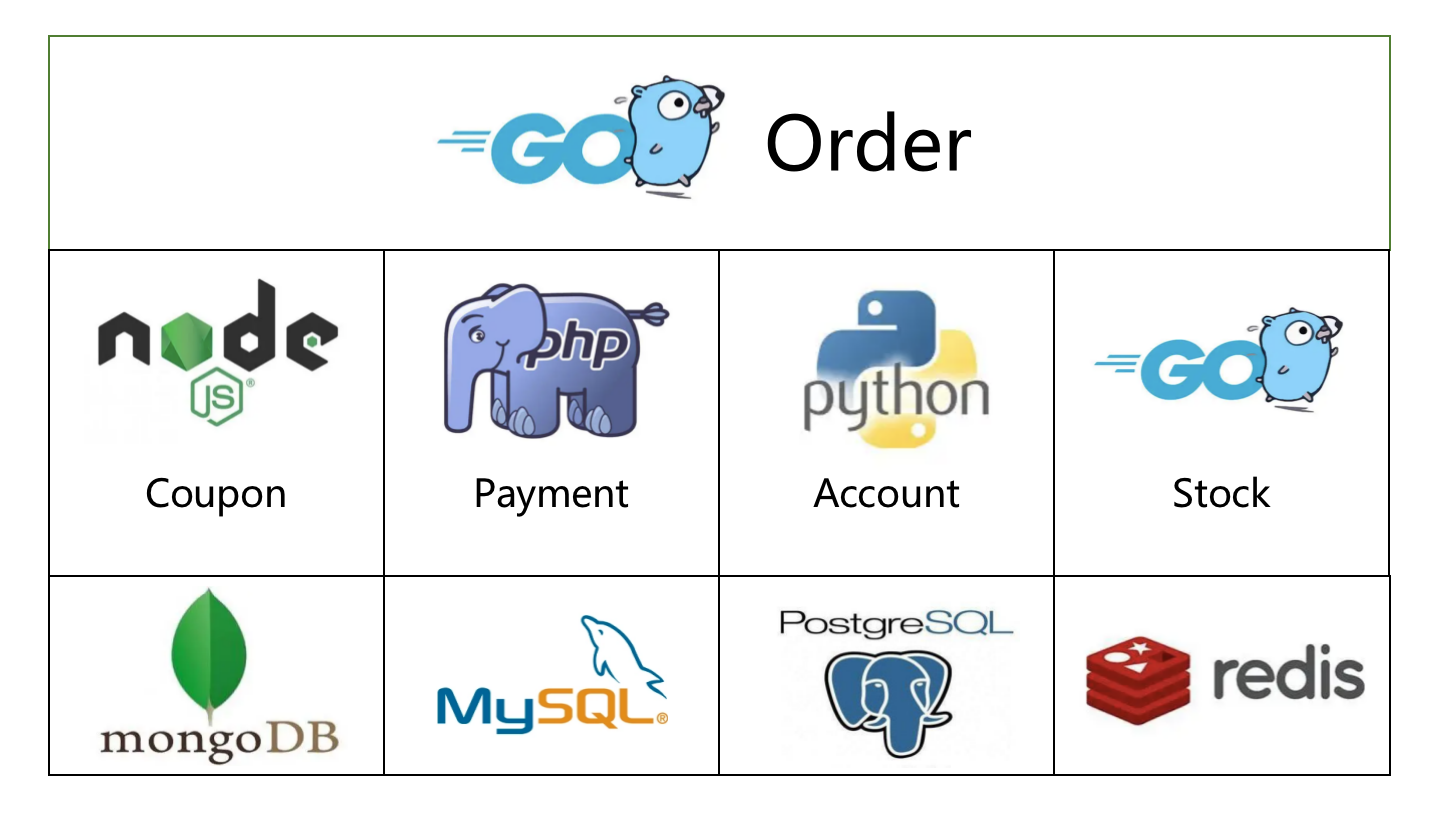
What is this?
 DTM is a distributed transaction framework that provides cross-service eventual data consistency. It implements the saga, TCC, XA, 2-phase message, outbox and workflow patterns for different application scenarios.
DTM is a distributed transaction framework that provides cross-service eventual data consistency. It implements the saga, TCC, XA, 2-phase message, outbox and workflow patterns for different application scenarios.Is it a library I import into my code, or a separate service I run?Both halves: a standalone dtm server processes the transactions, while your services talk to it through SDKs for Go, Java, PHP, C#, Python and Node.js.
Both halves: a standalone dtm server processes the transactions, while your services talk to it through SDKs for Go, Java, PHP, C#, Python and Node.js.How do I get a first transaction running?The README Quick start has you run the dtm server and then an inter-bank transfer example with TransOut and TransIn living in separate microservices; more samples live in the dtm-labs/quick-start-sample repo.
The README Quick start has you run the dtm server and then an inter-bank transfer example with TransOut and TransIn living in separate microservices; more samples live in the dtm-labs/quick-start-sample repo.Which databases can it coordinate transactions across?MySQL/MariaDB, Redis, MongoDB, Postgres and TDSQL are supported for the transaction branches. For dtm's own storage, MySQL/MariaDB is the common choice, Redis the high-performance option, BoltDB for dev and test.
MySQL/MariaDB, Redis, MongoDB, Postgres and TDSQL are supported for the transaction branches. For dtm's own storage, MySQL/MariaDB is the common choice, Redis the high-performance option, BoltDB for dev and test.What happens if one step of a transaction fails midway?DTM invokes the corresponding compensating operation of each sub-transaction to roll everything back. The README demo purposely fails the second sub-transaction, and you see TransOutRevert being called.
DTM invokes the corresponding compensating operation of each sub-transaction to roll everything back. The README demo purposely fails the second sub-transaction, and you see TransOutRevert being called.Is it solid enough to bet a production system on?It is built for high availability and easy horizontal scaling, and the README lists Tencent, Bytedance and Ivydad among its users.
It is built for high availability and easy horizontal scaling, and the README lists Tencent, Bytedance and Ivydad among its users.What is the 'better outbox' the README mentions?The 2-phase message pattern: the author positions it as a more elegant solution than the classic outbox, and it works across multiple databases.
The 2-phase message pattern: the author positions it as a more elegant solution than the classic outbox, and it works across multiple databases.What scenarios is it actually meant for?Cache consistency management, flash-sale inventory deduction in Redis that must exactly match the orders created, non-monolithic order systems, and event publishing/subscription.
Cache consistency management, flash-sale inventory deduction in Redis that must exactly match the orders created, non-monolithic order systems, and event publishing/subscription.Can I already use MongoDB as dtm's storage?Not yet: the README lists MongoDB as a storage engine under planning, so stick to MySQL/MariaDB or Redis for now.
Not yet: the README lists MongoDB as a storage engine under planning, so stick to MySQL/MariaDB or Redis for now.Does it plug into particular Go microservice frameworks?Yes, it supports the go-zero, go-kratos/kratos and polarismesh/polaris microservice architectures out of the box.
Yes, it supports the go-zero, go-kratos/kratos and polarismesh/polaris microservice architectures out of the box.What are similar projects?incubator-seata, conductor, sealos, pinpoint, emqx, tork, mcp-toolbox, chat
incubator-seata, conductor, sealos, pinpoint, emqx, tork, mcp-toolbox, chatWhich topics is it in?transactions, microservice, workflow-engine, distributed, high-availability, event-driven, mongodb, microservices, php, csharp, mysql, redis
transactions, microservice, workflow-engine, distributed, high-availability, event-driven, mongodb, microservices, php, csharp, mysql, redis