





Что это такое?
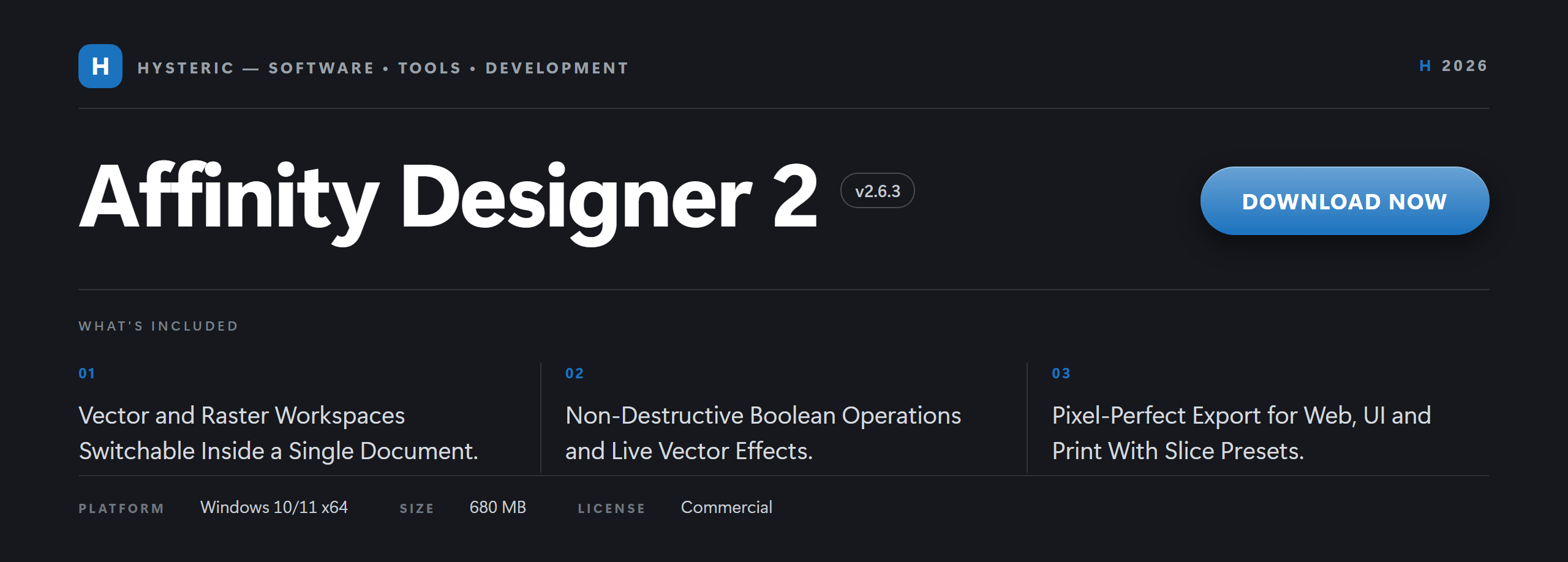
 Неофициальный автономный установочный пакет Affinity Designer 2 для Windows x64. Его собрали независимые сопровождающие, он не связан ни с одним производителем. Пакет предназначен для установки программы на компьютеры без сетевого подключения.
Это само приложение или только установщик для него?Это упакованный установщик, а не новый редактор. Вся программа включена в один архив с номером версии, который поддерживает как портативный запуск для каждого пользователя, так и обычную установку.
Это упакованный установщик, а не новый редактор. Вся программа включена в один архив с номером версии, который поддерживает как портативный запуск для каждого пользователя, так и обычную установку.Нужно ли сначала что-нибудь установить?Сборка не устанавливает системные среды выполнения, а обычная установка работает из стандартной учётной записи без прав администратора. Доступ в интернет нужен только для первоначальной загрузки.
Сборка не устанавливает системные среды выполнения, а обычная установка работает из стандартной учётной записи без прав администратора. Доступ в интернет нужен только для первоначальной загрузки.На каких версиях Windows это реально работает?Только на 64-битной Windows 10 (версии 21H2 и новее) и Windows 11. 32-битные системы, Windows Server вне стандартной роли рабочего стола и более старые выпуски Windows не поддерживаются.
Только на 64-битной Windows 10 (версии 21H2 и новее) и Windows 11. 32-битные системы, Windows Server вне стандартной роли рабочего стола и более старые выпуски Windows не поддерживаются.Для кого предназначена эта сборка?В README она рассчитана на администраторов Windows и тех, кто собирает рабочие станции и должен выполнять повторяемые установки в изолированных от сети или ограниченных по пропускной способности средах.
В README она рассчитана на администраторов Windows и тех, кто собирает рабочие станции и должен выполнять повторяемые установки в изолированных от сети или ограниченных по пропускной способности средах.Работает ли это без интернета?Да. После установки программа работает полностью офлайн. Обновления выполняются вручную: вы запускаете более новый установщик с номером версии поверх существующей установки, и он сохраняет ваши проекты и настройки.
Да. После установки программа работает полностью офлайн. Обновления выполняются вручную: вы запускаете более новый установщик с номером версии поверх существующей установки, и он сохраняет ваши проекты и настройки.Отправляет ли это какие-либо данные куда-либо?В README сказано, что в сборке нет телеметрии и отчётов об использовании, а вся обработка происходит локально на компьютере с Windows.
В README сказано, что в сборке нет телеметрии и отчётов об использовании, а вся обработка происходит локально на компьютере с Windows.Могу ли я использовать программу, которую устанавливаю с помощью этого?Содержимое самого репозитория распространяется по лицензии CC BY-SA 4.0, но она не распространяется на программное обеспечение Affinity Designer 2. В README сказано, что вышестоящее ПО остаётся под конечной лицензией производителя, что репозиторий не выдаёт на него никакой лицензии и что ответственность за соблюдение этой лицензии лежит на пользователях. Перед установкой проверьте свои права.
Содержимое самого репозитория распространяется по лицензии CC BY-SA 4.0, но она не распространяется на программное обеспечение Affinity Designer 2. В README сказано, что вышестоящее ПО остаётся под конечной лицензией производителя, что репозиторий не выдаёт на него никакой лицензии и что ответственность за соблюдение этой лицензии лежит на пользователях. Перед установкой проверьте свои права.Можно ли установить это тихо, через скрипт?Да. В README упоминаются флаги командной строки, с помощью которых скрипты развёртывания могут запускать и настраивать сборку без участия пользователя.
Да. В README упоминаются флаги командной строки, с помощью которых скрипты развёртывания могут запускать и настраивать сборку без участия пользователя.Могут ли портативная и установленная копии работать одновременно?Да, если они используют разные пути установки. Запросы на привязку файлов действуют только для текущего пользователя, а удаление одной копии не влияет на другую.
Да, если они используют разные пути установки. Запросы на привязку файлов действуют только для текущего пользователя, а удаление одной копии не влияет на другую.Какие форматы файлов можно импортировать и экспортировать?В FAQ перечислены распространённые векторные форматы (SVG, PDF, EPS) и растровые форматы (PNG, JPEG, TIFF) для импорта и экспорта.
В FAQ перечислены распространённые векторные форматы (SVG, PDF, EPS) и растровые форматы (PNG, JPEG, TIFF) для импорта и экспорта.Как работают обновления?Вы запускаете более новый установщик с номером версии поверх существующей установки. Он сохраняет ваши проекты, шаблоны и настройки, а фоновая служба обновления не регистрируется.
Вы запускаете более новый установщик с номером версии поверх существующей установки. Он сохраняет ваши проекты, шаблоны и настройки, а фоновая служба обновления не регистрируется.Какие есть похожие проекты?microsoft-office-pro-desktop, kontakt-8-desktop, ableton-live-11-desktop, izotope-rx-11-desktop, acrobat-dc-desktop, microsoft-excel-analyse-it-desktop, microsoft-outlook-desktop, microsoft-project-desktop
microsoft-office-pro-desktop, kontakt-8-desktop, ableton-live-11-desktop, izotope-rx-11-desktop, acrobat-dc-desktop, microsoft-excel-analyse-it-desktop, microsoft-outlook-desktop, microsoft-project-desktopВ каких он темах?neovim-plugin, x64, vector, sha256, design-tool, download, portable, neovim, scripts, latex, image-editing, deployment
neovim-plugin, x64, vector, sha256, design-tool, download, portable, neovim, scripts, latex, image-editing, deployment