






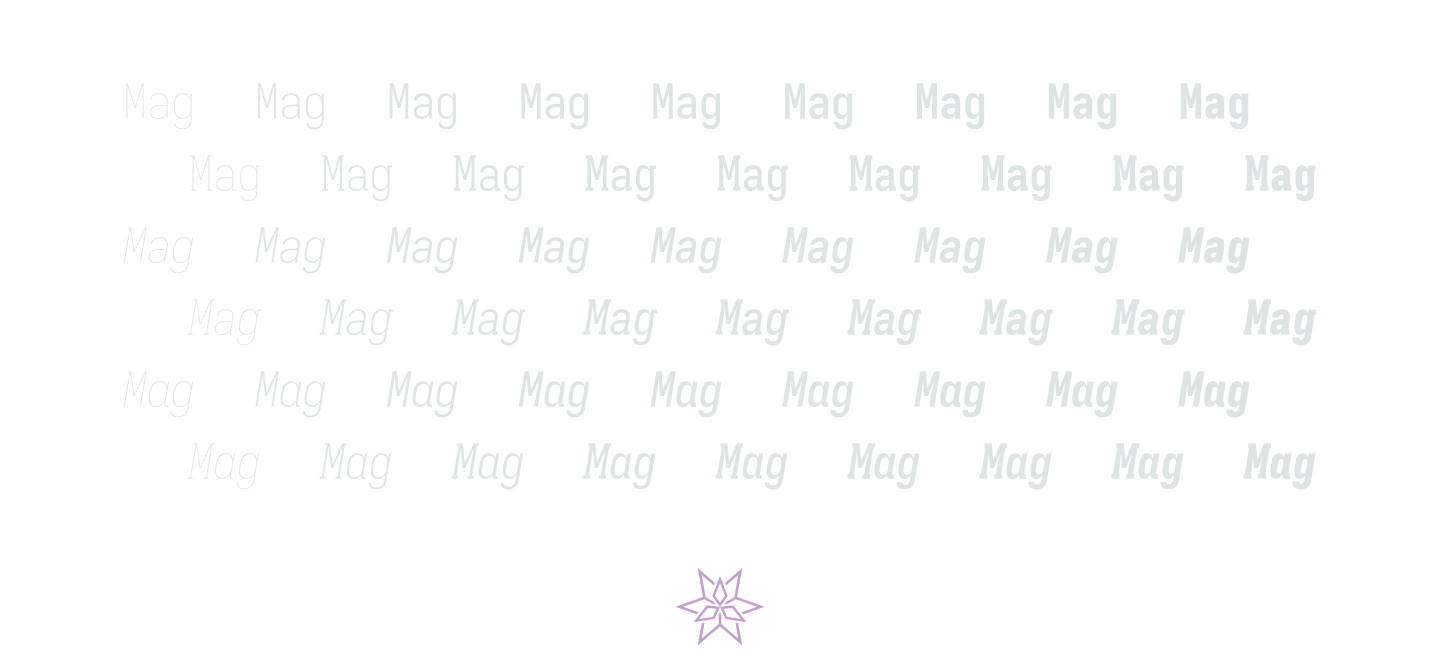
What is this?
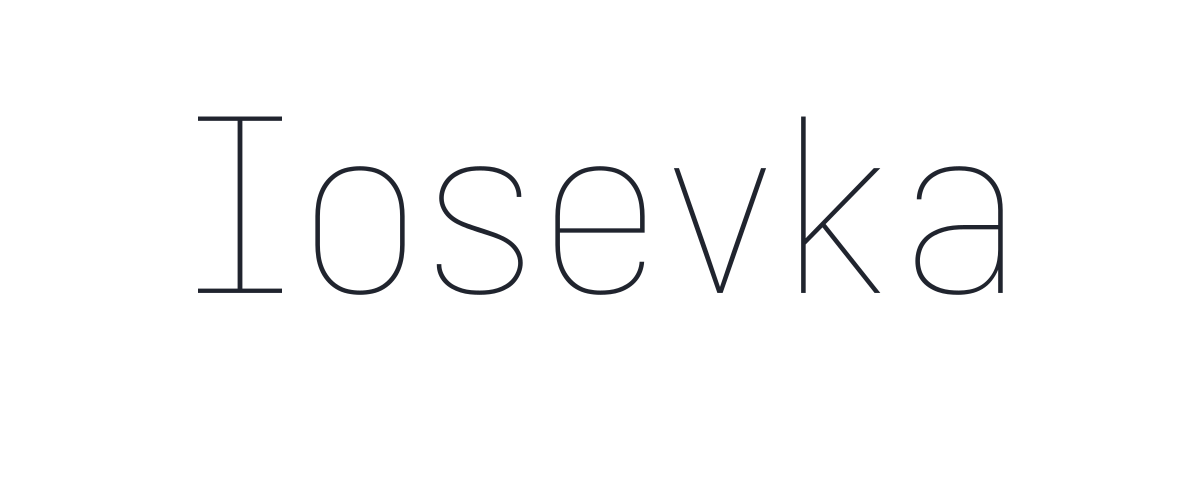
 Iosevka is an open-source typeface family designed for writing code, using in terminals and preparing technical documents. It comes in sans-serif and slab-serif forms, both monospace and quasi-proportional.
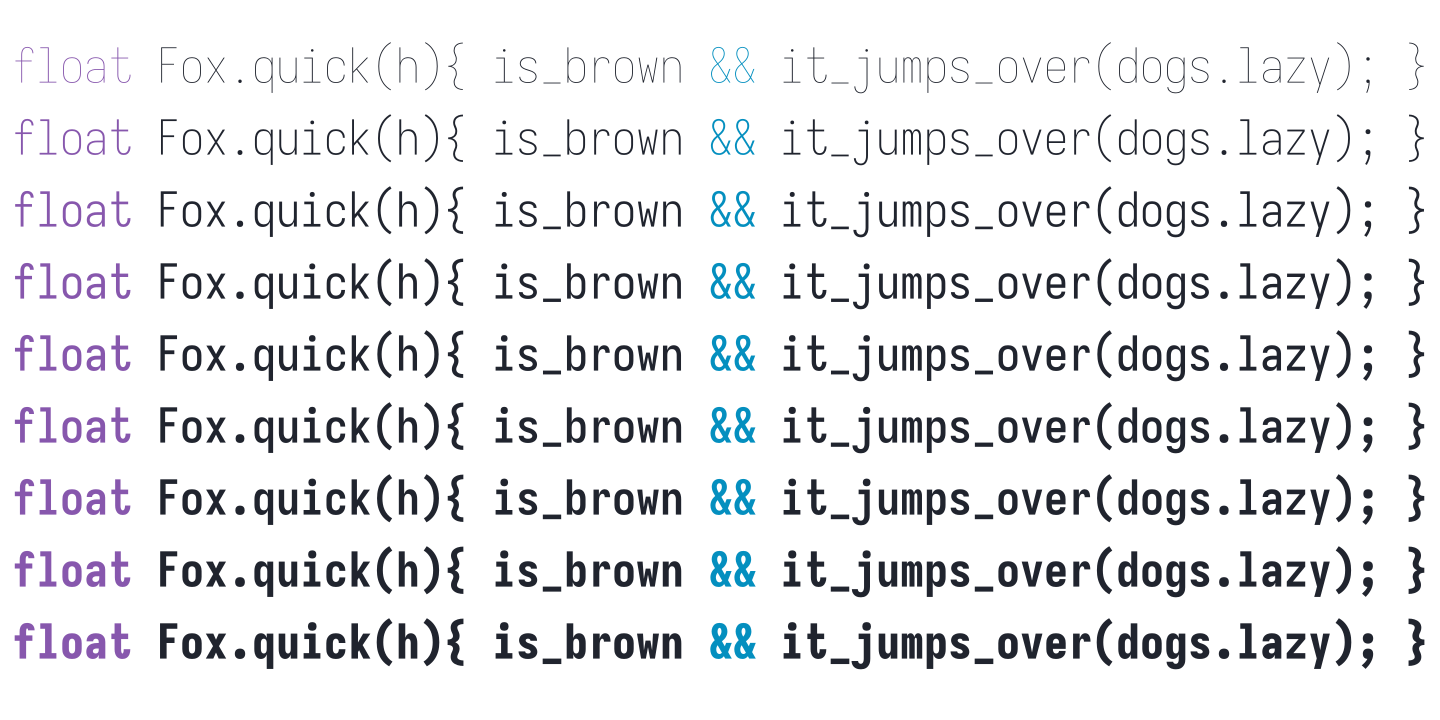
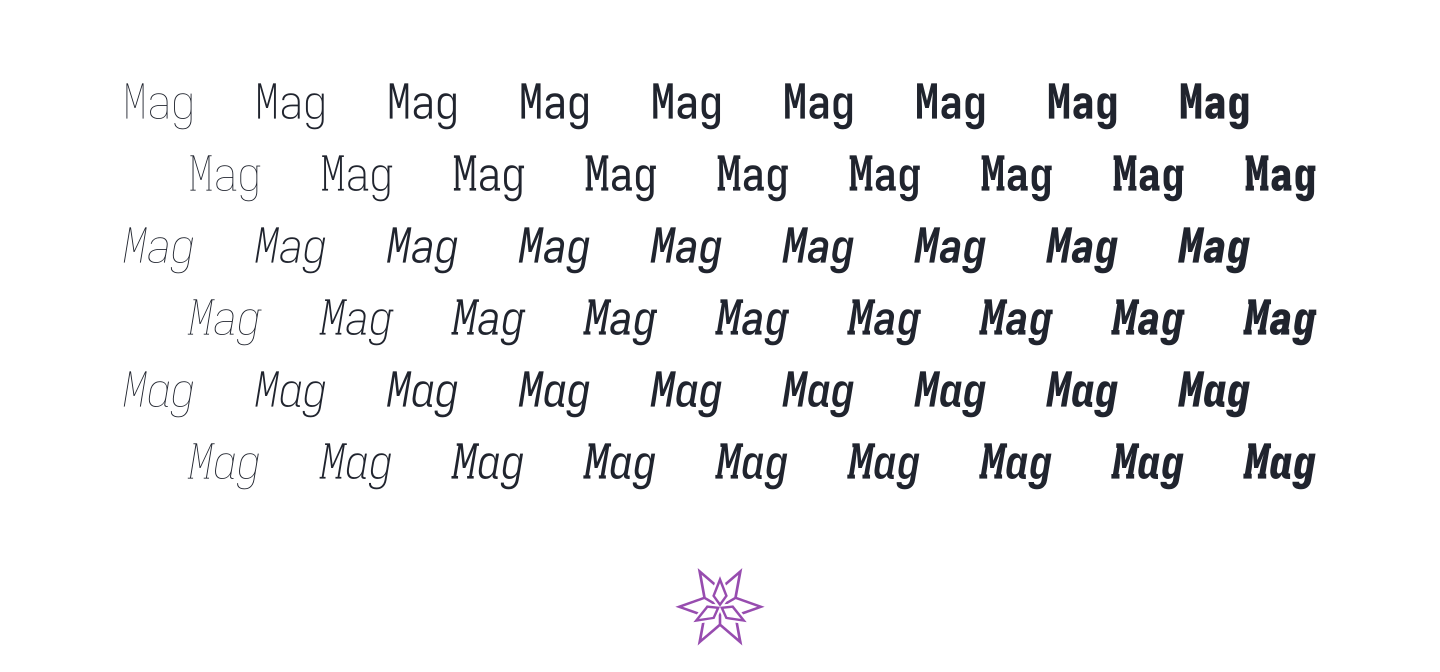
Iosevka is an open-source typeface family designed for writing code, using in terminals and preparing technical documents. It comes in sans-serif and slab-serif forms, both monospace and quasi-proportional.Is it a single font or a whole family?A family: the official package has 6 monospace subfamilies (sans-serif and slab-serif, each in Default, Term and Fixed spacings) plus quasi-proportional Aile and Etoile. Monospace cuts span 9 weights, 2 widths and 3 slopes.
A family: the official package has 6 monospace subfamilies (sans-serif and slab-serif, each in Default, Term and Fixed spacings) plus quasi-proportional Aile and Etoile. Monospace cuts span 9 weights, 2 widths and 3 slopes.Do I need to install anything else to use it?Nothing — as a font it is simply installed and picked in your editor or terminal. Building your own customized variant from source is optional and needs Node.js 16 or newer with the project's verda build runner.
Nothing — as a font it is simply installed and picked in your editor or terminal. Building your own customized variant from source is optional and needs Node.js 16 or newer with the project's verda build runner.Are there any gotchas when installing it on Windows?Yes — on Windows 10 1809 and newer the default install is per-user, which some applications (mostly Java-based ones) may not pick up. Right-click the font files and choose 'Install for all users' instead.
Yes — on Windows 10 1809 and newer the default install is per-user, which some applications (mostly Java-based ones) may not pick up. Right-click the font files and choose 'Install for all users' instead.Does it work beyond Windows, macOS and Linux?Yes — the README also lists packages for the BSDs: FreeBSD installs it with 'pkg install iosevka', and on OpenBSD you can discover Iosevka packages with 'pkginfo -Q iosevka'.
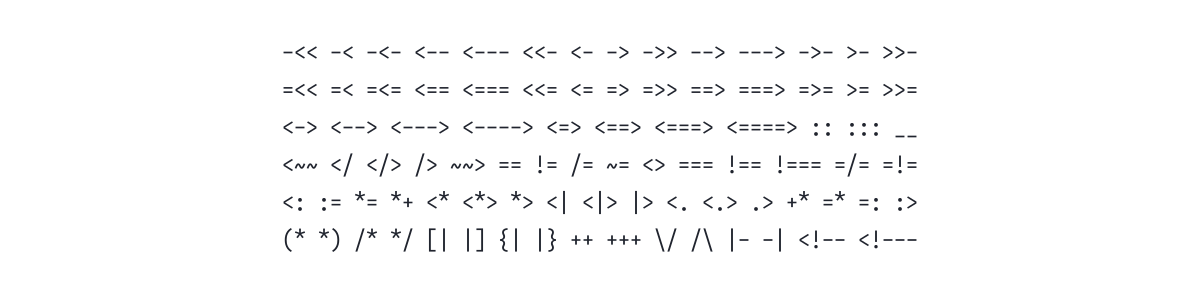
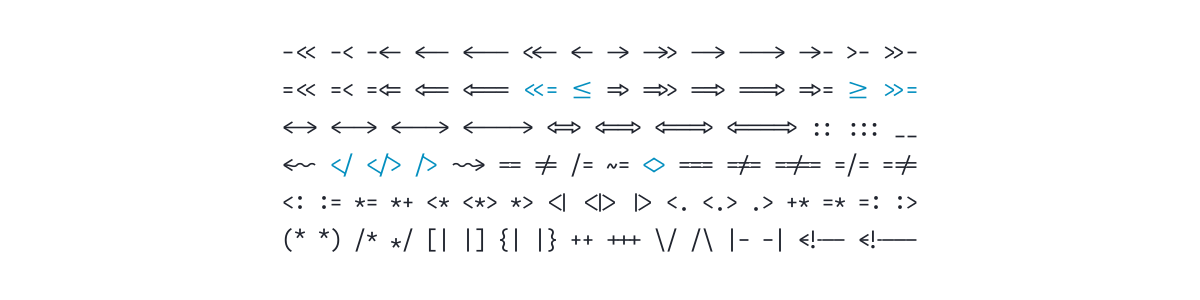
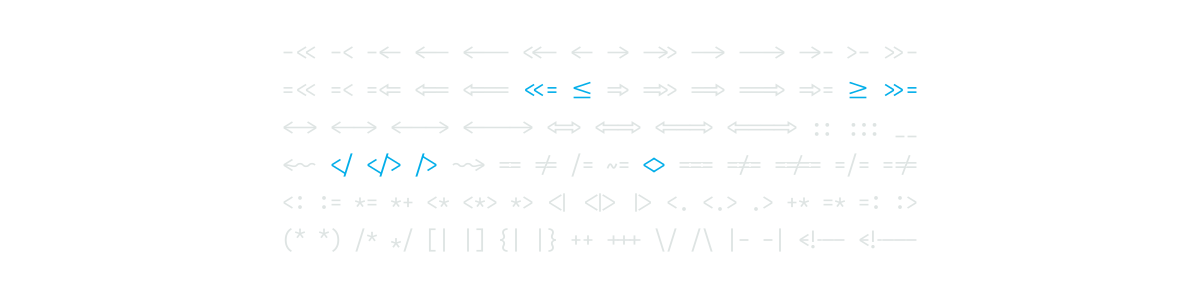
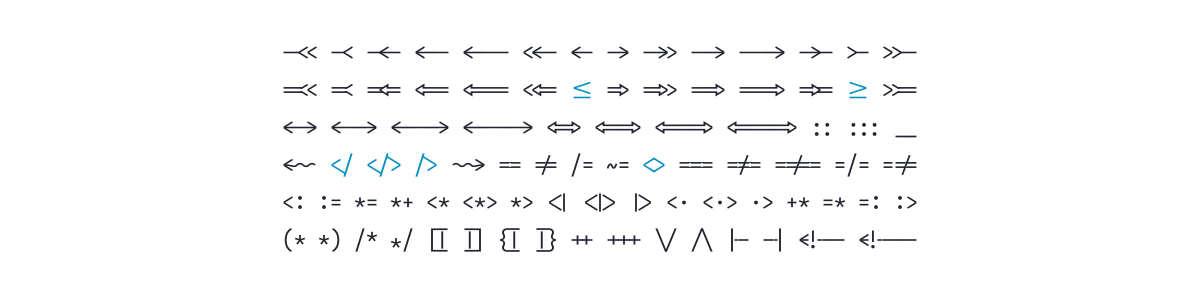
Yes — the README also lists packages for the BSDs: FreeBSD installs it with 'pkg install iosevka', and on OpenBSD you can discover Iosevka packages with 'pkginfo -Q iosevka'.Does it support programming ligatures, and can I turn them off?Yes. Monospace subfamilies ship ligatures controlled through OpenType features: the default set lives in 'calt' (not all groups are enabled by default), discretionary ligatures in 'dlig', plus language-specific sets under custom tags. Cherry-picking individual ligation groups requires building a custom Iosevka.
Yes. Monospace subfamilies ship ligatures controlled through OpenType features: the default set lives in 'calt' (not all groups are enabled by default), discretionary ligatures in 'dlig', plus language-specific sets under custom tags. Cherry-picking individual ligation groups requires building a custom Iosevka.Can I change the shape of individual characters?Yes — there are stylistic sets and per-character variants enabled as OpenType features; for example, setting 'cv26' to 6 switches to a single-storey 'a'. Caution: some software limits how many OpenType features it keeps, so validate your configuration.
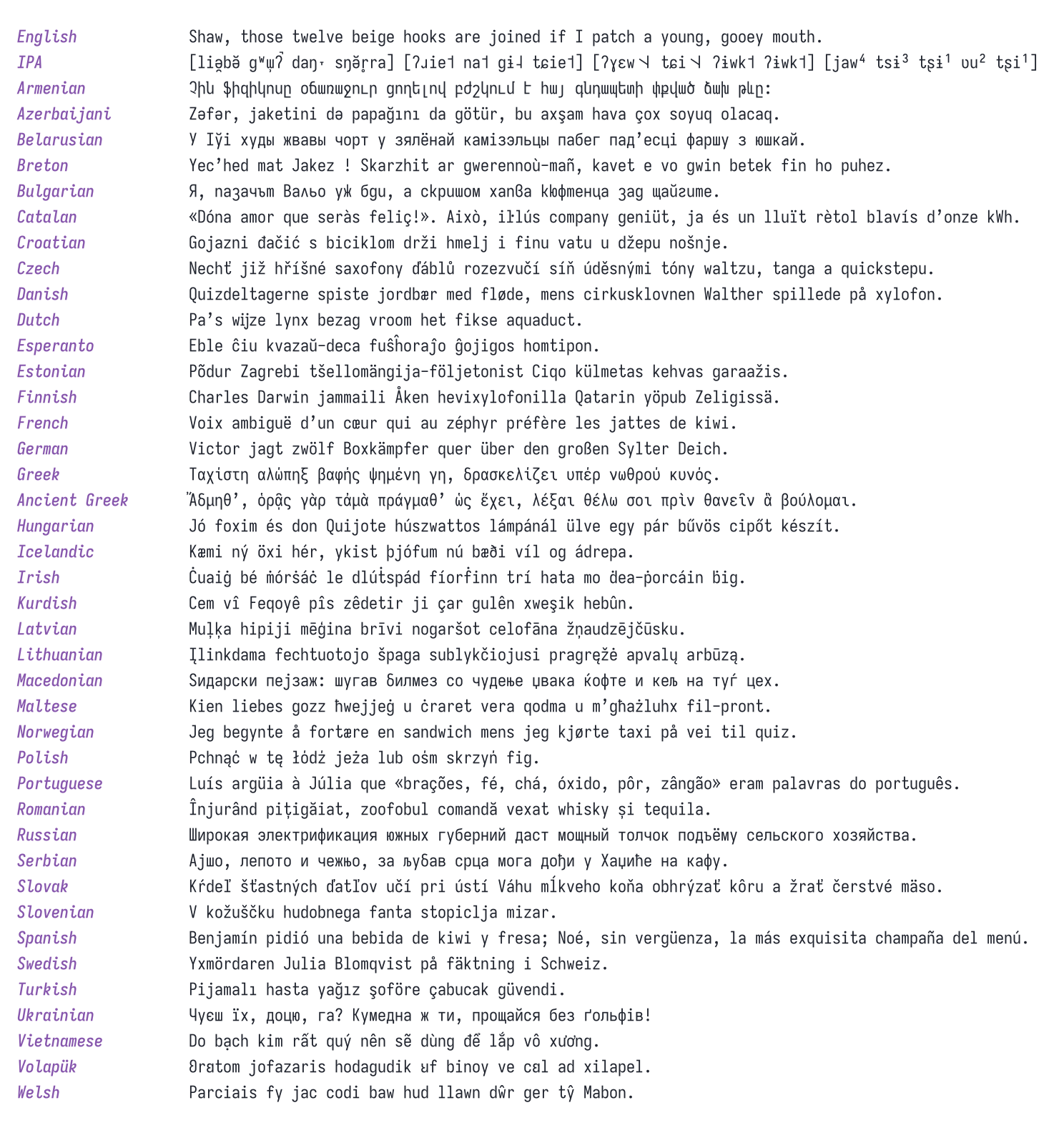
Yes — there are stylistic sets and per-character variants enabled as OpenType features; for example, setting 'cv26' to 6 switches to a single-storey 'a'. Caution: some software limits how many OpenType features it keeps, so validate your configuration.Does it include Chinese, Japanese or Korean glyphs?No — for CJK the README points users to Sarasa Gothic, the same author's companion project. Iosevka's own coverage is Latin, Greek (including Polytonic), some Cyrillic, IPA symbols and punctuation, supporting 248 languages.
No — for CJK the README points users to Sarasa Gothic, the same author's companion project. Iosevka's own coverage is Latin, Greek (including Polytonic), some Cyrillic, IPA symbols and punctuation, supporting 248 languages.Is the project actively maintained?Yes — the repository is not archived and its CI runs daily development builds; the project has been in continuous development since 2015.
Yes — the repository is not archived and its CI runs daily development builds; the project has been in continuous development since 2015.What are similar projects?maple-font, JetBrainsMono, Monocraft, Hack, plex, Sarasa-Gothic, source-code-pro, monaspace
maple-font, JetBrainsMono, Monocraft, Hack, plex, Sarasa-Gothic, source-code-pro, monaspaceWhich topics is it in?programming-ligatures, ligatures, monospace-font, ofl, programming-font, build-system, typeface, fonts, opensource, font, typography, build-tool
programming-ligatures, ligatures, monospace-font, ofl, programming-font, build-system, typeface, fonts, opensource, font, typography, build-tool