Что это?
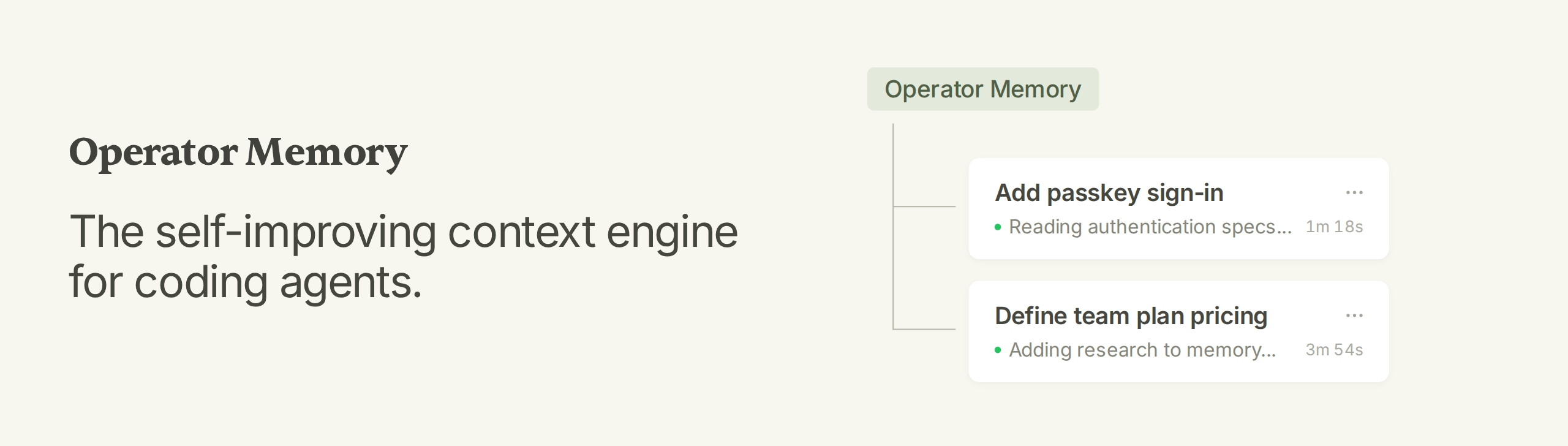
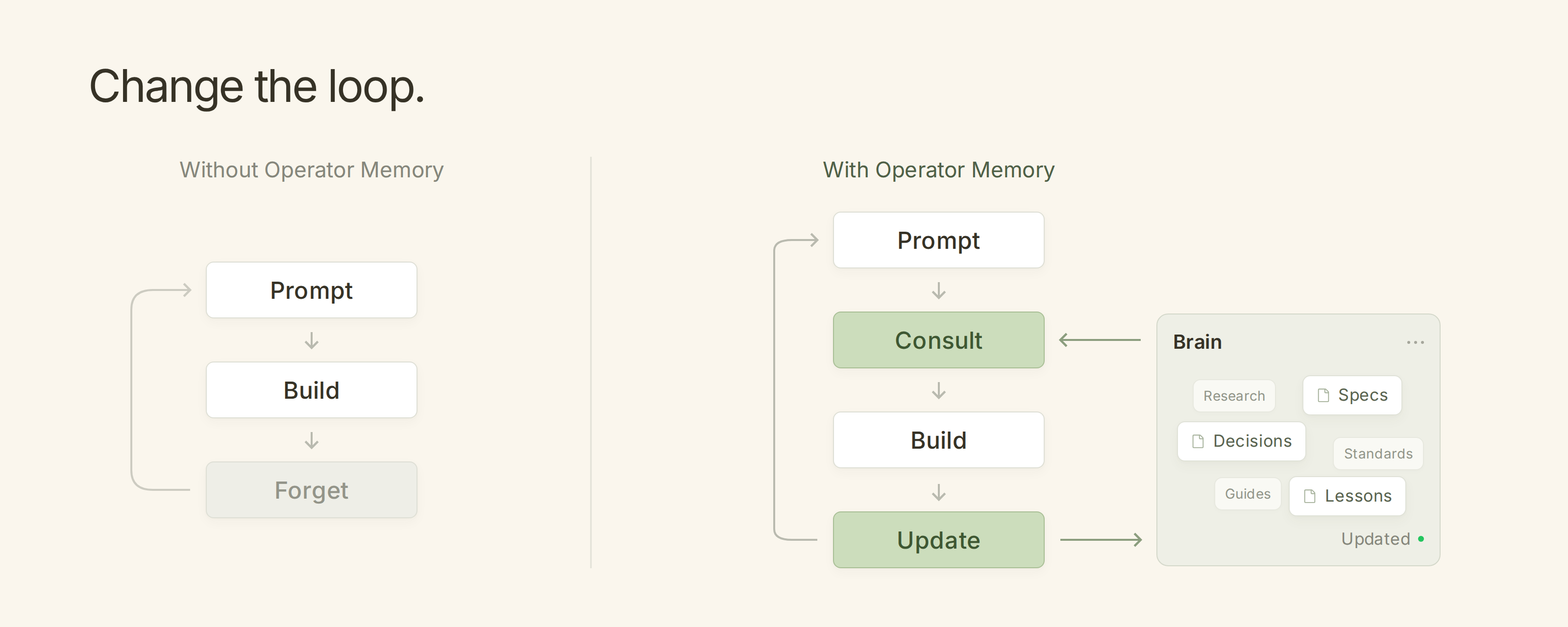
 Operator Memory — самообучающийся движок контекста, дающий кодинг-агентам постоянную память: пока агент работает, он автоматически записывает спецификации, решения, исследования и уроки в Markdown, так что следующая сессия стартует, уже зная, что выучила предыдущая.
Operator Memory — самообучающийся движок контекста, дающий кодинг-агентам постоянную память: пока агент работает, он автоматически записывает спецификации, решения, исследования и уроки в Markdown, так что следующая сессия стартует, уже зная, что выучила предыдущая.Это библиотека для импорта или плагин для моего кодинг-агента?Это система плагинов, управляемая через CLI: вы устанавливаете 'Operator Helper' через npm или Bun, затем ставите адаптер под конкретный харнесс (Claude Code, Codex, OpenCode, Pi, DeepSeek Harness или Kiro).
Это система плагинов, управляемая через CLI: вы устанавливаете 'Operator Helper' через npm или Bun, затем ставите адаптер под конкретный харнесс (Claude Code, Codex, OpenCode, Pi, DeepSeek Harness или Kiro).Как его запустить?Установите Operator Helper через npm или Bun, выполните его команду установки для вашего харнесса (например, operator-helper install claude-code), затем один раз запустите /operator:user-init и /operator:project-init в каждом проекте, чтобы создать структуру и проиндексировать Brain.
Установите Operator Helper через npm или Bun, выполните его команду установки для вашего харнесса (например, operator-helper install claude-code), затем один раз запустите /operator:user-init и /operator:project-init в каждом проекте, чтобы создать структуру и проиндексировать Brain.С какими кодинг-агентами он работает?Полностью поддерживаются Claude Code, Codex, OpenCode V2 (V1 всё ещё поддерживается как legacy), Pi и DeepSeek Harness; также поддерживается Kiro.
Полностью поддерживаются Claude Code, Codex, OpenCode V2 (V1 всё ещё поддерживается как legacy), Pi и DeepSeek Harness; также поддерживается Kiro.Нужна ли ему векторная база данных или фоновые агенты?Нет. Operator спроектирован без какой-либо дополнительной инфраструктуры: не нужны ни фоновые агенты, ни эмбеддинги, ни векторная база, ни настройка модели.
Нет. Operator спроектирован без какой-либо дополнительной инфраструктуры: не нужны ни фоновые агенты, ни эмбеддинги, ни векторная база, ни настройка модели.Где на самом деле хранится память?Приватные знания проекта лежат в локальной папке .operator/, командные знания — в .operator-shared/ (коммитятся в репозиторий), а личные правила, используемые во всех проектах, — в ~/.operator/user/.
Приватные знания проекта лежат в локальной папке .operator/, командные знания — в .operator-shared/ (коммитятся в репозиторий), а личные правила, используемые во всех проектах, — в ~/.operator/user/.Почему он редактирует существующие документы, а не просто дописывает новые фрагменты памяти?Когда 'истина проекта' меняется, агент прямо обновляет канонический файл спецификации или решения, удерживая Brain единым актуальным источником вместо накопления устаревших фрагментов, как это было бы с RAG-базой.
Когда 'истина проекта' меняется, агент прямо обновляет канонический файл спецификации или решения, удерживая Brain единым актуальным источником вместо накопления устаревших фрагментов, как это было бы с RAG-базой.Могу ли я сам читать или редактировать память агента?Да, всё это обычный Markdown, который можно открыть, отредактировать или удалить, и можно вести его в Git, чтобы делиться знаниями с командой.
Да, всё это обычный Markdown, который можно открыть, отредактировать или удалить, и можно вести его в Git, чтобы делиться знаниями с командой.Что дальше запланировано для Operator?В роадмапе — Observation Engine для стойких пользовательских предпочтений, более надёжные обновления Brain посреди разговора, рендеринг преамбулы с учётом кэша и сжатие контекста без потерь — у каждого пункта есть переключатель вкл/выкл.
В роадмапе — Observation Engine для стойких пользовательских предпочтений, более надёжные обновления Brain посреди разговора, рендеринг преамбулы с учётом кэша и сжатие контекста без потерь — у каждого пункта есть переключатель вкл/выкл.What are similar projects?billion-context, context-mode, pstack-claude, ruflo, oh-my-openagent, ordewell, answer-me-with-html, MemOS
billion-context, context-mode, pstack-claude, ruflo, oh-my-openagent, ordewell, answer-me-with-html, MemOSWhich topics is it in?kiro, second-brain, pi, agentic-workflow, agent-harness, claude-code-plugin, codex-skill, knowledge-management, context-engineering, agent-skill, harness, opencode
kiro, second-brain, pi, agentic-workflow, agent-harness, claude-code-plugin, codex-skill, knowledge-management, context-engineering, agent-skill, harness, opencode