


What is this?
 Perry compiles the TypeScript or JavaScript you already write directly into native machine-code executables for macOS, Windows, Linux, iOS, Android, watchOS and TV, using SWC to parse and LLVM to generate code, so there is no Node.js runtime or Electron bundle to ship.
Perry compiles the TypeScript or JavaScript you already write directly into native machine-code executables for macOS, Windows, Linux, iOS, Android, watchOS and TV, using SWC to parse and LLVM to generate code, so there is no Node.js runtime or Electron bundle to ship.Is this a library I import into Node, or a standalone compiler toolchain?It is a standalone ahead-of-time compiler and CLI toolchain, not a library you require() into a Node app: it parses your code with SWC and emits native machine code via LLVM, producing a self-contained binary.
It is a standalone ahead-of-time compiler and CLI toolchain, not a library you require() into a Node app: it parses your code with SWC and emits native machine code via LLVM, producing a self-contained binary.How do I install Perry and compile my first program?Install it via APT, Scoop, the install script, or by building from source per the installation guide, then run the compiler on your entry file; `perry doctor` checks that your setup is correct, and `--target ios` / `--target android` / `--target web` switch the output platform.
Install it via APT, Scoop, the install script, or by building from source per the installation guide, then run the compiler on your entry file; `perry doctor` checks that your setup is correct, and `--target ios` / `--target android` / `--target web` switch the output platform.Do I need Node.js installed to run the compiled binary?No. Compiled Perry programs have no runtime at all — no Node, no Bun, no embedded browser engine — just the executable itself.
No. Compiled Perry programs have no runtime at all — no Node, no Bun, no embedded browser engine — just the executable itself.Will my existing Node code and npm packages just run under Perry?Most common Node APIs work: about 97% of Node's own test suite passes across 53 node: modules, plus roughly 50 popular npm packages like Fastify, Express, mysql2 and ioredis — but it is not full Node parity, and supported TypeScript syntax has documented limitations.
Most common Node APIs work: about 97% of Node's own test suite passes across 53 node: modules, plus roughly 50 popular npm packages like Fastify, Express, mysql2 and ioredis — but it is not full Node parity, and supported TypeScript syntax has documented limitations.Which platforms can I actually ship an app to?From one codebase you can target macOS, iOS, iPadOS, visionOS, tvOS, watchOS, Android, Wear OS, Windows, Linux, and Web/WASM, with a SwiftUI-like API compiling to real native widgets on each.
From one codebase you can target macOS, iOS, iPadOS, visionOS, tvOS, watchOS, Android, Wear OS, Windows, Linux, and Web/WASM, with a SwiftUI-like API compiling to real native widgets on each.Does Perry send any telemetry or data off my machine?Telemetry is opt-in only: nothing is sent unless you enable it yourself in ~/.perry/config.toml, and any payload that is sent is anonymous and redacted, never your source code or project names.
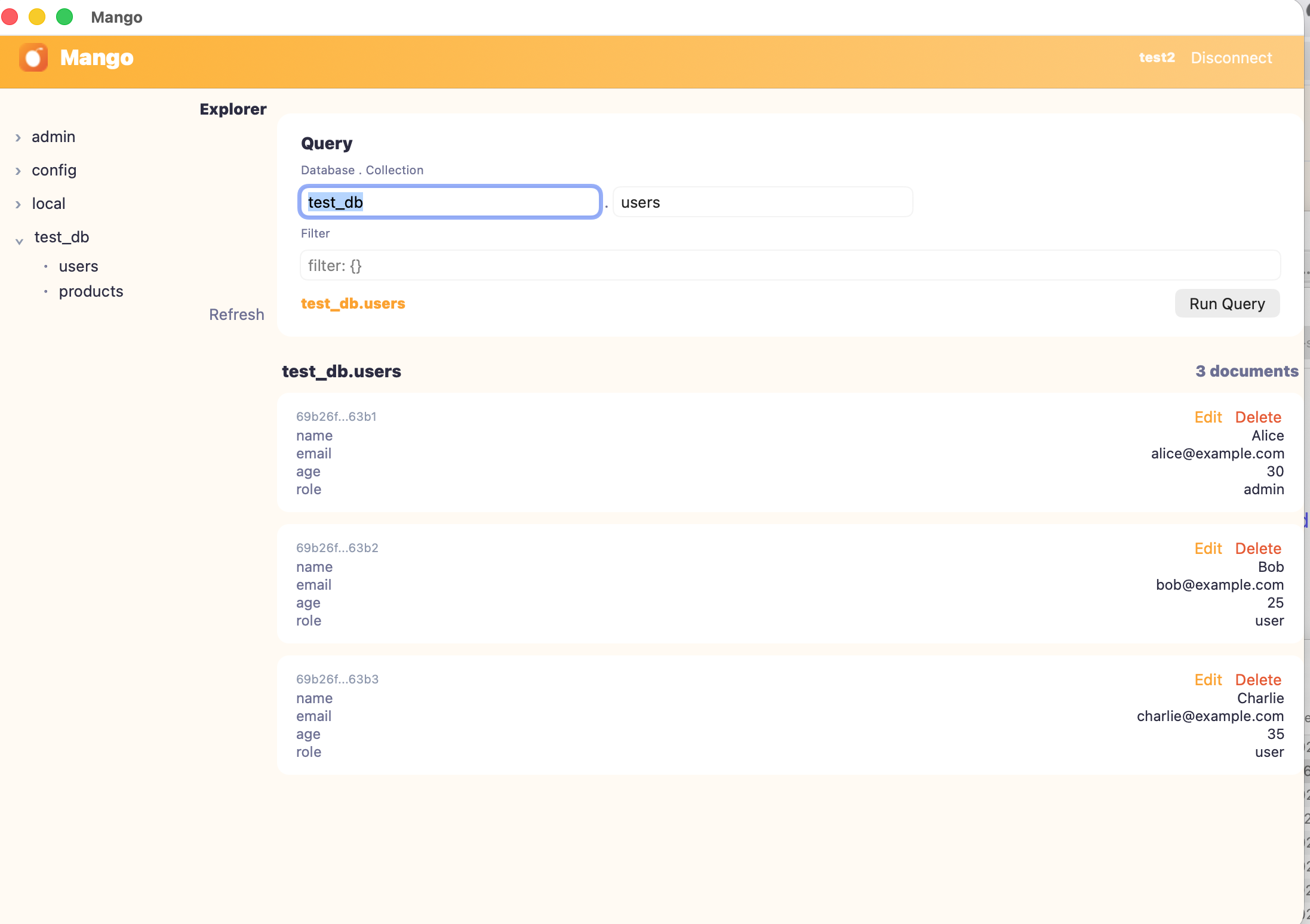
Telemetry is opt-in only: nothing is sent unless you enable it yourself in ~/.perry/config.toml, and any payload that is sent is anonymous and redacted, never your source code or project names.How small are the resulting binaries?A 'hello world' compiles to about 330 KB, and a real app like the Mango MongoDB GUI ships as roughly 7 MB with sub-second cold start.
A 'hello world' compiles to about 330 KB, and a real app like the Mango MongoDB GUI ships as roughly 7 MB with sub-second cold start.How does Perry make multi-core code safe?It exposes parallelMap, parallelFilter and spawn backed by real OS threads, and the compiler rejects shared mutable state so data races fail to compile rather than crash at runtime.
It exposes parallelMap, parallelFilter and spawn backed by real OS threads, and the compiler rejects shared mutable state so data races fail to compile rather than crash at runtime.How much faster is Perry than Node.js or Bun?On the published benchmark suite Perry beats both on workloads like string concatenation and JSON round-trips (over 3x faster than Node in some cases), though V8's JIT still wins on a few large-data cases, and the authors publish the full results including losses.
On the published benchmark suite Perry beats both on workloads like string concatenation and JSON round-trips (over 3x faster than Node in some cases), though V8's JIT still wins on a few large-data cases, and the authors publish the full results including losses.What kinds of apps have people already built with Perry?Showcased projects include Bloom Engine (a native game engine using Metal/DirectX12/Vulkan), Mango (a native MongoDB GUI), Hone (an AI-powered code editor), and dB Meter (a real-time sound level app) — all shipping across multiple native platforms from one codebase.
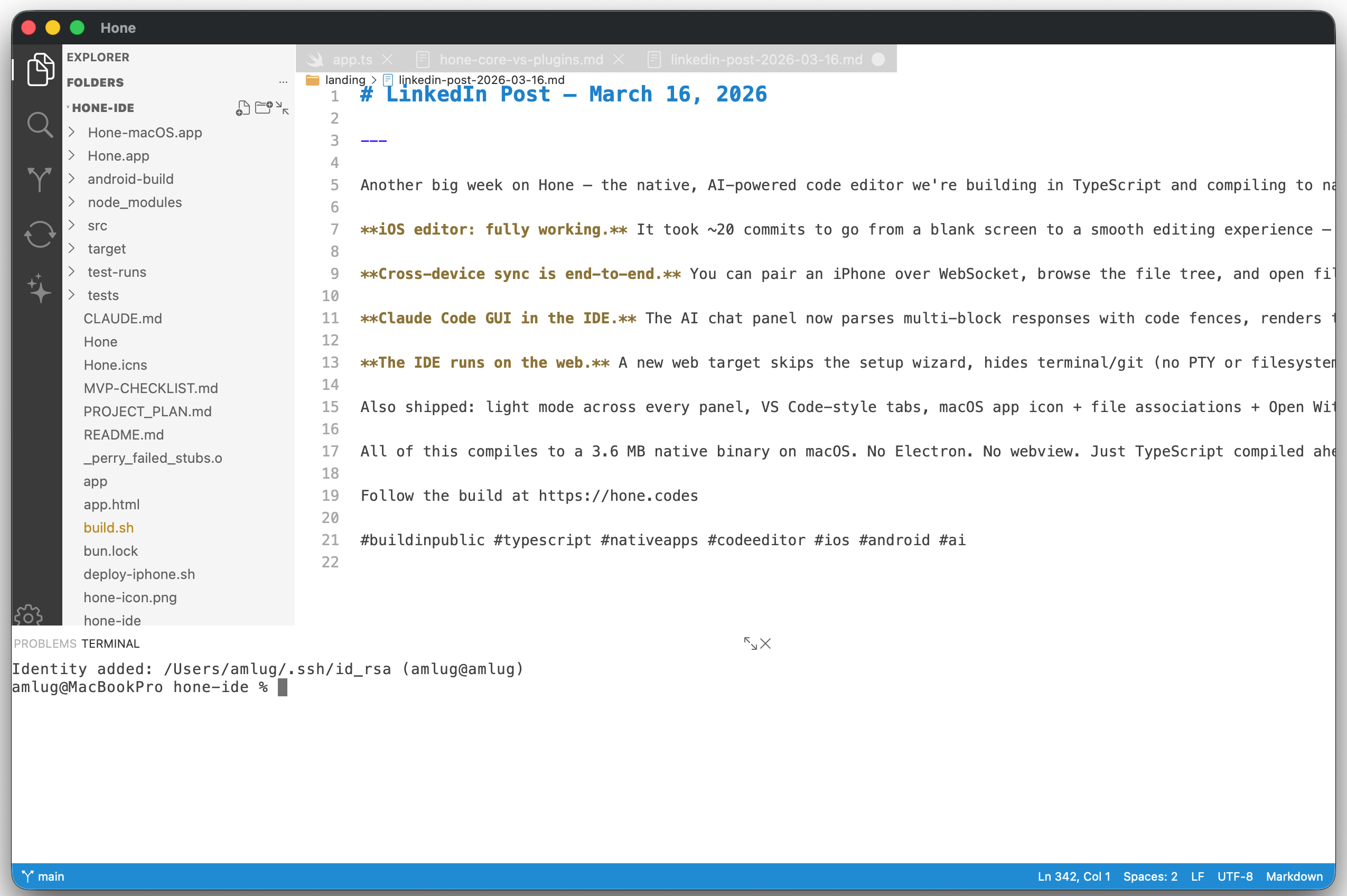
Showcased projects include Bloom Engine (a native game engine using Metal/DirectX12/Vulkan), Mango (a native MongoDB GUI), Hone (an AI-powered code editor), and dB Meter (a real-time sound level app) — all shipping across multiple native platforms from one codebase.What are similar projects?CalcKernel, scriptc, Tov, goose, lightcraft, Kof4j, swift, yew
CalcKernel, scriptc, Tov, goose, lightcraft, Kof4j, swift, yewWhich topics is it in?harmonyos, llvm, watchos, multithreading, programming-language, concurrency, systems-programming, native, compiler, wasm, ios, performance
harmonyos, llvm, watchos, multithreading, programming-language, concurrency, systems-programming, native, compiler, wasm, ios, performance