






What is this?
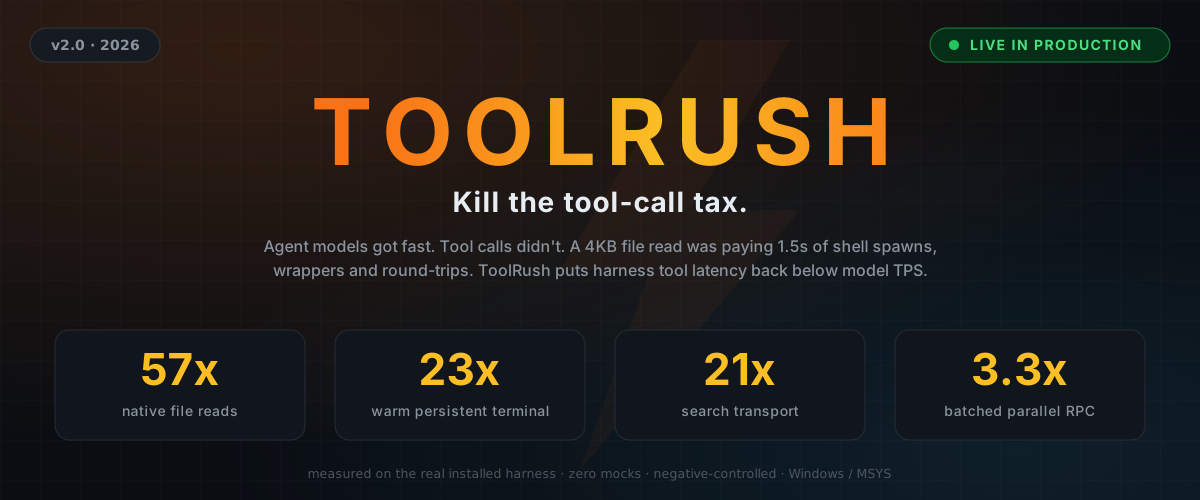
 ToolRush is a low-overhead execution layer plugin for Hermes Agent (Nous Research's agent harness) that eliminates the latency overhead of tool calls like file reads, searches, and terminal commands while keeping the same tools, outputs, and safety gates.
ToolRush is a low-overhead execution layer plugin for Hermes Agent (Nous Research's agent harness) that eliminates the latency overhead of tool calls like file reads, searches, and terminal commands while keeping the same tools, outputs, and safety gates.Is this a standalone tool or a plugin for something else?It's a plugin that installs into an existing Hermes Agent harness and accelerates its transport layer; it deliberately avoids reimplementing the search engine or file reader, instead speeding up the real ones.
It's a plugin that installs into an existing Hermes Agent harness and accelerates its transport layer; it deliberately avoids reimplementing the search engine or file reader, instead speeding up the real ones.How do I verify it's working after install?After installing the plugin into the harness, you run doctor.py --smoke for diagnostics, and can disable any accelerated lane individually via a TOOLRUSH=0 kill-switch or the master toolrush.enabled flag.
After installing the plugin into the harness, you run doctor.py --smoke for diagnostics, and can disable any accelerated lane individually via a TOOLRUSH=0 kill-switch or the master toolrush.enabled flag.Do I need Hermes Agent installed first?Yes, ToolRush is a plugin that only functions inside an installed Hermes Agent harness, and its fast search lane shells out directly to rg.exe (ripgrep on Windows) while reusing the harness's native Windows file reader.
Yes, ToolRush is a plugin that only functions inside an installed Hermes Agent harness, and its fast search lane shells out directly to rg.exe (ripgrep on Windows) while reusing the harness's native Windows file reader.Does it speed up every kind of agent turn?No — the speedups apply to tool-operation wall time, not whole model turns, so tool-heavy turns get dramatically faster while chat-heavy turns barely change; trivial native reads also don't benefit from the threading used for batched reads.
No — the speedups apply to tool-operation wall time, not whole model turns, so tool-heavy turns get dramatically faster while chat-heavy turns barely change; trivial native reads also don't benefit from the threading used for batched reads.Who is this built for?It's built specifically for users and operators of Hermes Agent, the harness made by Nous Research, not as a general-purpose tool-calling accelerator.
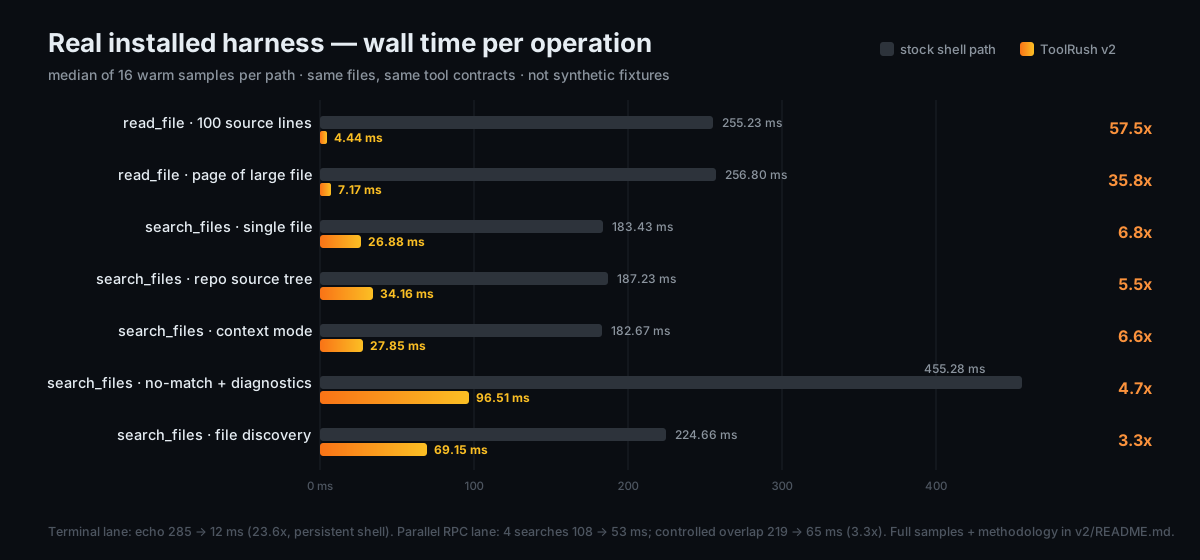
It's built specifically for users and operators of Hermes Agent, the harness made by Nous Research, not as a general-purpose tool-calling accelerator.How much faster does ToolRush make native file reads?Native file reads drop from 255.23ms to 4.44ms, a measured 57.5x speedup, benchmarked on the real installed harness with no mocks or fixtures.
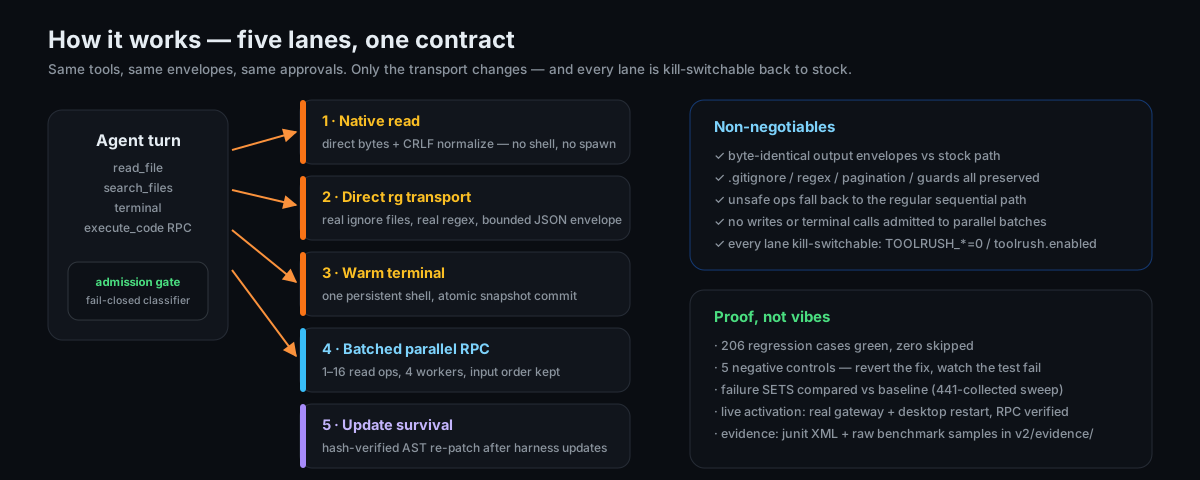
Native file reads drop from 255.23ms to 4.44ms, a measured 57.5x speedup, benchmarked on the real installed harness with no mocks or fixtures.What happens if a command is flagged as unsafe to accelerate?ToolRush's fail-closed admission classifier refuses to accelerate hidden-write operations like wget, curl -o, or branch creation, but those calls still run — just through the normal slower sequential path instead of being blocked.
ToolRush's fail-closed admission classifier refuses to accelerate hidden-write operations like wget, curl -o, or branch creation, but those calls still run — just through the normal slower sequential path instead of being blocked.How does ToolRush keep working after Hermes Agent updates?It stores hash-verified helper sources and 25 function-scoped compatibility patches outside the upstream checkout, then restores them in memory after an update, and degrades loudly rather than silently breaking if upstream code has drifted unexpectedly.
It stores hash-verified helper sources and 25 function-scoped compatibility patches outside the upstream checkout, then restores them in memory after an update, and degrades loudly rather than silently breaking if upstream code has drifted unexpectedly.What does the parallel batch reading feature do?Through hermestools.parallel, 1-16 read operations can run across up to 4 workers in one RPC call, returning results in input order while still enforcing authentication, allowlists, and call budgets; invalid batches are rejected entirely before dispatch.
Through hermestools.parallel, 1-16 read operations can run across up to 4 workers in one RPC call, returning results in input order while still enforcing authentication, allowlists, and call budgets; invalid batches are rejected entirely before dispatch.What are similar projects?hermes-agent-self-evolution, pi-autoresearch, billion-context, agentbox, hermes-agent, botmaker, spinel, Proteus
hermes-agent-self-evolution, pi-autoresearch, billion-context, agentbox, hermes-agent, botmaker, spinel, ProteusWhich topics is it in?nous-research, parallel, agent-tools, rpc, hermes-agent, optimization, caching, concurrency, harness, testing, benchmark, plugin
nous-research, parallel, agent-tools, rpc, hermes-agent, optimization, caching, concurrency, harness, testing, benchmark, plugin