



What is this?
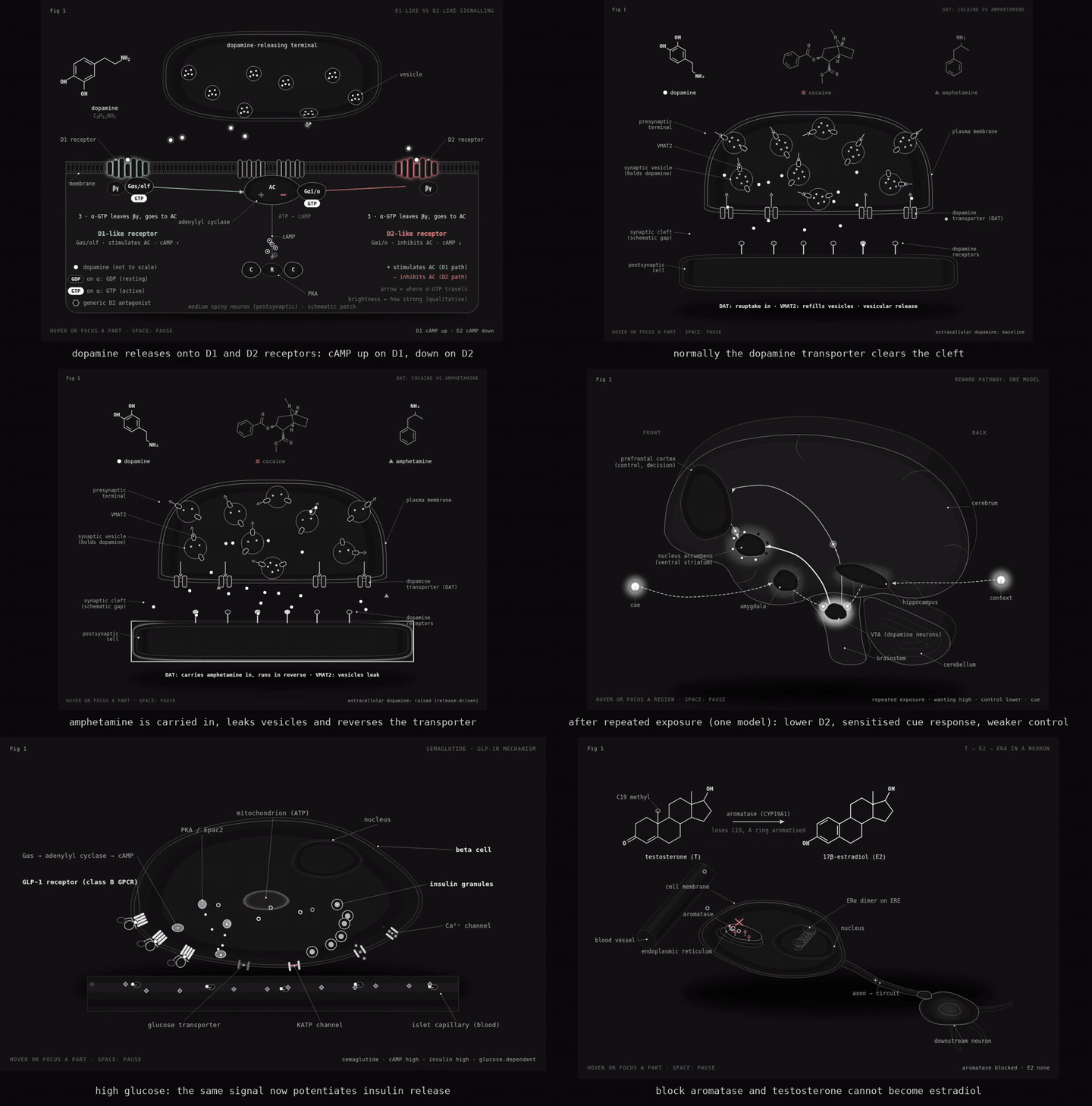
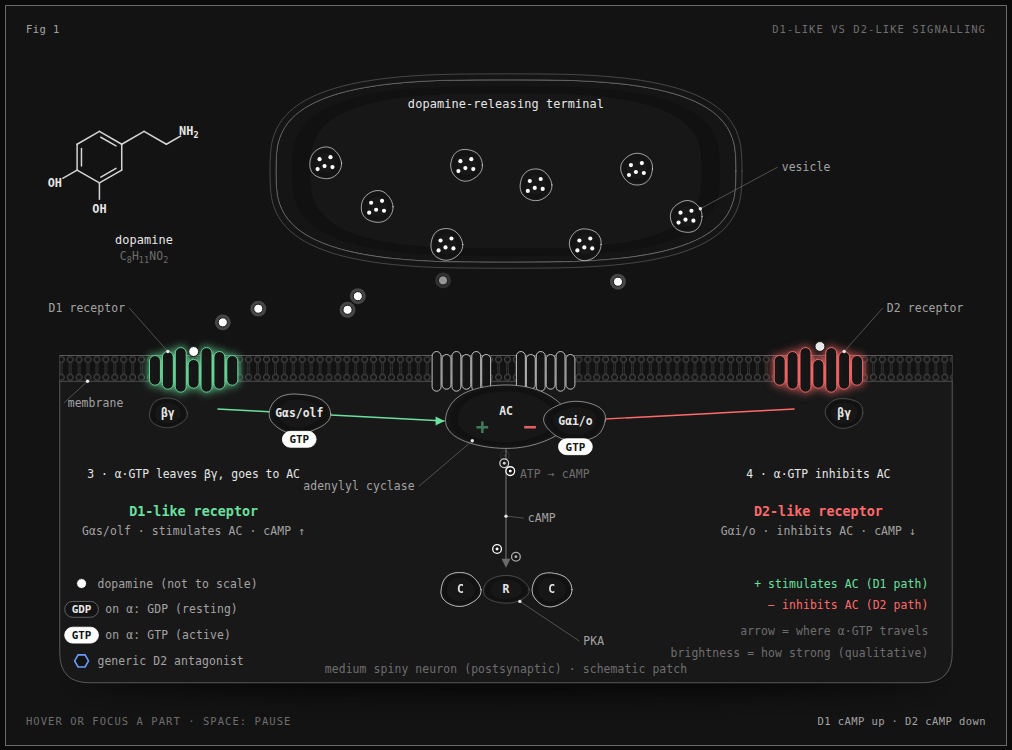
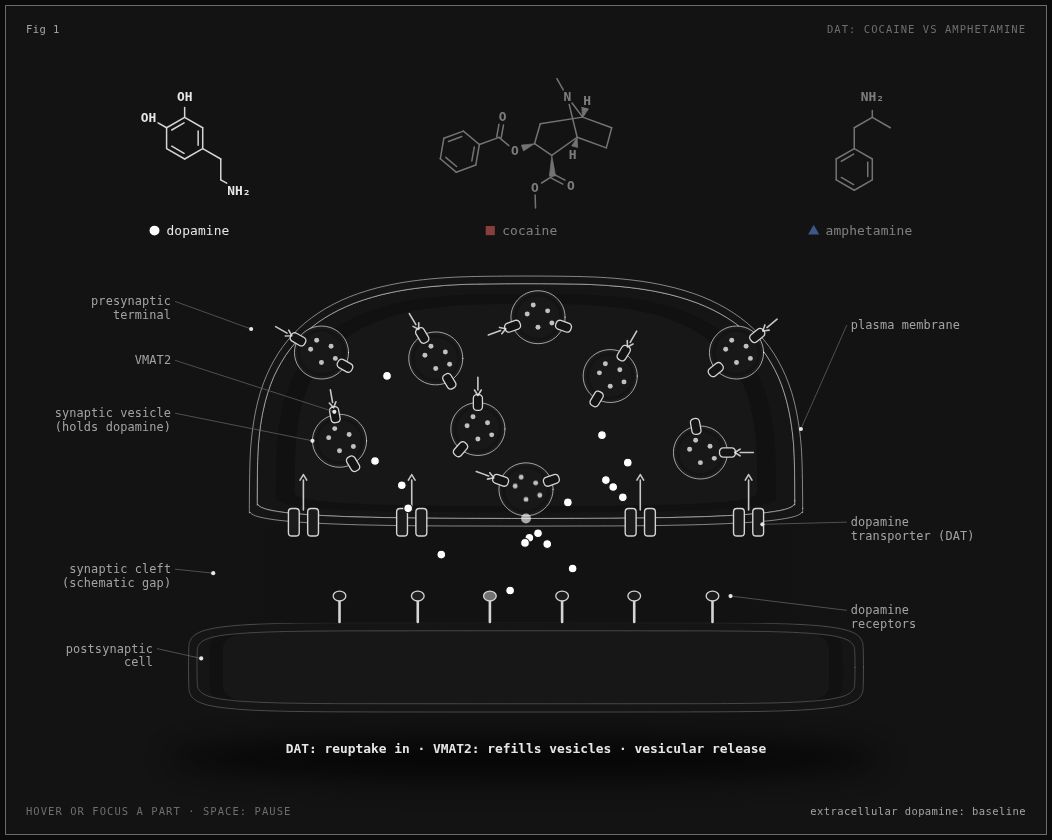
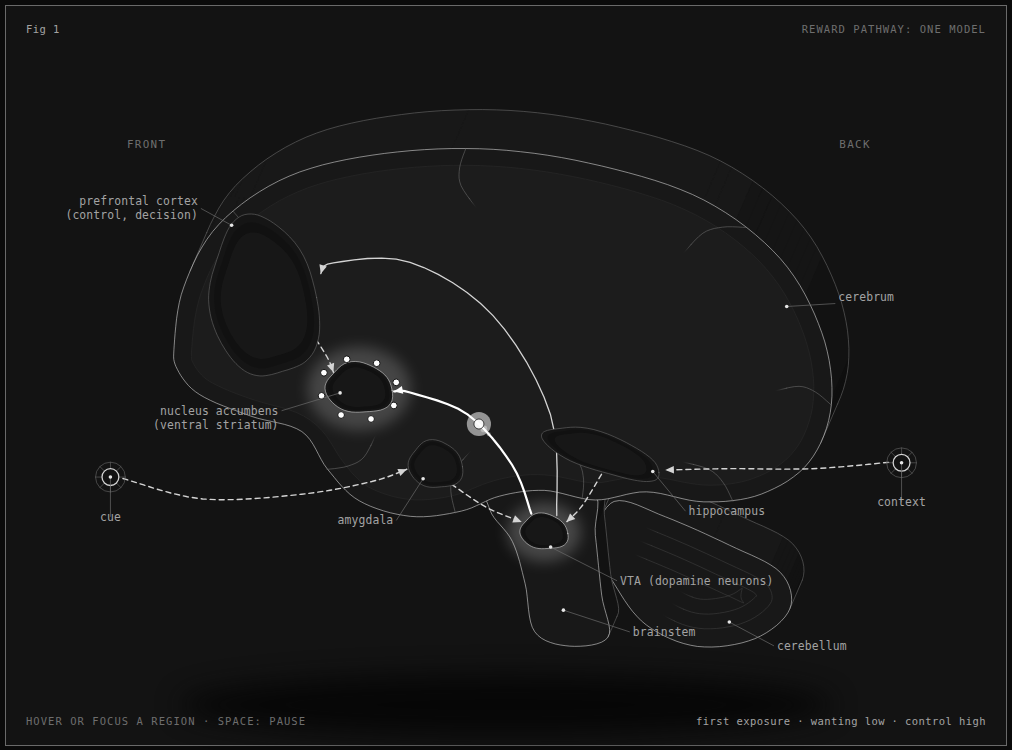
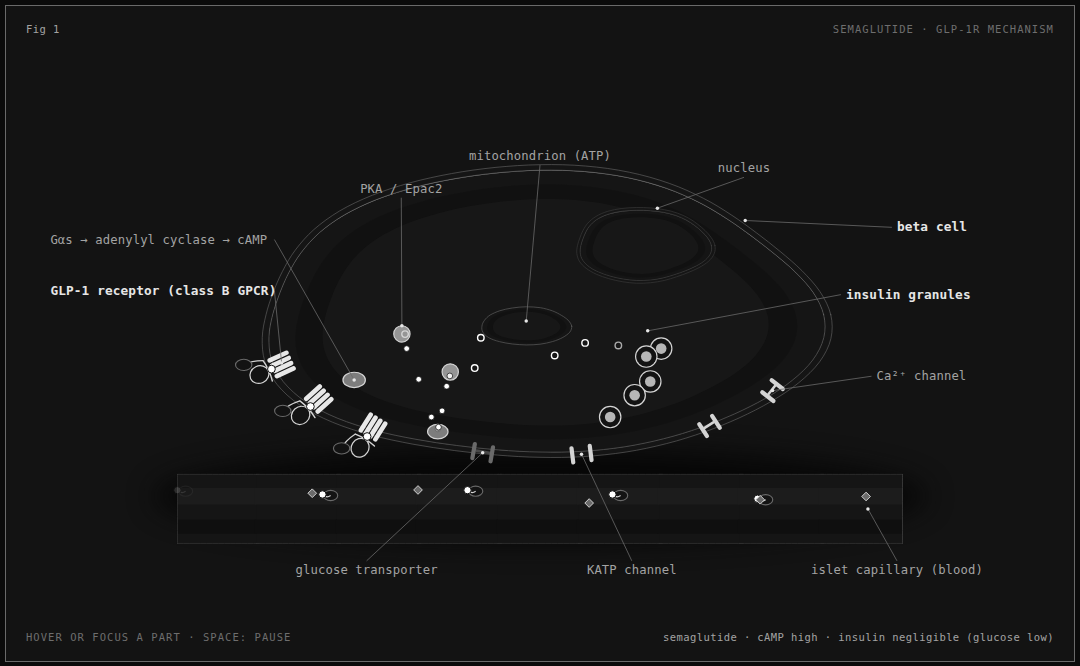
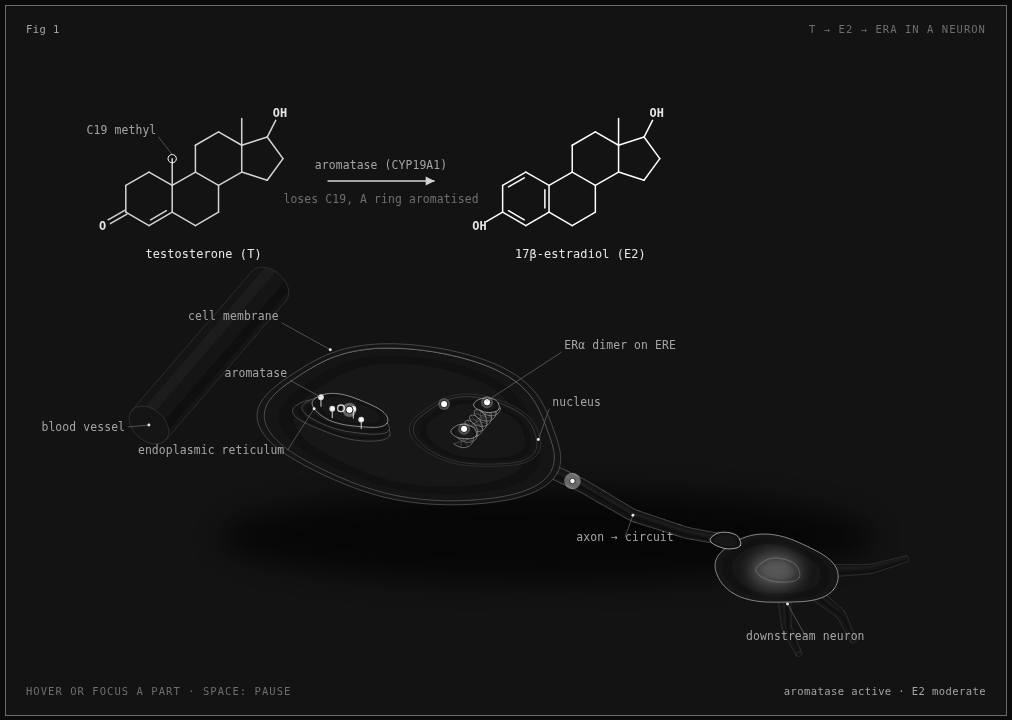
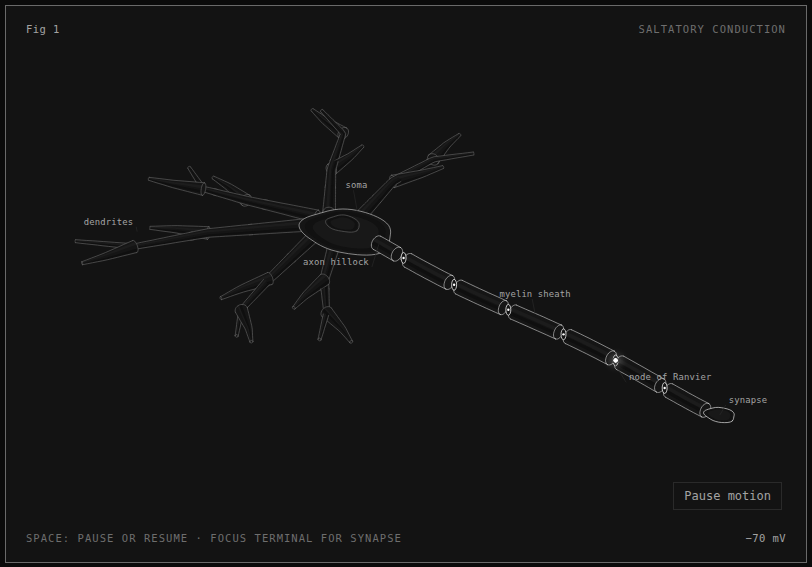
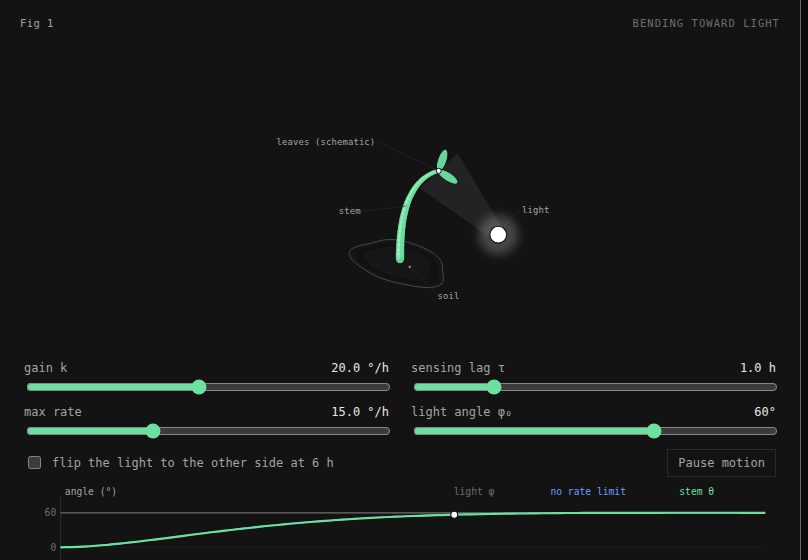
 Anima is a Claude Code skill that turns a plain-language biology question into an interactive, sourced, isometric figure: a standalone web page showing real structures, a toggleable mechanism, a live readout, and a citation for every number shown.
Is this an app, or something Claude Code generates for me?It is not an app you run directly — it is a skill installed inside Claude Code. You describe the biology topic and Claude Code uses the skill to generate a standalone HTML page you open in a browser.
It is not an app you run directly — it is a skill installed inside Claude Code. You describe the biology topic and Claude Code uses the skill to generate a standalone HTML page you open in a browser.How do I actually use it to get a figure?In Claude Code, you name the biological subject, the mechanism to explain, the audience, and the output format. The skill then sizes the job (Figure, Hero, or Epic), gathers sources, builds the page, and checks it zoomed in, in both themes, and at phone width.
In Claude Code, you name the biological subject, the mechanism to explain, the audience, and the output format. The skill then sizes the job (Figure, Hero, or Epic), gathers sources, builds the page, and checks it zoomed in, in both themes, and at phone width.What do I need installed before this works?You need Claude Code and Node.js 20.10 or later. The drawing kit itself only uses Node built-ins with zero runtime dependencies; Chrome or Chromium is only needed for the optional capture and verification scripts.
You need Claude Code and Node.js 20.10 or later. The drawing kit itself only uses Node built-ins with zero runtime dependencies; Chrome or Chromium is only needed for the optional capture and verification scripts.Will it ever give dosing or medical advice for drugs?No — figures involving drugs are restricted to explaining mechanism only, with no doses, routes, schedules, or recommendations, and every figure is explicitly framed as educational rather than medical advice.
No — figures involving drugs are restricted to explaining mechanism only, with no doses, routes, schedules, or recommendations, and every figure is explicitly framed as educational rather than medical advice.How does it make sure the numbers on screen are trustworthy?Every displayed value — size, concentration, potential, rate, or dose — must cite its source with species, tissue, conditions and units in the caption or sources block; numbers that cannot be verified are left out rather than approximated.
Every displayed value — size, concentration, potential, rate, or dose — must cite its source with species, tissue, conditions and units in the caption or sources block; numbers that cannot be verified are left out rather than approximated.What does every generated figure contain?A framed card with a figure number, title, and interaction hint, a live readout driven by a small model, hover/keyboard explanations, a pause control, a reduced-motion still frame, a sources block, and both light and dark themes.
A framed card with a figure number, title, and interaction hint, a live readout driven by a small model, hover/keyboard explanations, a pause control, a reduced-motion still frame, a sources block, and both light and dark themes.Can I build my own new figure instead of using the examples?Yes — you copy the closest existing example and adapt it, reusing the kit modules (kit/blob.mjs, kit/branch.mjs, kit/chem.mjs, kit/bio-audit.mjs) that each build.mjs imports to draw organic forms, branching structures, molecules, and run membrane/label checks.
Yes — you copy the closest existing example and adapt it, reusing the kit modules (kit/blob.mjs, kit/branch.mjs, kit/chem.mjs, kit/bio-audit.mjs) that each build.mjs imports to draw organic forms, branching structures, molecules, and run membrane/label checks.Why was Anima built instead of using typical science animations?Most biology graphics are either static or confident-looking but unsourced; Anima insists on drawing real structures, citing every number, stating confidence levels, and only animating mechanisms, not decoration.
Most biology graphics are either static or confident-looking but unsourced; Anima insists on drawing real structures, citing every number, stating confidence levels, and only animating mechanisms, not decoration.What are similar projects?aetherviz-master, vistep, svg-diagram, answer-me-with-html, live-panel-skill, anatomy, explainer, motion-video-kit
aetherviz-master, vistep, svg-diagram, answer-me-with-html, live-panel-skill, anatomy, explainer, motion-video-kitWhich topics is it in?science, educational, zero-dependency, claude-skill, interactive, claude-code-skill, svg, visualization, data-visualization, design, skill, anthropic
science, educational, zero-dependency, claude-skill, interactive, claude-code-skill, svg, visualization, data-visualization, design, skill, anthropic