



5.4K ·GitHub
Что это такое?
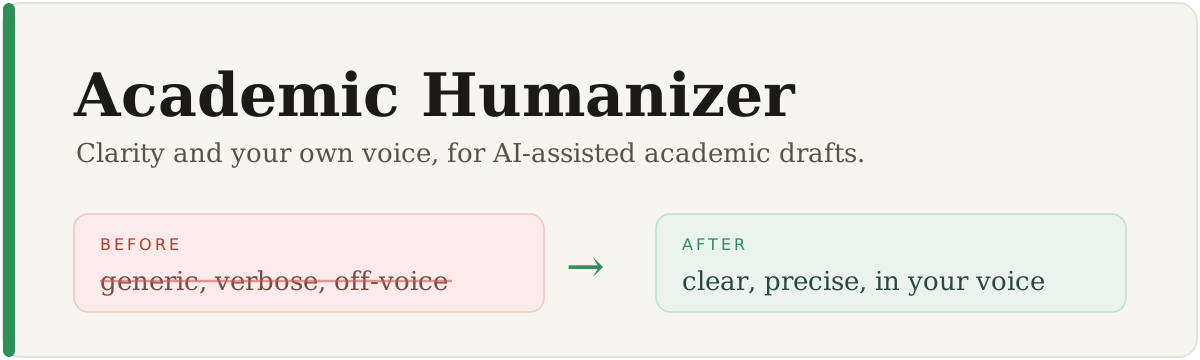
 Навык для редактирования, который убирает типичные признаки текста, написанного ИИ, из научных статей и заявок на гранты NSF и NIH. Он сохраняет научный стиль, связывает утверждения с доказательствами и оставляет числа и цитаты в точности такими, как были написаны.
Это отдельное приложение или то, что подключается к агенту?Это не отдельное приложение. Это простой файл SKILL.md вместе с примерами, который вы загружаете в ИИ-агента, например Claude Code, Codex или MorphMind.
Это не отдельное приложение. Это простой файл SKILL.md вместе с примерами, который вы загружаете в ИИ-агента, например Claude Code, Codex или MorphMind.Как начать пользоваться?Укажите вашему агенту на SKILL.md. Его можно запускать как навык или передать как системный промпт.
Укажите вашему агенту на SKILL.md. Его можно запускать как навык или передать как системный промпт.Нужно ли что-то особенное перед началом?Нужен ИИ-агент, который умеет читать навыки или системные промпты, например Claude Code, Codex или MorphMind. Так как это простой файл, ничего компилировать или упаковывать не нужно.
Нужен ИИ-агент, который умеет читать навыки или системные промпты, например Claude Code, Codex или MorphMind. Так как это простой файл, ничего компилировать или упаковывать не нужно.Поможет ли это обойти детекторы использования ИИ?Нет. В README сказано, что инструмент не предназначен для обхода обнаружения использования ИИ, а его применение не снимает вашу обязанность сообщать о помощи ИИ. Всегда следуйте правилам раскрытия того издания или конференции, куда вы подаёте работу.
Нет. В README сказано, что инструмент не предназначен для обхода обнаружения использования ИИ, а его применение не снимает вашу обязанность сообщать о помощи ИИ. Всегда следуйте правилам раскрытия того издания или конференции, куда вы подаёте работу.Он только для NSF и NIH?Нет. Есть общий режим для статей и отдельный режим для заявок на гранты. Его задумано адаптировать под вашу область и ваши уже принятые работы, а не использовать как универсальный фильтр.
Нет. Есть общий режим для статей и отдельный режим для заявок на гранты. Его задумано адаптировать под вашу область и ваши уже принятые работы, а не использовать как универсальный фильтр.Зачем автор это создал?Команда заметила, что черновики ИИ получаются шаблонными и многословными. Существующие инструменты для «очеловечивания» текста рассчитаны на блоги и маркетинг и стирают точность, на которой держится научное письмо.
Команда заметила, что черновики ИИ получаются шаблонными и многословными. Существующие инструменты для «очеловечивания» текста рассчитаны на блоги и маркетинг и стирают точность, на которой держится научное письмо.Как организован процесс редактирования?Шесть слоёв: общий каталог признаков ИИ-текста, специфические для научных работ признаки, сохранение научных конвенций, соответствие утверждений и доказательств, калибровка стиля и площадки публикации, а также режим для заявок на финансирование. Цикл «сначала аудит, затем переписывание» описан в SKILL.md.
Шесть слоёв: общий каталог признаков ИИ-текста, специфические для научных работ признаки, сохранение научных конвенций, соответствие утверждений и доказательств, калибровка стиля и площадки публикации, а также режим для заявок на финансирование. Цикл «сначала аудит, затем переписывание» описан в SKILL.md.Можно посмотреть примеры?Да. В examples/before-after.md есть общий пример, страница Specific Aims для NIH и резюме одобренного гранта NSF CAREER; в каждом показан черновик до и после редактирования.
Да. В examples/before-after.md есть общий пример, страница Specific Aims для NIH и резюме одобренного гранта NSF CAREER; в каждом показан черновик до и после редактирования.На что фокусируется режим для заявок на гранты?Он сохраняет видение, которое в статье было бы сокращено, и основные усилия тратит на первые страницы, поскольку именно их оценивают рецензенты.
Он сохраняет видение, которое в статье было бы сокращено, и основные усилия тратит на первые страницы, поскольку именно их оценивают рецензенты.Какие есть похожие проекты?Oleafly, sepia, awesome-ai-research-writing, humanizer, chinese-novelist-skill, linkedin-agent-skill, SimpleEnglish, yomiyasu
Oleafly, sepia, awesome-ai-research-writing, humanizer, chinese-novelist-skill, linkedin-agent-skill, SimpleEnglish, yomiyasuВ каких он темах?writing-assistant, academic-writing, ai-writing, beginner-friendly, prompt-engineering, skills, markdown, agent-skills, research, codex, free, claude-code
writing-assistant, academic-writing, ai-writing, beginner-friendly, prompt-engineering, skills, markdown, agent-skills, research, codex, free, claude-code