Topics / #trading-strategies
Trading-strategies projects on GitHub
Systematic trading strategies and quantitative finance research.
As of , the most-starred Trading-strategies projects on GitHub are awesome-quant (30.2K stars), backtrader (23.5K stars) and Lean (22.1K stars). GitHub.Locker tracks 12 Trading-strategies repositories with 177.1K stars combined. The fastest-growing on October 18 was machine-learning-for-trading, with +40 stars in a day.
Hot right now
Most stars gained in a day · Oct 18
 +40
machine-learning-for-trading
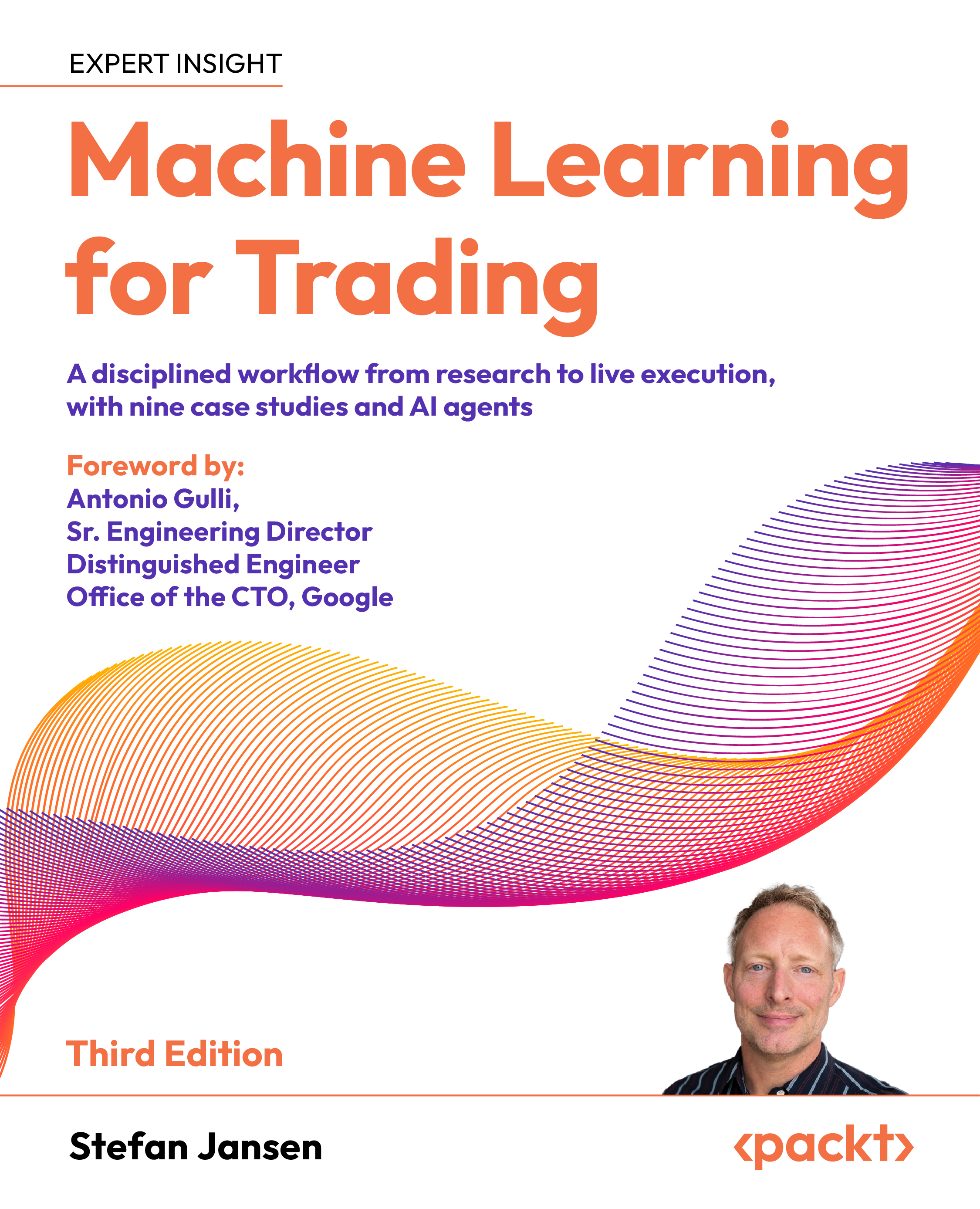
stefan-jansen/machine-learning-for-trading · ★ 21.5KThe code repository for Machine Learning for Trading, 3rd Edition by Stefan Jansen: an end-to-end workflow for building, testing, and deploying ML-driven trading strategies, from data sourcing to live execution.
 +26
awesome-systematic-trading
paperswithbacktest/awesome-systematic-trading · ★ 14.8KA curated list of resources for systematic (quantitative) trading: papers, libraries, packages, books, articles, videos, blogs and courses for finding, developing and running trading strategies.
 +23
awesome-quant
wilsonfreitas/awesome-quant · ★ 30.2KA curated list of libraries, packages and resources for quants - people doing quantitative finance: pricing, trading, backtesting, risk and market data.
Lean
QuantConnect/Lean · ★ 22.1KLEAN is QuantConnect's open-source, event-driven algorithmic trading engine, written in C# with Python support. You use it to build, backtest and live-trade strategies, with alternative data support out of the box.
The all-time top
12 projects · by stars
- 30.2K#1 · wilsonfreitas/awesome-quant
awesome-quant
A curated list of libraries, packages and resources for quants - people doing quantitative finance: pricing, trading, backtesting, risk and market data.
- 23.5K
 #2 · mementum/backtrader
backtrader
backtrader is a Python library for backtesting trading strategies: you write a strategy as code, run it against historical market data and measure how it would have performed before risking real money.
- 22.1K
#3 · QuantConnect/Lean
Lean
LEAN is QuantConnect's open-source, event-driven algorithmic trading engine, written in C# with Python support. You use it to build, backtest and live-trade strategies, with alternative data support out of the box.
- 4
machine-learning-for-trading
21.5Kstefan-jansen/machine-learning-for-trading · Jupyter NotebookThe code repository for Machine Learning for Trading, 3rd Edition by Stefan Jansen: an end-to-end workflow for building, testing, and deploying ML-driven trading strategies, from data sourcing to live execution.
- 5

abu
19Kbbfamily/abu · PythonThis is 'abu' (阿布量化), an open-source Python framework for building, backtesting and running quantitative trading strategies across US/A-share/HK stocks, futures, options and cryptocurrencies like Bitcoin, using machine learning to optimize the strategies.
- 6
awesome-systematic-trading
14.8Kpaperswithbacktest/awesome-systematic-trading · PythonA curated list of resources for systematic (quantitative) trading: papers, libraries, packages, books, articles, videos, blogs and courses for finding, developing and running trading strategies.
- 7

gs-quant
13.2Kgoldmansachs/gs-quant · PythonGS Quant is a Python toolkit for quantitative finance built by Goldman Sachs quants on top of their risk transfer platform, used for derivative structuring, trading strategy development, and risk management.
- 8

quant-trading
11.1Kje-suis-tm/quant-trading · PythonThis is a Python repository of quantitative trading strategies — a collection of standalone scripts implementing technical indicators, pattern recognition, options strategies and statistical arbitrage for backtesting on historical market data.
- 9

StockSharp
10.9KStockSharp/StockSharp · C#StockSharp (S#) is a free, open-source platform for trading on any market worldwide - crypto exchanges, stocks, futures, options, forex, and Bitcoin - supporting both manual and algorithmic trading, including high-frequency strategies.
- 10

gekko
10.2Kaskmike/gekko · JavaScriptGekko is a Bitcoin trading and backtesting platform that connects to popular Bitcoin exchanges — a trading bot written in JavaScript that runs on Node.js.
- 11

ict-trading-model
323carreypro/ict-trading-model · PythonICT Trading Model is a Codex skill that combines multi-timeframe bias, liquidity mapping, premium/discount location, session context, displacement, market structure, and PD arrays into a strict ICT/SMC (Inner Circle Trader / Smart Money Concepts) setup-validation framework.
- 12

bytex
250BYTEX-TRADE/bytex · C#BYTEX is an open-source, event-driven algorithmic trading engine for .NET written in C#. You write a trading strategy once and run the exact same code unchanged against historical data (backtest), live data with simulated fills (sandbox/paper), or real exchange accounts (live), with fixed-point money and adapters for major crypto exchanges.
Related topics
Often tagged together
- finance152
- quantitative-finance51
- algorithmic-trading39
- backtesting31
- python2,440
- trading61
- open-source5,768
- quant32
- trading-bot31
- technical-analysis11
- cross-platform2,682
- market-data24
- windows3,493
- algorithmic-trading-engine5
- apache-2.01,457
- data-science233
- docker1,686
- fintech60
- linux4,265
- macos3,624
- quantitative-trading15
- research783
- stock-market50
- algotrading6