























What is this?
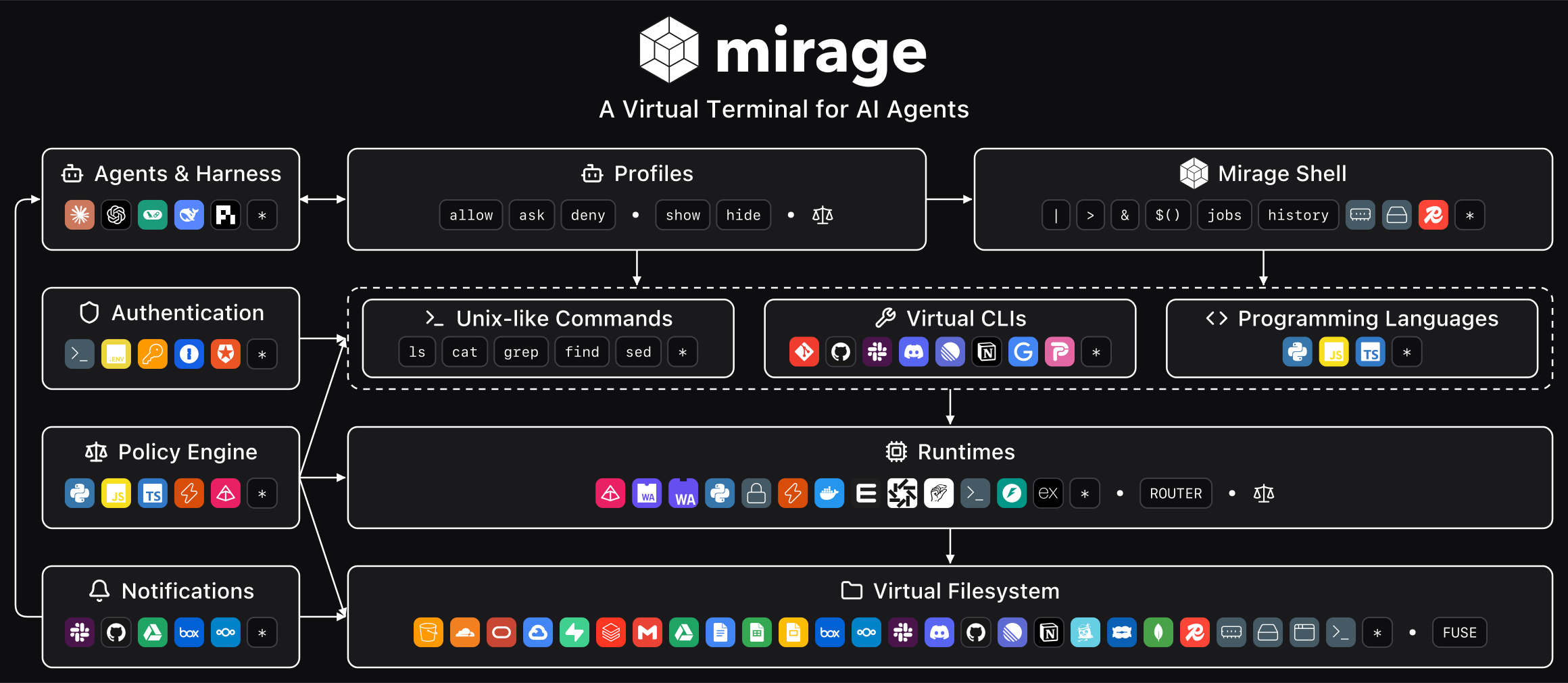
 Mirage is a virtual terminal for AI agents that mounts services like S3, Google Drive, Slack, Gmail and Redis into one unified virtual filesystem, so agents access everything with familiar unix tools (ls, grep, find, jq), run virtual CLIs, route code to different runtimes, and stay inside a policy-controlled shell.
Mirage is a virtual terminal for AI agents that mounts services like S3, Google Drive, Slack, Gmail and Redis into one unified virtual filesystem, so agents access everything with familiar unix tools (ls, grep, find, jq), run virtual CLIs, route code to different runtimes, and stay inside a policy-controlled shell.Is Mirage a framework I embed in my app, or a standalone CLI tool?It is a framework you launch inside your own application rather than a standalone app. It binds the virtual filesystem, virtual CLIs and runtimes into one shell that your agent drives.
It is a framework you launch inside your own application rather than a standalone app. It binds the virtual filesystem, virtual CLIs and runtimes into one shell that your agent drives.How do I start using Mirage with my agent?You launch Mirage inside your application and mount your data sources (object storage, files, messaging tools, etc.) under its single virtual filesystem root; the repo's test suites cover both Python and TypeScript integrations.
You launch Mirage inside your application and mount your data sources (object storage, files, messaging tools, etc.) under its single virtual filesystem root; the repo's test suites cover both Python and TypeScript integrations.Do I need a separate SDK or MCP server for every service my agent should reach?No. Mirage replaces per-service SDKs and MCP servers with one unified virtual terminal interface, so every backend speaks the same filesystem semantics.
No. Mirage replaces per-service SDKs and MCP servers with one unified virtual terminal interface, so every backend speaks the same filesystem semantics.Can my agent see files or folders I want hidden from it?No — profiles with hide and show rules remove restricted paths from what the agent can see entirely, not just block reads, and a scriptable policy engine gates every filesystem operation and session write.
No — profiles with hide and show rules remove restricted paths from what the agent can see entirely, not just block reads, and a scriptable policy engine gates every filesystem operation and session write.Does this work with Claude Code or other agent frameworks?Yes — Mirage ships as a dsh plugin and its repo topics list support for Claude Code and OpenAI Agents SDKs alongside general LLM agent integrations.
Yes — Mirage ships as a dsh plugin and its repo topics list support for Claude Code and OpenAI Agents SDKs alongside general LLM agent integrations.What stops an agent from taking a dangerous action, like deleting files?A scriptable policy engine can prohibit any dangerous action before it runs, and the same stack gates every virtual filesystem operation and session write so nothing leaks.
A scriptable policy engine can prohibit any dangerous action before it runs, and the same stack gates every virtual filesystem operation and session write so nothing leaks.Can the same underlying tool have two different identities with separate credentials?Yes — one real tool can be virtualized into two or more named CLIs, each with its own credentials, so an agent sees them as separate commands.
Yes — one real tool can be virtualized into two or more named CLIs, each with its own credentials, so an agent sees them as separate commands.How does Mirage react to external changes, like a new Slack message?External changes stream as events on the mount — a new Slack reply surfaces as a change to the chat file in the virtual filesystem, so the agent reacts to it instead of rescanning the tree.
External changes stream as events on the mount — a new Slack reply surfaces as a change to the chat file in the virtual filesystem, so the agent reacts to it instead of rescanning the tree.What runtimes can agent code execution be routed to?Python, JavaScript and other commands can be sent to a configured runtime — in-process, sandboxed, or remote — decoupling computation from storage.
Python, JavaScript and other commands can be sent to a configured runtime — in-process, sandboxed, or remote — decoupling computation from storage.What are similar projects?capsule-fs, nono, xerj, cynative, computer, coop, DSH-taskboard, agentbox
capsule-fs, nono, xerj, cynative, computer, coop, DSH-taskboard, agentboxWhich topics is it in?fuse, agent-sandbox, agent-tools, llm-agents, bash, ssh, dsh, dsh-plugin, sandbox, sdk, command-line-tool, framework
fuse, agent-sandbox, agent-tools, llm-agents, bash, ssh, dsh, dsh-plugin, sandbox, sdk, command-line-tool, framework